
What Guwahati–Silchar Expressway Means For Assam? Check Distance Cut, Travel Time Reduced And Major Fuel Savings
The upcoming Guwahati–Silchar Expressway is expected to transform connectivity in Assam by significantly reducing travel distance between Guwahati and Silchar. The project could boost trade, tourism and logistics while lowering fuel and transportation costs across the state.
- India News
- 3 min read

;'%3e%3cpath%20d='m8,15.99c4.41,0,7.99-3.58,7.99-7.99S12.41,0,8,0,0,3.59,0,8s3.58,7.99,7.99,7.99Z'%20style='stroke:%23fff;%20stroke-miterlimit:10;%20stroke-width:.02px;'/%3e%3cpath%20d='m3.08,3.37l3.82,5.11-3.84,4.15h.87l3.37-3.64,2.72,3.64h2.94l-4.04-5.39,3.58-3.87h-.86l-3.1,3.35-2.5-3.35h-2.94Zm1.27.64h1.35l5.97,7.99h-1.35l-5.97-7.99Z'%20style='fill:%23fff;'/%3e%3c/g%3e%3c/svg%3e)


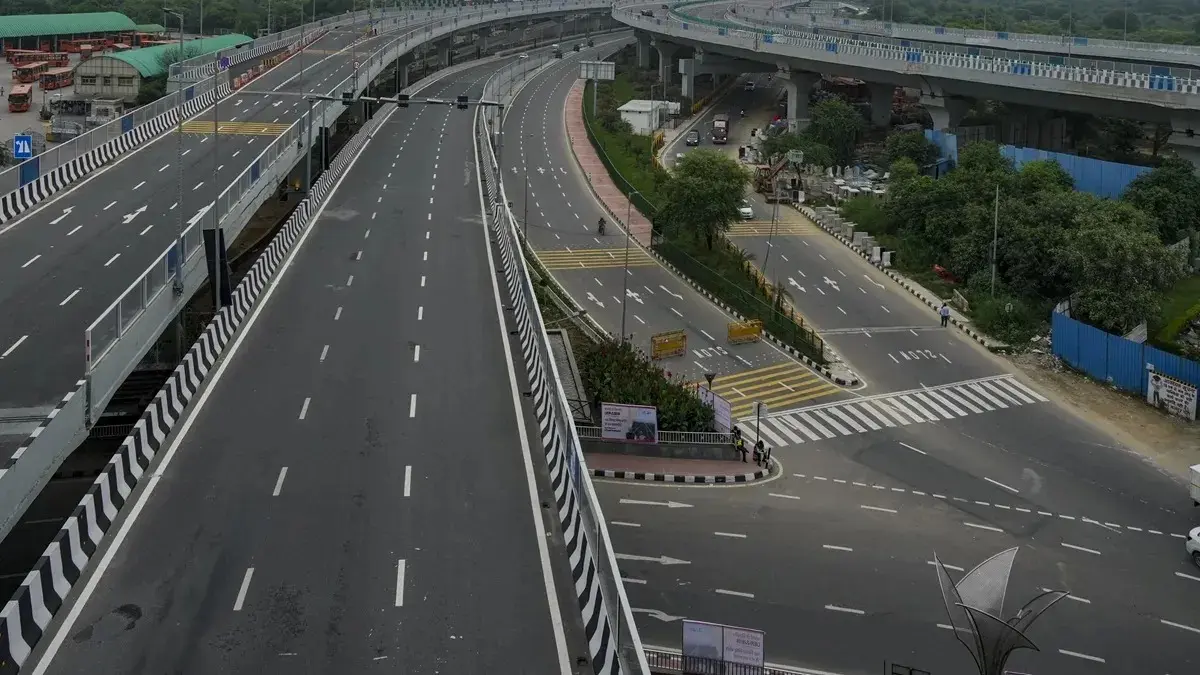
Guwahati: Prime Minister Narendra Modi laid the foundation stone for the Guwahati-Silchar Expressway on March 14, 2026. He is set to launch a development project worth approximately Rs 23,550 crore, representing a landmark shift in the state's infrastructure and social welfare.
He will inaugurate, dedicate to the nation, lay foundation stones, perform Bhoomi Poojan and flag off multiple development projects worth more than Rs 47,600 crore across Kokrajhar, Guwahati and Silchar. He will also perform Bhoomi Poojan of Assam Mala 3.0, a major road infrastructure initiative worth over Rs 3,200 crore.
This initiative will construct 900 km of new roads to improve inter-state connectivity and strengthen linkages between national highways and rural roads.
He will perform Bhoomi Poojan for six road infrastructure projects in the Bodoland Territorial Council (BTC) area, including four flyovers and two bridges, with an investment of around Rs 1,100 crore.
Advertisement
This Rs 22,864-crore project is being hailed as the most significant infrastructure development in the history of Northeast India, promising to bridge the geographical and economic divide between the Brahmaputra and Barak Valleys.
What does the Greenfield high-speed corridor mean for the region?
The Guwahati-Silchar Expressway is a landmark Rs 22,864-crore infrastructure project designed as the Northeast’s first 166.8 km, four-lane greenfield high-speed corridor.
Advertisement
This access-controlled highway will provide a critical, weather-resistant artery between the Brahmaputra and Barak valleys, effectively bypassing the landslide-prone bottlenecks of the existing NH-6 to ensure uninterrupted regional connectivity.
1. Distance
Currently, the journey between Guwahati and Silchar is a test of endurance, spanning nearly 295 km through the winding, often treacherous terrains of Meghalaya and the Dima Hasao hills.
The new four-lane access-controlled expressway is designed to be sleeker and more direct.
2. Total Project Length
The new corridor will cover approximately 166.8 km (primarily through Meghalaya).
3. Total Distance Reduction
According to Union Minister Nitin Gadkari, the overall travel distance between the two major cities will shrink to 245 km, a roughly 25% of reduction.
4. Time
The biggest transformation lies in the travel time. Currently, commuters face an 8 to 12-hour journey, frequently due to landslides in the Sonapur tunnel area and heavy monsoon disruptions.
5. The Target
The expressway is designed for a minimum speed of 80-100 km/h, aiming to slash travel time to just 4.5 to 5 hours.
6. The Impact
This effectively cuts the journey time in half, making same-day business trips between Guwahati and Silchar possible for the first time.
Money Saved: Logistics and Lifeblood
The economic implications are staggering. For the Barak Valley and neighbouring states like Mizoram, Tripura, and Manipur, this road is a lifeline.
A 25% shorter route on a smooth, 4-lane surface will drastically reduce fuel consumption and vehicle emissions for thousands of commercial trucks.
Lower transit times mean lower costs for essential goods, including food, medicine, and fuel, which are often inflated in difficult terrain.
The project is estimated to generate over 8.9 million person-days of employment during its construction phase, providing a direct boost to the local economy.
The Road Ahead
Managed by the NHIDCL under the Hybrid Annuity Mode (HAM), the project features 19 major bridges and extensive tunnelling to bypass landslide-prone zones.
With a completion target of 2030, the expressway isn't just a road; it's a high-speed engine for the Northeast’s future.
Get Current Updates on India News, Entertainment News, Cricket News along with Latest News and Web Stories from India and around the world.