
Haryana’s Big New Transport Rule Could Completely Change Your Next Cab Ride in NCR
From app-based taxis to delivery vehicles, the state government has approved sweeping new regulations that could reshape daily travel and mobility across Delhi-NCR.
- India News
- 3 min read

;'%3e%3cpath%20d='m8,15.99c4.41,0,7.99-3.58,7.99-7.99S12.41,0,8,0,0,3.59,0,8s3.58,7.99,7.99,7.99Z'%20style='stroke:%23fff;%20stroke-miterlimit:10;%20stroke-width:.02px;'/%3e%3cpath%20d='m3.08,3.37l3.82,5.11-3.84,4.15h.87l3.37-3.64,2.72,3.64h2.94l-4.04-5.39,3.58-3.87h-.86l-3.1,3.35-2.5-3.35h-2.94Zm1.27.64h1.35l5.97,7.99h-1.35l-5.97-7.99Z'%20style='fill:%23fff;'/%3e%3c/g%3e%3c/svg%3e)


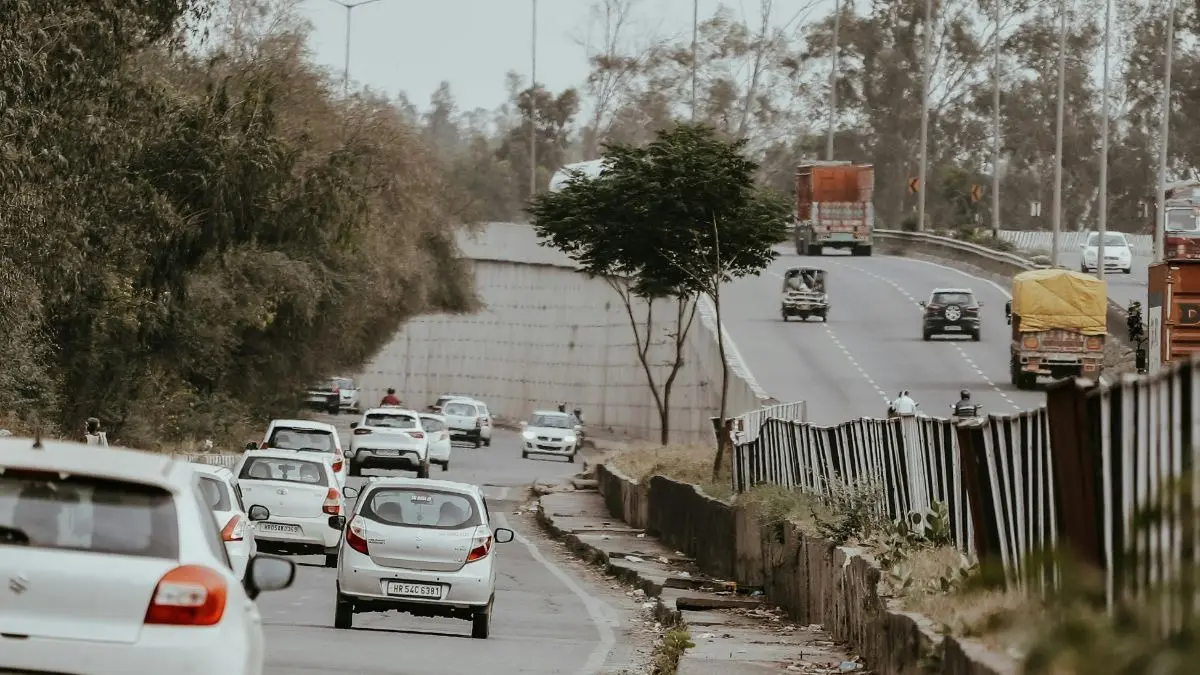
In a major push towards cleaner transport and better air quality, the Haryana government has approved new rules that will stop cab aggregators and delivery companies from adding petrol or diesel vehicles to their fleets in NCR areas from January 1, 2026.
The decision was cleared during a Haryana Cabinet meeting chaired by Chief Minister Nayab Singh Saini on Monday. The new rules fall under the Haryana Motor Vehicles Rules, 1993, and are aligned with directions issued by the Ministry of Road Transport and Highways and the Commission for Air Quality Management (CAQM).
Only Clean Fuel Vehicles to Be Added
Under the new policy, companies such as app-based taxi services, delivery operators and e-commerce platforms operating in Haryana’s NCR districts will only be allowed to induct vehicles running on cleaner fuels. This includes:
- Electric Vehicles (EVs)
- CNG vehicles
- Battery-operated vehicles
- Other approved clean fuel vehicles
The rules also state that only CNG or electric auto-rickshaws can now be added to existing fleets in the NCR region. The move is aimed at reducing vehicular pollution, one of the biggest contributors to poor air quality across Delhi-NCR.
Advertisement
Big Changes for Cab Aggregators
The Haryana government has also introduced a broader regulatory framework for app-based transport and delivery platforms. Under the revised rules, aggregators will now need mandatory licences to operate. The government has also laid down strict conditions related to:
- Passenger safety
- Driver onboarding
- Vehicle verification
- Cybersecurity compliance
- Fare regulation
- Complaint handling systems
- Driver training programmes
Companies will also have to maintain digital records of drivers and vehicles using the VAHAN and SARATHI government portals.
Advertisement
Mandatory Insurance and Safety Features
The new framework makes several safety measures compulsory.
Cab aggregators and delivery service providers will now have to provide:
- Minimum Rs 5 lakh insurance cover for passengers
- Rs 5 lakh health insurance for drivers
- Rs 10 lakh term insurance for onboarded drivers
Vehicles will also need to be equipped with:
- GPS tracking devices
- Panic buttons
- First-aid kits
- Fire extinguishers
In addition, companies must set up 24x7 control rooms and customer support centres to handle emergencies and complaints.
Haryana Eyes Bigger EV Push
Ahead of the Cabinet meeting, Haryana Transport Minister Anil Vij said the state government has proposed 100 per cent tax exemption on electric vehicles, similar to policies already seen in Delhi and Chandigarh.
At present, Haryana offers a 20 per cent concession on EV registration fees.
Vij also announced that the government plans to purchase 500 electric buses as part of its larger clean mobility strategy.
The latest decision signals a major shift in how transport and delivery services will operate across NCR regions in Haryana over the next few years. With rising pollution levels becoming a growing public health concern, the government is now pushing aggressively towards electric and cleaner mobility solutions. The policy is also expected to increase demand for EVs, expand charging infrastructure and gradually reduce dependence on fossil fuel-powered commercial vehicles across the region.
Get Current Updates on India News, Entertainment News, Cricket News along with Latest News and Web Stories from India and around the world.