
'Human Problem': Delhi High Court Issues New Orders To Address Shelter Crisis Near Hospitals Amid Coldwave
The Delhi High Court issued urgent directions to address the shortage of night shelters near major hospitals during the coldwave. While clarifying that it was not doubting the efforts of authorities, the Bench observed that the present coldwave situation requires all stakeholders to work in coordination. It said the issue would be monitored through both short-term and long-term measures.
- India News
- 4 min read

;'%3e%3cpath%20d='m8,15.99c4.41,0,7.99-3.58,7.99-7.99S12.41,0,8,0,0,3.59,0,8s3.58,7.99,7.99,7.99Z'%20style='stroke:%23fff;%20stroke-miterlimit:10;%20stroke-width:.02px;'/%3e%3cpath%20d='m3.08,3.37l3.82,5.11-3.84,4.15h.87l3.37-3.64,2.72,3.64h2.94l-4.04-5.39,3.58-3.87h-.86l-3.1,3.35-2.5-3.35h-2.94Zm1.27.64h1.35l5.97,7.99h-1.35l-5.97-7.99Z'%20style='fill:%23fff;'/%3e%3c/g%3e%3c/svg%3e)


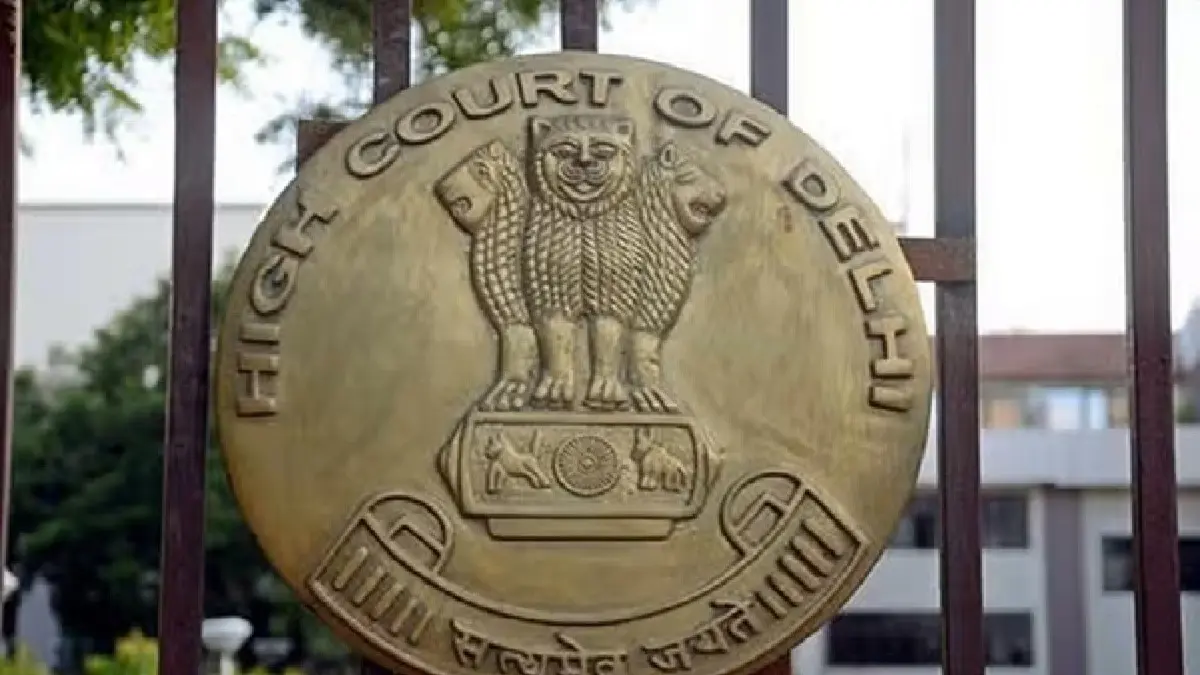
New Delhi: The Delhi High Court on Wednesday issued a series of fresh directions in the suo motu PIL concerning the acute shortage of night shelters for patients and attendants outside major hospitals in the capital, permitting impleadment of several additional authorities to comprehensively address the crisis.
A Division Bench led by Justice Devendra Kumar Upadhyay, along with Justice Tejas Karia, allowed the impleadment of the Centre for Holistic Development and directed that the All India Institute of Medical Sciences be impleaded through its Additional Director (Administration). The Court further ordered the impleadment of the MCD, NDMC, L&DO, DMRC, PWD, DDA, Delhi Jal Board, and the Commissioner of Police, Delhi. The Bench also directed that Vardhman Mahavir Medical College and Safdarjung Hospital, Lady Hardinge Medical College and Dr Ram Manohar Lohia Hospital be impleaded as parties.
Referring to its earlier order dated January 12, the Court reiterated its concern over the "human problem" faced by residents of Delhi due to inadequate facilities at shelter homes, particularly during extreme cold conditions.
The Bench observed that owing to insufficient arrangements, homeless persons and attendants of patients were struggling to protect themselves from the cold, even to the extent of risking serious harm to their limbs.
Advertisement
The Court noted several deficiencies, including a lack of effective implementation of the Winter Action Plan, a shortage of shelters, a mismatch between data on capacity and occupancy, an absence of adequate beds near hospitals, poor surveys of the homeless population, water supply and fire safety concerns, and a lack of proper rehabilitation measures.
While clarifying that it was not doubting the efforts of authorities, the Bench observed that the present coldwave situation requires all stakeholders to work in coordination. It said the issue would be monitored through both short-term and long-term measures.
Advertisement
On short-term steps, the Court took note of data placed by the Delhi Urban Shelter Improvement Board (DUSIB), including letters written to AIIMS, VMCC and Lady Hardinge seeking permission to set up pagoda tents in hospital open spaces. AIIMS, however, informed DUSIB through a letter dated January 13 that existing capacity was adequate, pagoda tents were unnecessary due to proactive measures, and raised security concerns.
The Court also recorded that the Central Government counsel Ashish Dict had visited night shelters around AIIMS and submitted a report, which was endorsed by the Additional Solicitor General and taken on record.
Senior counsel for the intervenor, however, tendered photographs taken around 11:30 pm on January 13, suggesting conditions contrary to what was stated by DUSIB. The photographs were also taken on record.
Emphasising that India is a social welfare State, the bench held that denial of the right to shelter amounts to a violation of the right to life. It said the State and its authorities cannot shirk their constitutional duty to provide shelter to homeless persons, particularly those accompanying patients in search of medical treatment. "No refuge can be given to authorities for denying this right," the Court observed.
Taking note of a report submitted by an intervenor highlighting that several patients and attendants were in urgent need of shelter facilities, the Court issued several directions. That includes subways around hospitals, which shall be taken over by DUSIB and equipped with facilities equivalent to shelter homes. DUSIB shall immediately identify spaces near hospitals and erect tents or pandals; all other authorities shall cooperate, failing which erring officials will be held liable.
A meeting shall be convened at 10 am on Thursday by the Principal District Judge (South), to be attended by the senior-most officers (CEOs or high-ranking nominees) of NDMC, MCD, DMRC, AIIMS, DUSIB, VMCC, RML, LHMC, Delhi Police, DDA and L&DO to chalk out a short-term plan, to be implemented from the same day. Any conflict during deliberations shall be resolved by the PDJ, whose decision will be final. The PDJ shall prepare a note and submit it on the next date through the Registrar General. No further notice shall be required for attending the meeting.
The Bench relisted the matter for January 16, 2026, and directed all concerned authorities to file compliance reports before the next hearing.
Additional Solicitors General Chetan Sharma and Ashish Dixit appeared for the Central Government and its authorities. Standing Counsel Sameer Vashisht and Advocate Satya Ranjan Swain represented the Delhi Government and its authorities. However, Advocate Nishant Gautam appeared for Delhi Police in the matter.
Get Current Updates on India News, Entertainment News, Cricket News along with Latest News and Web Stories from India and around the world.