
IAF Achieved 'Air Superiority' Over Pak Airspace By May 10 Morning During Operation Sindoor: Report
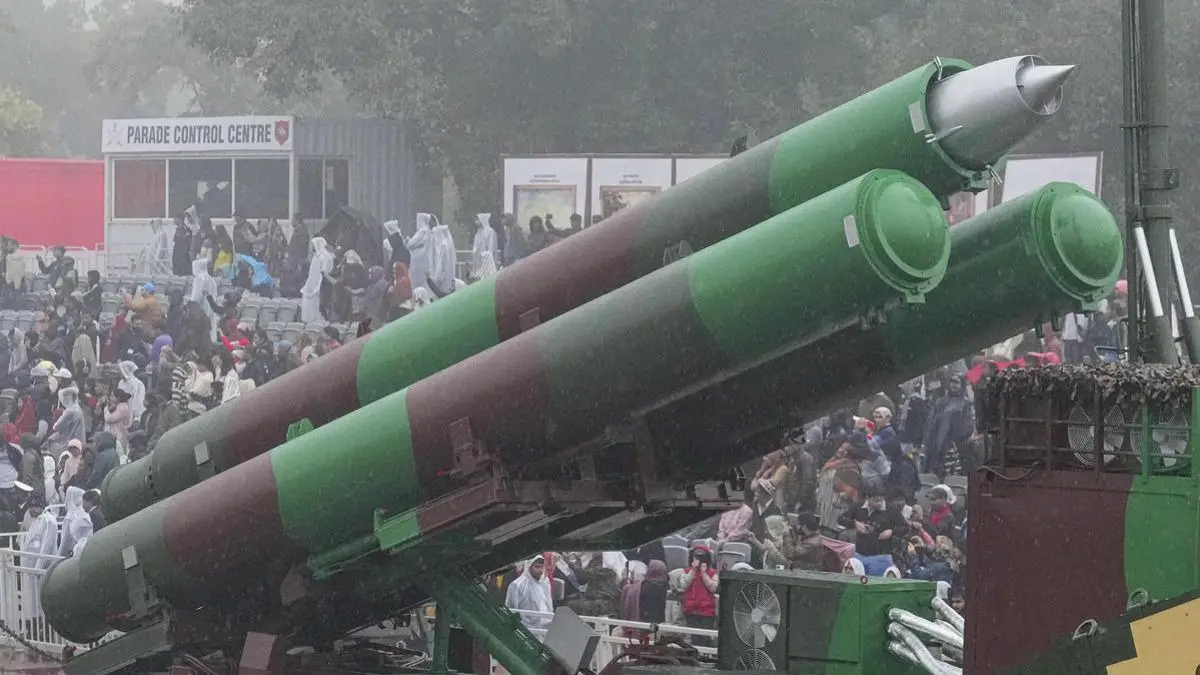
According to military historian Adrien Fontanellaz, the sustainability of India’s long-range offensive was fundamentally tied to its stockpile of high-tech weaponry, specifically the BrahMos and SCALP-EG cruise missiles.
- India News
- 3 min read

;'%3e%3cpath%20d='m8,15.99c4.41,0,7.99-3.58,7.99-7.99S12.41,0,8,0,0,3.59,0,8s3.58,7.99,7.99,7.99Z'%20style='stroke:%23fff;%20stroke-miterlimit:10;%20stroke-width:.02px;'/%3e%3cpath%20d='m3.08,3.37l3.82,5.11-3.84,4.15h.87l3.37-3.64,2.72,3.64h2.94l-4.04-5.39,3.58-3.87h-.86l-3.1,3.35-2.5-3.35h-2.94Zm1.27.64h1.35l5.97,7.99h-1.35l-5.97-7.99Z'%20style='fill:%23fff;'/%3e%3c/g%3e%3c/svg%3e)


New Delhi: The Indian Air Force (IAF) had achieved "air superiority" over Pakistani airspace by the morning of May 10, 2025, during the days of Operation Sindoor, a new report by the Switzerland-based Centre d’Histoire et de Prospective Militaires (CHPM) stated.
The 47-page analysis, titled Operation Sindoor: The India-Pakistan Air War (7–10 May 2025), reveals that the IAF’s dominance was the primary factor that "coerced" Islamabad into seeking a ceasefire just 88 hours after the start of the conflict.
The Counterstrike
According to military historian Adrien Fontanellaz, the sustainability of India’s long-range offensive was fundamentally tied to its stockpile of high-tech weaponry, specifically the BrahMos and SCALP-EG cruise missiles.
The report suggests that these advanced munitions were the primary source behind India's ability to execute precise stand-off strikes without putting its aircraft at undue risk.
Advertisement
Using a combination of Rafale, Su-30MKI, and Jaguar jets, India fired an array of stand-off weapons, including BrahMos, SCALP-EG, and Rampage missiles, while remaining largely within Indian airspace. The strikes targeted seven critical sites up to 200 km inside Pakistan, including Nur Khan and Murid Air Bases, which are for dismantling command centres and drone infrastructure, Sargodha Air Base, impacting runway intersections to render the base inoperative and Jacobabad Air Base for destroying an F-16 maintenance hangar and surveillance radars.
Neutralising the Drone Threat
The Swiss report highlights the "effectiveness" of India’s integrated air defence network as a major surprise of the conflict. Pakistan launched two massive drone waves involving over 900 UAVs (including Bayraktar TB2 and Akinci) intended to saturate Indian radars.
Advertisement
However, the integration of the IAF’s Integrated Air Command and Control System (IACCCS) with the Army’s Akashteer network allowed Indian batteries to operate with "strict emission control."
By activating radars only briefly and relocating frequently, India prevented Pakistan from triangulating its defence positions. More than half of the intruding drones were reportedly downed by anti-aircraft guns and jamming alone.
The CHPM study characterises Operation Sindoor as the first "high-intensity, network-centric air conflict" between two nuclear-armed states. It concludes that India achieved "escalation dominance" by demonstrating the capability to impose high costs while keeping the conflict below the nuclear threshold.
While the report notes that both sides overclaimed aircraft losses, assessing India lost at least one Rafale and one Mirage-2000 on the opening night due to strict initial rules of engagement, it affirms that by May 10, the "extent and quality of Pakistani airspace coverage" had been drastically reduced, leaving Islamabad with no choice but to request a halt to hostilities.
Get Current Updates on India News, Entertainment News, Cricket News along with Latest News and Web Stories from India and around the world.