
India Hails UN Report Linking Jaish to Red Fort Terror Attack, Calls for Strengthening Global Fight Against Terrorism
India has consistently raised the issue of cross-border terrorism emanating from Pakistan, and the United Nations report's inclusion of New Delhi's concerns underscores growing international recognition of the threat posed by Pakistan-based terror groups.
- India News
- 4 min read

;'%3e%3cpath%20d='m8,15.99c4.41,0,7.99-3.58,7.99-7.99S12.41,0,8,0,0,3.59,0,8s3.58,7.99,7.99,7.99Z'%20style='stroke:%23fff;%20stroke-miterlimit:10;%20stroke-width:.02px;'/%3e%3cpath%20d='m3.08,3.37l3.82,5.11-3.84,4.15h.87l3.37-3.64,2.72,3.64h2.94l-4.04-5.39,3.58-3.87h-.86l-3.1,3.35-2.5-3.35h-2.94Zm1.27.64h1.35l5.97,7.99h-1.35l-5.97-7.99Z'%20style='fill:%23fff;'/%3e%3c/g%3e%3c/svg%3e)


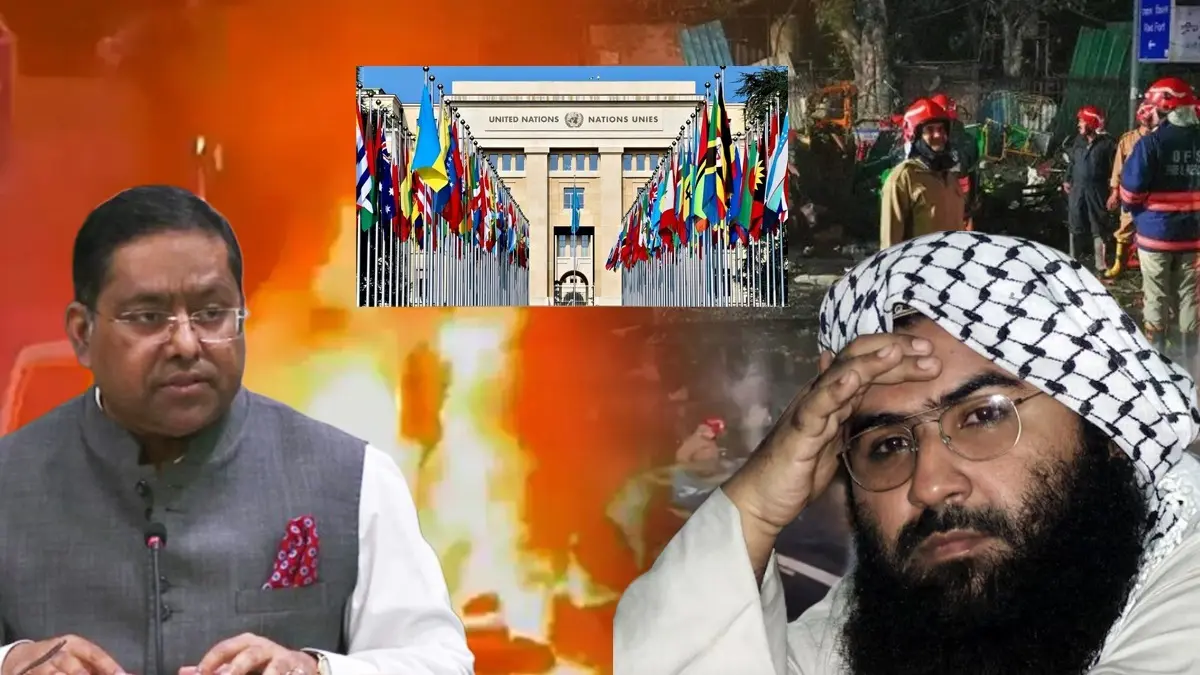
New Delhi: The Ministry of External Affairs (MEA) has welcomed a recent United Nations report that highlights the role of Pakistan-based terror group Jaish-e-Mohammed (JeM) in the deadly car explosion near Delhi's Red Fort in November 2025, which claimed 15 lives and injured over 20 others.
In response to queries on the 37th report of the UN Analytical Support and Sanctions Monitoring Team, published on February 4, 2026, MEA spokesperson Randhir Jaiswal stated: "This particular report is available in the public domain. We have seen that they have taken on board India’s inputs regarding our concerns on cross-border terrorism and also as to how we can strengthen the global fight against terrorism."
About the UN Report
The UN findings, submitted to the Security Council's 1267 Sanctions Committee, link JeM to the attack based on inputs from member states, amid ongoing concerns over the group's continued operations and reported plans to establish a women-only wing.
India has consistently raised the issue of cross-border terrorism emanating from Pakistan, and the report's inclusion of New Delhi's concerns underscores growing international recognition of the threat.
Advertisement
The United Nations’ 37th report by the Analytical Support and Sanctions Monitoring Team, submitted to the Security Council’s 1267 Sanctions Committee and made public on February 4, 2026, has highlighted ongoing concerns about Pakistan-based terrorist groups, including links to recent attacks in India.
The report has raised fresh alarms about the operational persistence of UN-designated entities despite sanctions.
Advertisement
The document reflects divisions among member states on JeM’s status: one country described the group as still active and capable, while another labeled it “inactive” (or “defunct” in some accounts). These discrepancies underscore challenges in achieving international consensus on the threat from Pakistan-origin terror networks.
Pakistan has long asserted that JeM and Lashkar-e-Taiba (LeT) have been rendered inactive through domestic bans and enforcement measures. However, the UN report's inclusions appear to challenge that narrative, prompting renewed scrutiny of compliance and on-ground realities.
In a notable development, the report states that on October 8, 2025, JeM leader Masood Azhar, a UN-designated global terrorist, announced the establishment of a separate women’s wing called Jamaat-ul-Muminat (also referred to as Jamaat ul-Muminat).
Though not individually listed under UN sanctions, the wing is accused of supporting terrorist activities, potentially signaling efforts to evolve structurally, broaden recruitment, or adapt under pressure from international restrictions.
Security analysts suggest such a formation could reflect attempts at ideological reinforcement or operational diversification amid sanctions.
The report also references the April 22, 2025, Pahalgam attack in Jammu and Kashmir, where 26 civilians were killed. That assault was initially claimed by The Resistance Front (TRF), widely viewed as a proxy or front for Lashkar-e-Taiba (LeT). The incident escalated India-Pakistan tensions significantly, leading to Indian targeted strikes on terror hideouts in Pakistan in May 2025 and several days of military standoff between the two nuclear-armed neighbors. The report mentions that three suspects linked to the Pahalgam attack were killed on July 28, 2025.
Overall, the 37th report refocuses attention on cross-border terrorism and the enduring or purported resurgence of UN-proscribed groups. By documenting the JeM claim regarding the Red Fort incident and noting member-state disagreements on operational viability, it highlights gaps in global alignment against terrorism.
For India, the inclusion of both the Red Fort and Pahalgam attacks in this UN document bolsters its longstanding assertions about the persistence of Pakistan-based terror infrastructure, despite declared bans and countermeasures.
Get Current Updates on India News, Entertainment News, Cricket News along with Latest News and Web Stories from India and around the world.