
Indian Army's Institutional Integration With PM GatiShakti: A Strategic Counter To China's Border Infrastructure Build-up
The Army’s logistics planners now study border roads, tunnels, airfields, and even power lines on the same digital canvas that civilian ministries use to plan industrial corridors and highways.
- India News
- 8 min read

;'%3e%3cpath%20d='m8,15.99c4.41,0,7.99-3.58,7.99-7.99S12.41,0,8,0,0,3.59,0,8s3.58,7.99,7.99,7.99Z'%20style='stroke:%23fff;%20stroke-miterlimit:10;%20stroke-width:.02px;'/%3e%3cpath%20d='m3.08,3.37l3.82,5.11-3.84,4.15h.87l3.37-3.64,2.72,3.64h2.94l-4.04-5.39,3.58-3.87h-.86l-3.1,3.35-2.5-3.35h-2.94Zm1.27.64h1.35l5.97,7.99h-1.35l-5.97-7.99Z'%20style='fill:%23fff;'/%3e%3c/g%3e%3c/svg%3e)


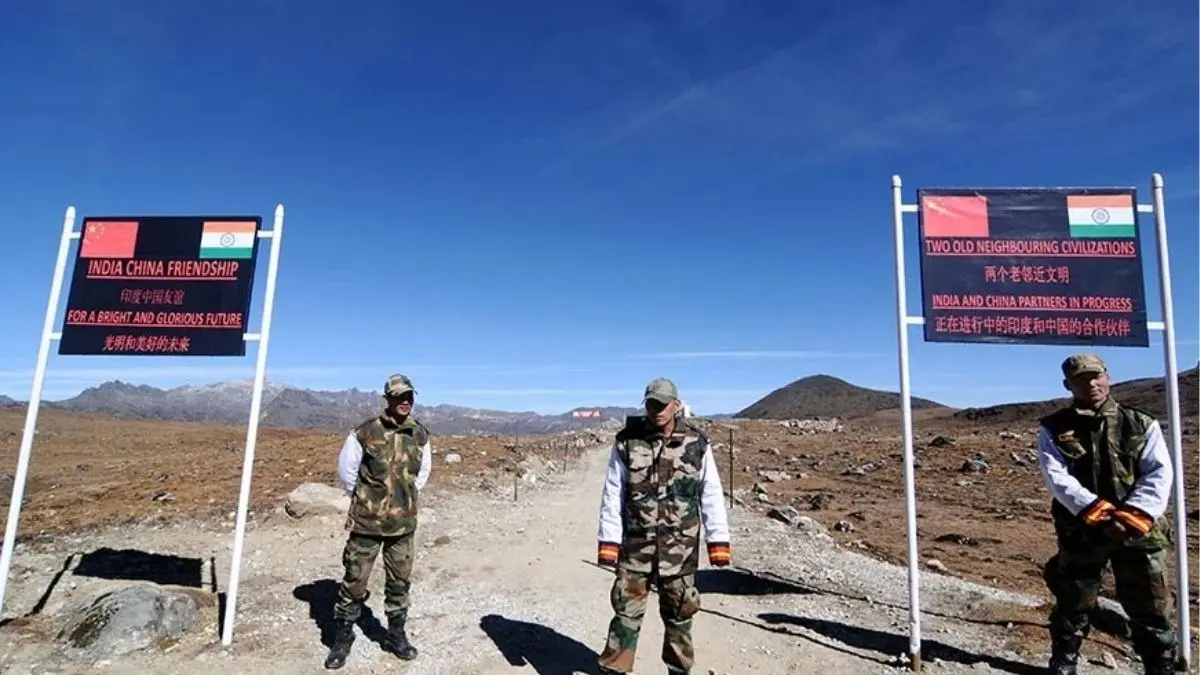
New Delhi: In a secure room in army headquarters, the Army’s logistics planners now study border roads, tunnels, airfields and even power lines on the same digital canvas that civilian ministries use to plan industrial corridors and highways. That shared map—India’s PM GatiShakti National Master Plan—is where the Indian Army has quietly moved from being just a “user” of infrastructure to a full-fledged institutional stakeholder in how that infrastructure is conceived, funded and sequenced.
New logistics brain at Army HQ
To plug itself into this national grid, the Army has created a dedicated PM GatiShakti cell at Army Headquarters under the Directorate General of Operational Logistics and Strategic Movement (DG OL&SM), headed by a senior officer. This cell functions as the service’s logistics “nerve centre” for GatiShakti, mirroring the structure in the government’s Logistics Division, with similar architectures replicated across all Command and subordinate Headquarters so that proposals can be generated, refined and pushed into the national pipeline from theatre level upwards. Brigadier Atul Kumar, SM, serves as the nodal officer at Army HQ and represents the Army in the Network Planning Group (NPG), the inter‑ministerial body that scrutinises and green-lights major connectivity projects under PM GatiShakti.
India's Institutional Architecture: Army-Led GatiShakti Cell
Advertisement
In response to strategic challenges, India's Army has created a dedicated PM GatiShakti cell in Army Headquarters under the Directorate General of Operational Logistics and Strategic Movement (DG OL&SM), led by Lt Gen Sanjay Mitra, AVSM, the Director General of Operational Logistics and Strategic Movement. India's institutional framework demonstrates comprehensive military integration:
Brigadier Atul Kumar, SM, serves as the nodal officer at Army Headquarters, representing India's Army in Network Planning Group (NPG) meetings at DPIIT/Logistics Division
Advertisement
All Headquarters Commands and subordinate HQs across India have placed nodal officers to coordinate GatiShakti projects
India's Army is now an active member of the Network Planning Group, attending NPG meetings for infrastructure project approvals—marking the first time the Indian military directly participates in national infrastructure planning
"India's Army is embedding itself into the planning and monitoring process for projects with strategic relevance," confirmed Indian Army sources. "Projects with military perspective are at various stages of active collaboration across multiple commands".
From standalone projects to a national grid
PM GatiShakti itself is a GIS-based National Master Plan that brings existing and proposed projects of multiple ministries onto a single portal, giving each department visibility of others’ activities and providing critical data during planning and execution. For the Army, this means its infrastructure requirements—roads to forward posts, railheads close to cantonments, connectivity to ammunition depots and logistics nodes—are no longer pursued as isolated defence works but deliberately woven into a multi-modal national network that also serves civilian economic zones. In operational terms, this shifts the mindset from “Can we get a road to this post?” to “How do we align a cluster of roads, rail links, power and telecom so that both the local economy and military sustenance gain from the same rupee of capex?”
India's Dual-Use Infrastructure: The Strategic Numbers
The quantifiable impact of India's GatiShakti integration is striking. India's Army has co-opted approximately 103 proposals under PM GatiShakti for dual-use infrastructure, allowing simultaneous military and civilian utilization of identified resources:
Category | Count | India's Strategic Impact |
Border roads | ~543 projects | All-weather routes for year-round deployments |
Military/Base Hospitals | 109 | Medical infrastructure for border forces |
Strategic railway lines | 4 | Rapid troop and equipment movement |
Joint with Ministry of Railways | 15 proposals | Integrated rail-military logistics |
Joint with MoRTH | 47 proposals | Strategic road connectivity |
Joint with Ministry of Civil Aviation | 25 proposals | Air mobility support |
Joint with Ministry of Power | 14 proposals | Energy infrastructure for border areas |
Earlier, in December 2023, General Manoj Pande, COAS of India's Army, revealed that 300 infrastructure projects had been identified for dual purpose, including four strategic tunnels and strategic railway lines.
India's dual-use infrastructure strategy includes border roads, all-weather routes, and tunnels to support year-round deployments, directly addressing India's operational sustainment challenges.
The defence portal and dual‑use projects
The turning point came with the creation of a dedicated Defence Portal on PM GatiShakti, announced in late 2023, where about 300 infrastructure projects—including four strategic tunnels and key railway lines—were identified for dual use, serving both military and civilian objectives. Over the following year, the Army refined this pipeline: 103 specific Army proposals have been co‑opted into the National Master Plan, covering roads, railways, airfields and communication networks, with 15 of these jointly with the Ministry of Railways, 47 with the Ministry of Road Transport and Highways, 25 with Civil Aviation, 14 with Power, and one each with the Department of Telecom and the Ministry of Petroleum and Natural Gas. On the portal, roughly 543 border roads, 109 military and base hospitals and four strategic railway lines have already been uploaded as dual‑use assets, giving planners across government a live picture of where defence-linked infrastructure sits and where the gaps remain.
Strengthening border logistics on the ground
This institutional integration is riding on a visible surge in India’s own border infrastructure since the Ladakh crisis of 2020. Between 2020 and 2025, the Border Roads Organisation (BRO) completed more than 450 projects worth about ₹16,000 crore, including 75 critical strategic projects inaugurated in October 2024 alone—22 roads and 51 bridges spread across Ladakh, Jammu & Kashmir, Arunachal Pradesh, Uttarakhand, Sikkim, Himachal Pradesh and other frontier areas. These include showpiece assets such as the Sela Tunnel in Arunachal Pradesh, the world’s highest motorable road over Umling La in Ladakh, and the high-altitude Mudh‑Nyoma airfield runway, all of which now sit inside the same planning ecosystem that drives industrial corridors and freight logistics. The Centre told Parliament earlier that over 2,000 km of roads near the India–China border were built in five years at a cost of about ₹15,477 crore, signalling a deliberate political push to close the connectivity gap along the LAC.
Vibrant Villages and the Last Mile
At the village scale, the Vibrant Villages Programme has become another important lever that now interfaces with PM GatiShakti. In April 2025, the Cabinet approved Vibrant Villages Programme‑II as a Central Sector Scheme with an outlay of ₹6,839 crore for 2024‑25 to 2028‑29, aimed at border villages in sparsely populated, infrastructure‑deficient regions, especially along the northern frontier. The scheme explicitly mandates the use of data platforms like PM GatiShakti to map existing and required connectivity and to prioritise critical gaps, while more than 100 border villages flagged by the Army have been taken up under Vibrant Villages, ensuring that local roads, telecom, power and livelihood projects reinforce the same logistics grid that sustains forward deployments.
Building logistics expertise at home
Recognising that infrastructure is now as much about planning literacy as concrete and steel, the Army and Indian Air Force signed an MoU with Gati Shakti Vishwavidyalaya, Vadodara, on 9 September 2024 to deepen logistics expertise in‑house. The Raksha Mantri described the partnership as a “monumental” step towards a world‑class, future‑proof logistics system and a self‑reliant defence ecosystem, with the MoU designed to give officers higher skills in logistics, exposure to the PM GatiShakti and National Logistics Policy frameworks, and experiential learning based on real-world military case studies. Around 350–366 Army officers have already been trained on PM GatiShakti NMP through the government’s iGOT Karmayogi platform, capacity-building workshops have been run across the Army, and GatiShakti is now being introduced as a subject in multiple military courses of instruction.
Civil–military fusion in practice
What emerges is not just data sharing but genuine civil–military fusion in the infrastructure and logistics domain. The Army’s own articulation is telling: dual-use infrastructure under GatiShakti is intended to integrate defence logistics into the national logistics framework, enhancing overall logistics capability and efficiency while reducing cost through a seamless national grid and greater use of “fourth‑party logistics” support from civilian players in crises. To complement the PM GatiShakti interface, a Tri‑Services Infrastructure Portal, similar in concept to GatiShakti, is being developed under the Integrated Defence Staff Headquarters to optimise infrastructure requirements across the Army, Navy, and Air Force before they hit the national pipeline, ensuring that defence demands are coherent and mutually reinforcing rather than fragmented.
India’s own border push, on Indian terms
Seen against China’s long-running build‑up in Tibet, India’s answer is no longer limited to just adding more roads; it is about changing how those roads are conceived and governed. Government data show that allocations for strategic roads along the LAC were more than doubled between 2016 and 2020–21, while the pace of bridge and road construction along the Himalayan frontier has sharply accelerated since 2014, with 4,764 km of border roads built between 2014 and 2020 compared to 3,610 km in the previous six-year period. Now, by plugging BRO projects, Vibrant Villages works, tunnels, airfields, and logistics parks into PM GatiShakti and by stationing its own officers inside the Network Planning Group. The Army is ensuring that every new asset in these sensitive belts is evaluated not just for economic return but for how it shortens mobilisation time and strengthens staying power at the front.
The road ahead
The Army’s institutional integration with PM GatiShakti is still a work in progress, but it marks a shift from ad hoc “wish lists” of projects to data‑backed, multi‑stakeholder planning in which military requirements are visible to every civilian ministry that matters. In the medium term, this should mean fewer surprises on the ground, fewer missing bridges on otherwise good roads, fewer single‑point failures in power or telecom to critical logistics nodes, and more deliberate use of dual‑use airstrips and logistics parks in war plans. In the longer run, if the Army’s GatiShakti cell and the evolving Tri‑Services portal can continue to shape the national map this way, India’s border posture will increasingly reflect not just tactical grit but a mature logistics statecraft designed around its own strategic priorities.
Get Current Updates on India News, Entertainment News, Cricket News along with Latest News and Web Stories from India and around the world.