
India’s First High‑Altitude Wildlife Safari Announced In Ladakh, LG Saxena Unveils Eco‑Tourism Drive
Lieutenant Governor VK Saxena announced India’s first high‑altitude wildlife safari set to launch in Ladakh, introducing guided jeep tours across snow leopard trails and birdwatching routes in sensitive mountain habitats.
- India News
- 2 min read

;'%3e%3cpath%20d='m8,15.99c4.41,0,7.99-3.58,7.99-7.99S12.41,0,8,0,0,3.59,0,8s3.58,7.99,7.99,7.99Z'%20style='stroke:%23fff;%20stroke-miterlimit:10;%20stroke-width:.02px;'/%3e%3cpath%20d='m3.08,3.37l3.82,5.11-3.84,4.15h.87l3.37-3.64,2.72,3.64h2.94l-4.04-5.39,3.58-3.87h-.86l-3.1,3.35-2.5-3.35h-2.94Zm1.27.64h1.35l5.97,7.99h-1.35l-5.97-7.99Z'%20style='fill:%23fff;'/%3e%3c/g%3e%3c/svg%3e)


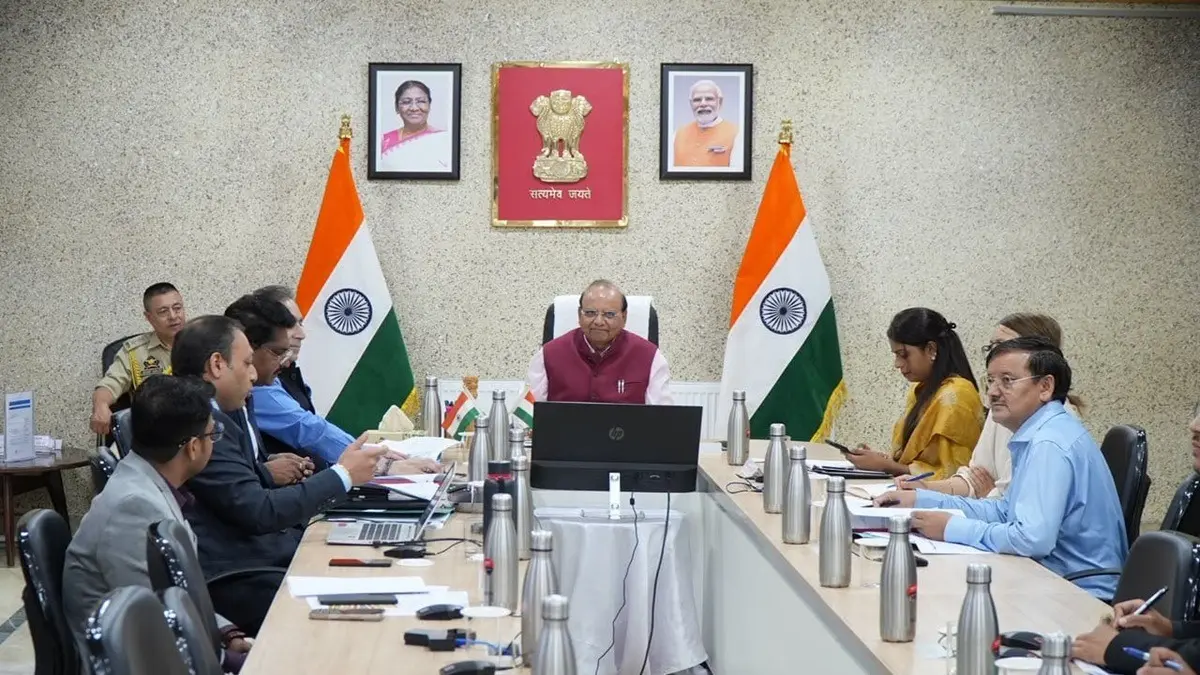
Srinagar: India’s first high‑altitude wildlife safari is set to launch in Ladakh, announced on Thursday by Lieutenant Governor Vinay Kumar Saxena, introducing guided jeep tours across snow leopard trails and birdwatching routes in sensitive mountain habitats.
The announcement was made during the inaugural governing body meeting of the Snow Leopard & High‑Altitude Nature (SHAN) Conservation Society.
Officials said the safari is aimed at curbing illegal off‑roading and reducing disturbance to wildlife, while offering visitors a structured way to experience Ladakh’s biodiversity.
Modelled on programs in Kaziranga and Ranthambore, the initiative will use specially designed open‑back jeeps operated by trained local drivers and guides.
Advertisement

Meanwhile, local communities are being placed at the centre of the plan as twenty youth will be trained in bird identification and tracking, equipped with binoculars, and supported by ten bird watching hides in key habitats.
Women artisans will be engaged to showcase crafts, while plastic‑free campaigns and installation of hundreds of color‑coded dustbins across villages will reinforce the eco‑friendly character of the project.
Advertisement
“If tourists come to see our wildlife, we should also benefit from protecting it,” said a young resident from Nubra, welcoming the plan as a chance for employment.
However, conservationists caution that regulation must be strict to prevent the safari from turning into mass tourism. Forest Department has been tasked with identifying routes through wildlife‑rich zones, ensuring safaris remain controlled. Portable dustbins, plastic‑free drives in 40 villages, and training programs for guides are part of the broader conservation package.
Pertinently, Ladakh is India’s largest snow leopard habitat, home to 477 of the country’s estimated 718, along with 38 mammalian species, 340 bird species and nearly 1,800 plant species. Protecting this biodiversity while creating livelihood opportunities is the twin goal of the safari.
“We have lived alongside snow leopards for generations. If this project helps us earn while keeping them safe, it is good for everyone,” said a villager from Sham valley.
“Safari is not just about showcasing Ladakh’s snow‑capped mountains and rare species; it is about redefining tourism in sensitive high‑altitude zones. By blending adventure with responsibility, and conservation with community empowerment, Ladakh’s high‑altitude wildlife safari is being positioned as a model for eco‑tourism across India,” an official said.
Get Current Updates on India News, Entertainment News, Cricket News along with Latest News and Web Stories from India and around the world.