
No Room for Coercion: EAM Jaishankar Veiled Attack on China at G20 FM's Meet
His address comes at a time when China is expanding its naval presence in the Indian Ocean.
- India News
- 3 min read


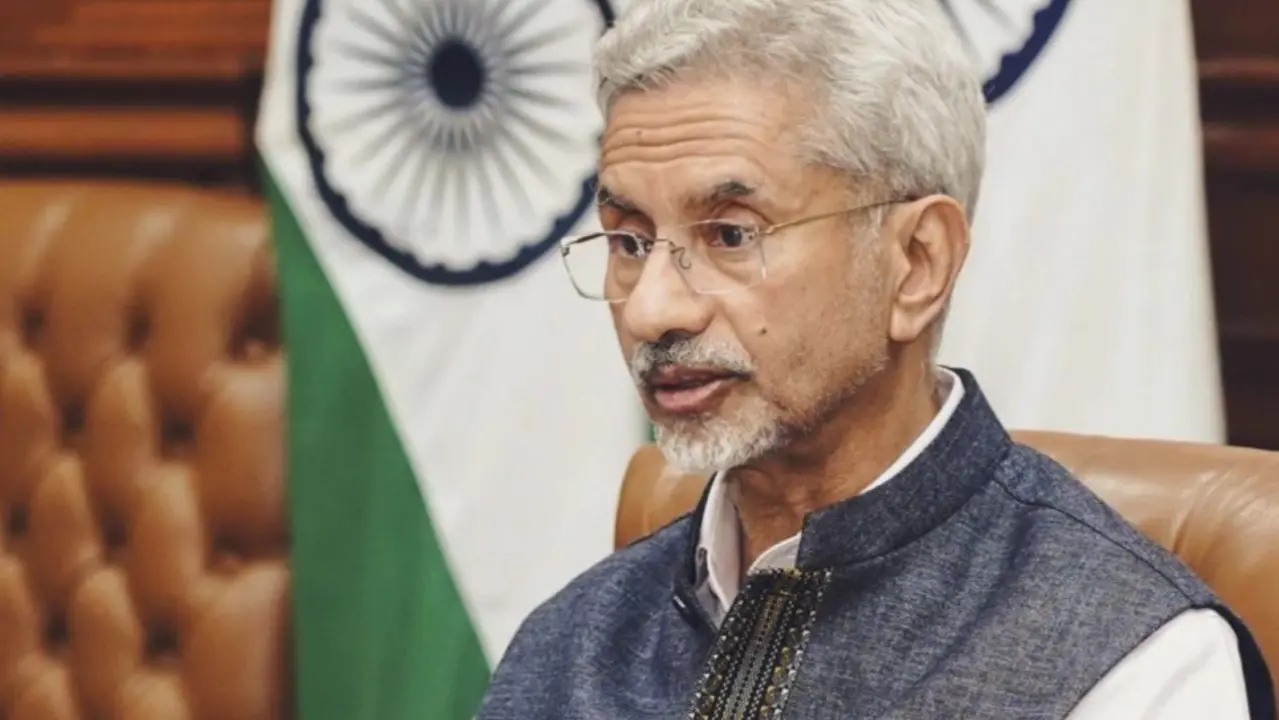
New Delhi: External Affairs Minister S. Jaishankar , speaking at the G20 Foreign Ministers’ Meeting in Johannesburg, took a strong stand on global governance, pushing for plurilateralism and asserting that the global agenda must not be dictated by a few. His remarks came against the backdrop of China’s expanding naval presence in the Indian Ocean, raising concerns in New Delhi. Days before his speech, China participated in Pakistan ’s AMAN-2025 naval drill alongside Indonesia, Italy, Japan, Malaysia, and the US, with observers from 32 nations. While Beijing insists its focus remains on maritime security and anti-piracy, its growing regional footprint has drawn scrutiny.
Call for Multilateral Reforms
Jaishankar underscored that multilateralism is deeply damaged, pointing to the frequent deadlocks in the United Nations and its Security Council. He argued that merely getting the UNSC functional again is not enough—its representation and working methods must evolve. He also made it clear that international cooperation must be less opaque and unilateral.
“As G20 members, we also must recognize that multilateralism itself lies deeply damaged. The UN and its Security Council is often grid-locked. Just getting it back to work is not enough; its working methods and representation must change,” said Jaishankar.
"More plurilateralism is required to plug global deficits. International cooperation itself must be less opaque or unilateral. And the global agenda cannot be narrowed down to the interests of a few," the external affairs minister added.
Advertisement
No Room for Coercion
On maritime security, Jaishankar strongly reaffirmed India’s stance that international law must be upheld. He referenced the United Nations Convention on the Law of the Sea (UNCLOS) of 1982 and insisted that agreements must be honoured.
"In the Indo-Pacific, it is important that international law – especially UNCLOS 1982 – is respected. Agreements entered into must be observed. And there must be no room for coercion, he said, in what appeared to be a direct message to China.
Advertisement
Despite tensions, India and China have taken steps to stabilise ties. Recent diplomatic discussions resulted in agreements to resume direct flights between New Delhi and Beijing, streamline visa processes, and restart the Kailash Mansarovar Yatra in 2025. Talks also included cooperation on trans-border river data sharing.
Tensions Along the LAC
However, concerns persist. While the disengagement process in Depsang and Demchok concluded last October, multiple media reports indicate that China continues to strengthen its military positions along the Line of Actual Control (LAC), from eastern Ladakh to Arunachal Pradesh . The issue was raised during Foreign Secretary Vikram Misri’s recent discussions with Chinese officials, where Beijing emphasised the need to manage differences and maintain stability.
Get Current Updates on India News, Entertainment News, Cricket News along with Latest News and Web Stories from India and around the world.