
Key IAF Witness Names Yasin Malik in 1990 J&K Air Force Attack Case
A crucial eyewitness and colleague of the victims testified in a TADA court on Friday in 1990 killing of four IAF officials in Jammu and Kashmir and said that he could personally recognise Yasin Malik among the attackers.
- India News
- 2 min read

;'%3e%3cpath%20d='m8,15.99c4.41,0,7.99-3.58,7.99-7.99S12.41,0,8,0,0,3.59,0,8s3.58,7.99,7.99,7.99Z'%20style='stroke:%23fff;%20stroke-miterlimit:10;%20stroke-width:.02px;'/%3e%3cpath%20d='m3.08,3.37l3.82,5.11-3.84,4.15h.87l3.37-3.64,2.72,3.64h2.94l-4.04-5.39,3.58-3.87h-.86l-3.1,3.35-2.5-3.35h-2.94Zm1.27.64h1.35l5.97,7.99h-1.35l-5.97-7.99Z'%20style='fill:%23fff;'/%3e%3c/g%3e%3c/svg%3e)


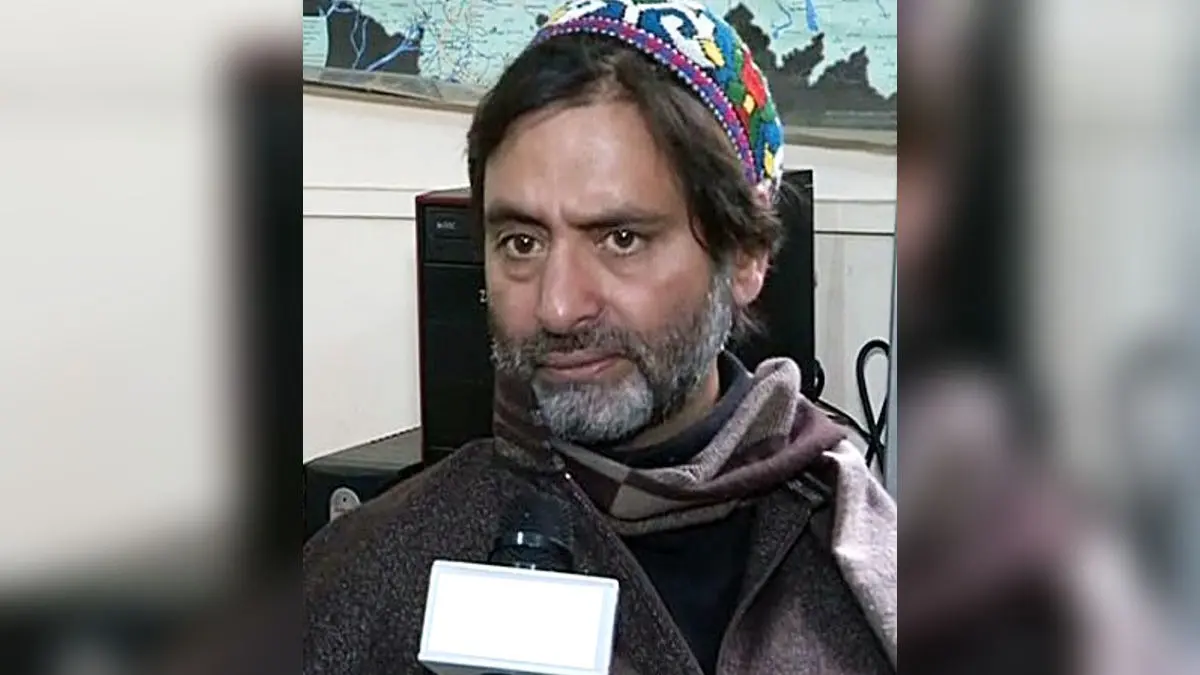
New Delhi: In a major development in the long-pending case over the killing of four Indian Air Force officials in Srinagar in 1990, a crucial eyewitness testified against accused Yasin Malik, who is currently lodged in jail, in the Terrorist and Disruptive Activities (Prevention) Act (TADA) court on Friday. The witness, an Air Force personnel and colleague of those killed in the 1990 incident, said that he could personally recognise Malik among all the accused involved in the attack.
In 2022, Malik was sentenced to life imprisonment after pleading guilty under the Unlawful Activities (Prevention) Act (UAPA). The trial court ruled that the case did not meet the Supreme Court's "rarest of rare" threshold for capital punishment. Malik's claim of leading a non-violent, Gandhian-style movement was also rejected.
The NIA's case, filed in 2017, accused Malik and others of conspiring with Pakistan-based terrorist groups to create a situation of unrest in Jammu and Kashmir. In March 2022, charges were framed against Malik and several co-accused, including Hafiz Muhammad Saeed, Shabbir Ahmad Shah, Hizbul Mujahideen chief Syed Salahuddin, Rashid Engineer, Zahoor Ahmad Shah Watali, Shahid-ul-Islam, Altaf Ahmad Shah (alias Fantoosh), Nayeem Khan and Farooq Ahmad Dar (alias Bitta Karate) in connection with the case.
Three individuals, Kamran Yusuf, Javed Ahmad Bhatt, and Syeda Aasiya Firdous Andrabi, were later discharged.
Advertisement
In a related development, a UAPA Tribunal led by Justice Neena Bansal Krishna of the Delhi High Court recently upheld the Union Home Ministry's decision to extend the ban on the Jammu and Kashmir Liberation Front (JKLF) for another five years. Originally imposed in 2019, the ban was renewed on March 15, 2024. The tribunal emphasised that "no tolerance" should be shown toward organisations that openly advocate secessionism.
The tribunal's findings challenged Malik's assertion that he abandoned armed resistance in 1994. Evidence presented included his alleged visits to terrorist camps in Pakistan-occupied Kashmir and his involvement in mobilising illegal funds for violent activities and protests in the Kashmir Valley.
Advertisement
The NIA's 2018 charge sheet also outlined a leadership hierarchy within the All Parties Hurriyat Conference (APHC), identifying SAS Geelani, Malik, and Mirwaiz Umar Farooq as key figures under the "Joint Resistance Leadership" banner.
(With inputs from agencies)
Get Current Updates on India News, Entertainment News, Cricket News along with Latest News and Web Stories from India and around the world.