
Lok Sabha Passes Tribunals Bill: Why Is the Government Replacing the 2021 Law?
The Lok Sabha has passed the Tribunals Reforms Bill 2026. Here’s what the new National Tribunals Commission means and how the Bill changes appointments, tenure and service rules.
- India News
- 4 min read

;'%3e%3cpath%20d='m8,15.99c4.41,0,7.99-3.58,7.99-7.99S12.41,0,8,0,0,3.59,0,8s3.58,7.99,7.99,7.99Z'%20style='stroke:%23fff;%20stroke-miterlimit:10;%20stroke-width:.02px;'/%3e%3cpath%20d='m3.08,3.37l3.82,5.11-3.84,4.15h.87l3.37-3.64,2.72,3.64h2.94l-4.04-5.39,3.58-3.87h-.86l-3.1,3.35-2.5-3.35h-2.94Zm1.27.64h1.35l5.97,7.99h-1.35l-5.97-7.99Z'%20style='fill:%23fff;'/%3e%3c/g%3e%3c/svg%3e)


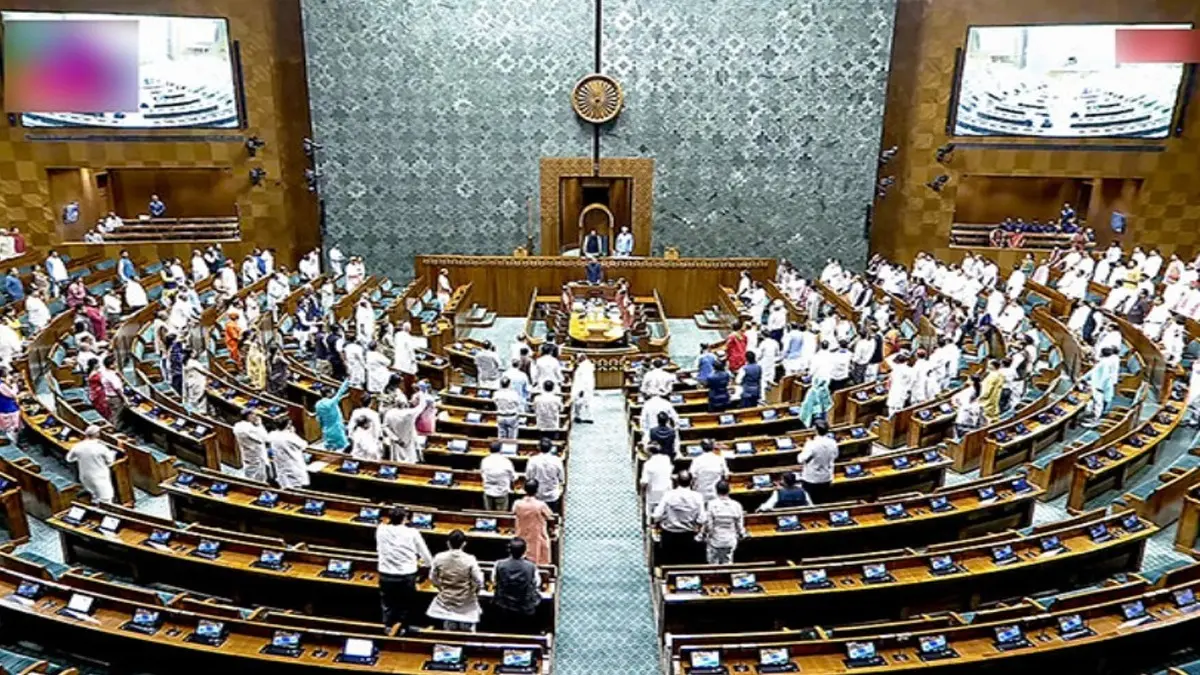
New Delhi: The Lok Sabha passed the Tribunals Reforms Bill, 2026, without debate on Monday, as opposition MPs continued to protest alleged police action against students at a July 20 demonstration in connection with the NEET paper leak.
Law Minister Arjun Ram Meghwal had introduced the Bill earlier in the day. As the opposition chanted slogans and requested the presence of Union Home Minister Amit Shah in the House, the measure was debated and passed amid the noise.
Several opposition MPs had also submitted notifications opposing the Bill during the introduction stage. However, because the proceedings were continuing amid sloganeering, they did not have the opportunity to intervene or undertake a full discussion on the proposed legislation.
What is the Tribunals Reforms Bill 2026?
The Bill proposes to revamp the country's tribunal architecture. Its primary goal is to provide uniformity in the qualifications, appointments, and service conditions of tribunal chairpersons and members.
Advertisement
One of its primary suggestions is to establish a National Tribunals Commission, which will act as an independent institutional structure for tribunal appointments and related topics.
The planned commission will be situated in New Delhi and comprise five members: a chairperson, two judicial members, and two technical members. A retired Supreme Court judge or a retired Chief Justice of a High Court will be able to lead the commission.
Advertisement
What will the National Tribunals Commission do?
The planned National Tribunals Commission is designed to create a unified institutional framework for tribunals, rather than dividing appointment and service-related matters across multiple tribunals. The commission will preside over the selection and appointment of tribunal chairpersons and members.
The administration has framed the framework as a means of improving efficiency, transparency, and consistency while also enhancing tribunal independence. The Bill also tries to set consistent criteria for qualifications and service conditions, replacing the fragmented approach that has seen individual tribunals function under separate laws.
Why has the government brought the Bill?
The proposed legislation is set against the backdrop of the Tribunals Reforms Act, 2021, which has attracted court review. The Supreme Court overturned some parts of the 2021 statute, ruling that they violated the principles of separation of powers and judicial independence, as well as previous decisions addressing tribunal member selection, tenure, and operation.
The court has also advocated for an independent National Tribunals Commission with professional experience, a transparent selection process, and an adequate institutional structure to manage tribunal appointments. The 2026 Bill intends to provide a broader institutional structure. Once enacted, it will repeal and replace the Tribunals Reforms Act of 2021.
The Act goes beyond the planned commission and includes provisions governing the eligibility, selection, and appointment of tribunal chairpersons and members. It also establishes a structure for their compensation, allowances, resignation, removal, and other employment terms.
The goal is to improve consistency in how tribunal members are recruited and regulated, while also giving clearer legislative restrictions on their tenure and working conditions.
Why was there no debate in Lok Sabha?
The Bill was enacted as opposition MPs protested alleged police action against students during the July 20 demonstration over the NEET paper leak incident. The opposition asked that Home Minister Amit Shah appear before the House and answer to the allegations.
The protests persisted as the Tribunals Reform Bill was debated. As a result, MPs who had sought to oppose the legislation during the introduction stage were unable to intervene, and the Bill was passed without the detailed floor debate that would normally accompany legislative consideration.
What could change if the Bill becomes law?
If passed, the Bill will replace the 2021 tribunal framework with a new system centred on the National Tribunals Commission. The commission would monitor tribunal appointments and serve as a single institutional vehicle for addressing concerns with tribunal member selection and service conditions.
The legislation also aims to improve transparency and consistency in qualifications, appointments, tenure, salary, resignation, and removal. At its core, the proposed law seeks to establish a more standard structure for tribunals while also addressing issues about transparency, institutional independence, and how tribunal selections are handled.
Get Current Updates on India News, Entertainment News, Cricket News along with Latest News and Web Stories from India and around the world.