
Nepal PM Balendra Shah Says India Border Disputes Will Be Resolved Via Dialogue
The Prime Minister's remarks follow a statement from New Delhi earlier this month, where India reiterated its openness to constructive interactions with Nepal across all bilateral matters, including mutually agreed outstanding boundary issues.
- India News
- 2 min read

;'%3e%3cpath%20d='m8,15.99c4.41,0,7.99-3.58,7.99-7.99S12.41,0,8,0,0,3.59,0,8s3.58,7.99,7.99,7.99Z'%20style='stroke:%23fff;%20stroke-miterlimit:10;%20stroke-width:.02px;'/%3e%3cpath%20d='m3.08,3.37l3.82,5.11-3.84,4.15h.87l3.37-3.64,2.72,3.64h2.94l-4.04-5.39,3.58-3.87h-.86l-3.1,3.35-2.5-3.35h-2.94Zm1.27.64h1.35l5.97,7.99h-1.35l-5.97-7.99Z'%20style='fill:%23fff;'/%3e%3c/g%3e%3c/svg%3e)


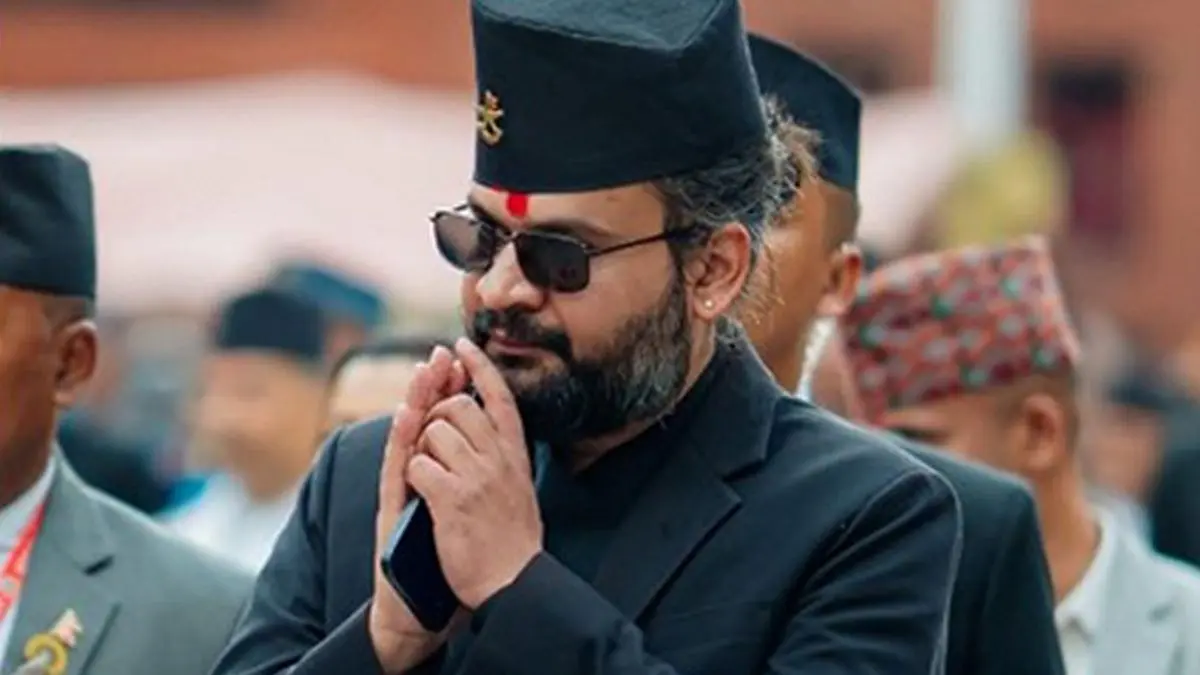
Nepal Prime Minister Balendra Shah addressed the country's Parliament on Sunday for the first time since winning the March elections, stating that outstanding border issues with India will be addressed strictly through diplomatic channels.
Speaking before lawmakers, Shah emphasized the necessity of bilateral negotiations, asserting that the boundary disputes would be resolved through "table talks and diplomatic efforts."
The Prime Minister's remarks follow a statement from New Delhi earlier this month, where India reiterated its openness to constructive interactions with Nepal across all bilateral matters, including mutually agreed outstanding boundary issues.
However, India has firmly drawn the line regarding recent territorial assertions made by Kathmandu. The friction resurfaced after the Foreign Ministry of Nepal raised objections concerning the annual Kailash Manasarovar Yatra route.
Advertisement
Responding to those claims, Indian Ministry of External Affairs (MEA) Official Spokesperson Randeep Jaiswal stated that New Delhi's stance has remained consistent and clear:
"Lipulekh Pass has been a long-standing route for the Kailash Manasarovar Yatra since 1954 and the Yatra through this route has been going on for decades. This is not a new development."
Advertisement
The Roots of the Dispute
The territorial disagreement involves the regions of Limpiyadhura, Lipulekh, and Kalapani. Jaiswal dismissed Nepal's map extensions, adding that such territorial claims are "neither justified nor based on historical facts and evidence," calling unilateral artificial enlargements of borders untenable.
This boundary friction traces back to 2020, when the previous Nepalese government led by KP Sharma Oli issued a revised political map incorporating these Indian-controlled territories. At the time, India rejected the move as a unilateral act that violated the bilateral understanding to settle border issues through mutual discussion.
While Prime Minister Shah’s debut parliamentary speech signals a desire to lower the temperature through formal diplomacy, New Delhi's position remains unchanged: boundary resolutions must be rooted in historical evidence rather than unilateral adjustments.
Get Current Updates on India News, Entertainment News, Cricket News along with Latest News and Web Stories from India and around the world.