
Updated 25 November 2025 at 14:42 IST
New Era of Dharma Begins As Saffron Flag Rises Over Ayodhya; PM Modi Calls It ‘Healing Of Centuries-Old Wounds’
Following the historic hoisting of the saffron 'Dharma Dhwaj' bearing the sacred symbols of Om, the Sun, and the Kovidara tree, PM Modi declared the ceremony a healing of centuries-old wounds and challenged the nation to eradicate the colonial "gulami mindset" to become unstoppable.
- India News
- 4 min read

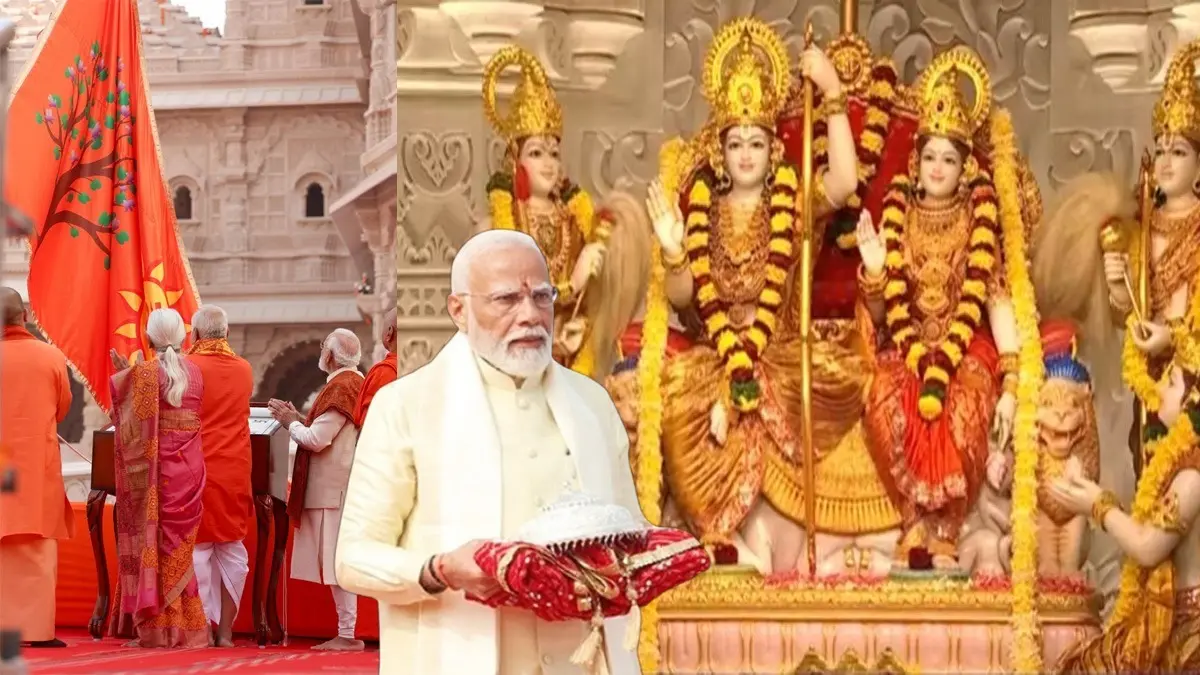
Ayodhya: Prime Minister Narendra Modi, along with Rashtriya Swayamsevak Sangh (RSS) chief Mohan Bhagwat, hoisted the sacred saffron “Dharma Dhwaja” atop the “Shikhar” of the Shri Ram Janmbhoomi Mandir on Tuesday, marking the completion of the temple’s structure and signalling the new era of cultural unity and national identity.
Addressing the gathering after the ceremony, PM Modi challenges the “Gulaami mindset”, stating that India would become “unstoppable” if the remnants of the colonial or “gulaami” mindset were eradicated.
Reflecting on the centuries-long struggle surrounding the Ram Janmbhoomi movement, he said, “The wounds of centuries are healing. The pain of centuries is finding respite today. The resolve of centuries is attaining fulfilment today. Today marks the culmination of that yajna, whose fire blazed for 500 years.”
He added that the Dharma Dhwaja represented the triumph of truth and righteousness. “The flag will inspire us to keep our word, even if it costs us our life. Pran jaaye par vachan na jaaye,” he said.
Advertisement
RSS Sarsanghchalak Mohan Bhagwat also called the Dhwajarohan a moment of “immense historical, emotional and spiritual significance", emphasising that the ceremony symbolised the realisation of centuries of collective aspiration and sacrifice.

Bhagwat noted that the sacred flag “Once flew high in Ayodhya during Treta Yug", describing the moment as the return of that symbol.
Advertisement
“It took time to build the temple. Even if you set aside the 500 years, it did take 30 years,” he said.
Uttar Pradesh Chief Minister Yogi Adityanath described the Ram Temple as a living testament to national pride and devotion. “This grand temple is the symbol of 140 crore Indians’ faith and self-respect. This saffron flag symbolises Dharma, integrity, truth, justice and Rashtra Dharma,” he said.
Before the ceremony, the leaders offered prayers at the Saptmandir, which features shrines dedicated to Maharshi Vashishtha, Maharshi Vishwamitra, Maharshi Agastya, Maharshi Valmiki, Devi Ahilya, Nishadraj Guha and Mata Shabari. They later visited the Sheshavtar Mandir inside the temple premises.
What Does ‘Dharma Dhwaja’ Symbolise?
The right-angled triangular saffron Dharma Dhwaj, measuring 10 feet in height and 20 feet in length and designed by Vaishnav saints, carries three sacred symbols Om, the Sun, and the Kovidara tree representing the core values of Ram Rajya: righteousness, courage, dignity, and collective welfare.
- ‘Om’ signifies eternal consciousness.
- The Sun represents Lord Ram’s Suryavanshi heritage and symbolises brilliance, leadership and strength.
- The Kovidara Tree, a hybrid of the Mandar and Parijat trees believed to be created by Rishi Kashyap, showcases ancient Indian mastery of plant hybridisation.
What is the importance of 'Dhwajarohan'?
The flag-hoisting marks the formal completion of the Ram Temple structure, an outcome reached after decades of socio-political struggle, including the Babri Masjid demolition and the long legal dispute resolved by the Supreme Court.
In 2019, a five-judge bench led by the then Chief Justice Ranjan Gogoi ruled unanimously in favour of the Hindu side, directing that the disputed land be transferred to a government-established trust. The 2003 ASI survey report played a crucial role in the verdict.
Significance of the Date
The ceremony coincided with the Abhijit Muhurat of Shri Ram and Maa Sita’s Vivah Panchami, enhancing its spiritual importance. The date also marked the martyrdom day of Guru Tegh Bahadur Ji, the ninth Sikh Guru, who meditated in Ayodhya for 48 hours in the 17th century.
Ram Lalla’s Historic Journey
- November 9, 2019: The Supreme Court awarded the 2.77-acre disputed site for the construction of the Ram Temple.
- February 5, 2020: The Shri Ram Janmabhoomi Teerth Kshetra Trust was formed to oversee the construction.
- August 5, 2020: Prime Minister Narendra Modi performed the Bhoomi Pujan (groundbreaking ceremony), marking the official start of the physical construction.
- January 22, 2024: The Pran Pratishtha (consecration ceremony) for the idols has taken place.
- November 25, 2025: Prime Minister Narendra Modi officially marks the completion of the temple by hoisting a saffron flag at the temple.
Get Current Updates on India News, Entertainment News, Cricket News along with Latest News and Web Stories from India and around the world.
Published By : Vanshika Punera
Published On: 25 November 2025 at 14:42 IST