
New PUC Rules 2026: BS-VI Cars Get 3-Year Certificate Validity; Older Vehicles Must Renew Every 6 Months
The Centre has revised PUC certificate validity periods for BS-I to BS-VI vehicles under new 2026 rules. Private BS-VI cars up to six years old get three-year validity, while older vehicles face more frequent emission tests. Check the new renewal schedule and rules.
- India News
- 3 min read


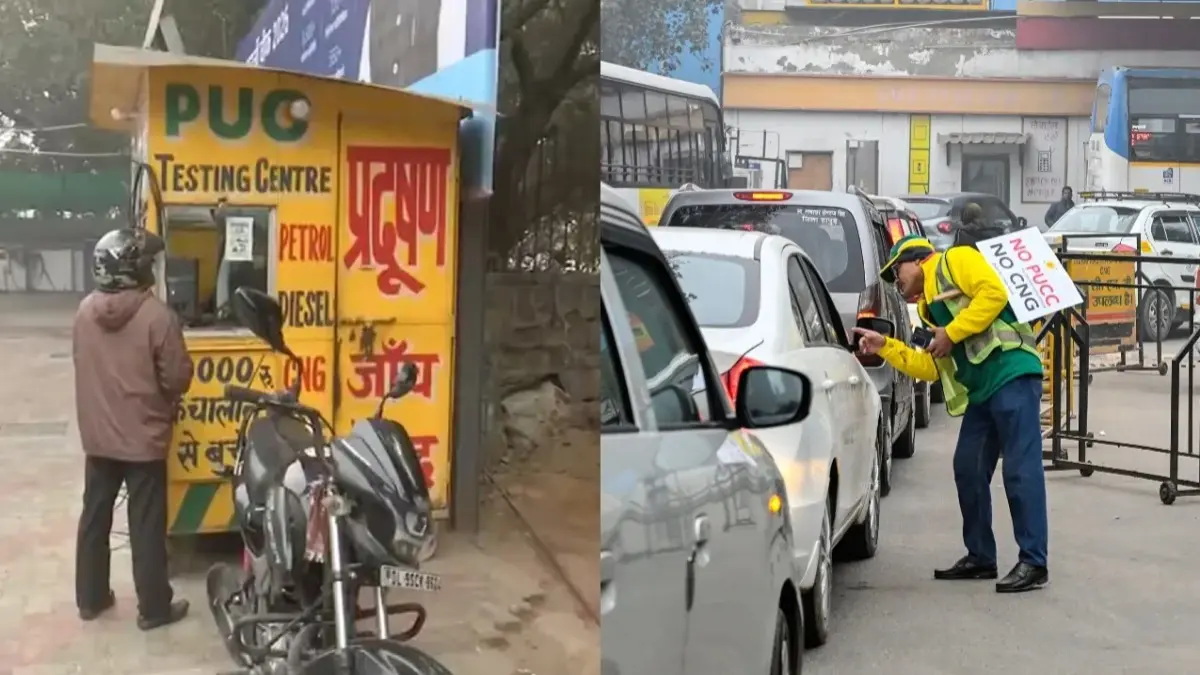
New Delhi: The Centre has revised the validity period of Pollution Under Control (PUC) certificates for vehicles across India, introducing longer renewal intervals for newer vehicles and more frequent emission checks for older ones.
Under the revised rules, private BS-VI vehicles aged up to six years will receive PUC certificates valid for three years, while vehicles older than 10 years will have to renew their certificates every six months.
The Ministry of Road Transport and Highways (MoRTH) notified the changes on November 13 through the Central Motor Vehicles (Sixteenth Amendment) Rules, 2026. The revised provisions amend Rule 115(7) of the Central Motor Vehicles Rules, 1989, and came into effect upon publication in the Official Gazette.
The Revised Validity Schedule is as Follows:
The validity of a new Pollution Under Control (PUC) certificate varies depending on the vehicle's emission standard, category, and age. For BS-I, BS-II, and BS-III vehicles, the certificate is valid for 3 months, while for BS-IV vehicles, the validity period is 6 months.
Advertisement
For BS-VI private vehicles, the certificate is valid for 3 years for vehicles up to 6 years old, 1 year for vehicles older than 6 years and up to 10 years, and 6 months for vehicles older than 10 years. Similarly, for BS-VI commercial vehicles, the certificate is valid for 2 years for vehicles up to 6 years old, 1 year for vehicles older than 6 years and up to 10 years, and 6 months for vehicles older than 10 years.
The vehicle's age will be calculated from the date of its first registration.
Advertisement
The revised rules also standardise PUC certificate validity for older emission categories across the country. Previously, BS-I, BS-II and BS-III vehicles generally had a six-month validity under central rules, although Delhi already required these vehicles to undergo emission testing every three months. The new provisions make the three-month validity mandatory across all states and Union Territories.
Similarly, BS-IV vehicles earlier had a 12-month validity under central rules, while certain states and areas within the National Capital Region followed a six-month renewal requirement. The revised framework now makes six months the standard validity period nationwide.
When Will the New Rules Apply?
The amendment also clarifies how the validity of renewed PUC certificates will be calculated. If a vehicle owner applies for renewal within the 10 days preceding the expiry of an existing certificate, the renewed certificate will take effect from the expiry date of the previous one.
However, if the existing certificate has already expired, the renewed certificate will become valid from the date of renewal.
Certificates issued before the amended rules came into force will continue to remain valid until their existing expiry dates. Vehicle owners will not have to obtain fresh certificates immediately. The revised validity schedule will apply when they renew their certificates for the first time after the new rules take effect.
For instance, a private BS-VI car that is four years old and currently has a PUC certificate valid for one year will become eligible for a three-year certificate at its next renewal. The Times of India +1
A PUC certificate is a mandatory document that verifies whether a vehicle's exhaust emissions comply with prescribed environmental standards. Vehicle owners are required to produce a valid certificate when asked by an authorised official. Its validity can also be checked digitally through the Parivahan PUCC portal.
Get Current Updates on India News, Entertainment News, Cricket News along with Latest News and Web Stories from India and around the world.