
'Nipah Virus Jumps From Bats To Humans': Expert Warns Of 91% Death Rate
IMA Cochin's ex-President Dr Rajeev Jayadevan warned that Nipah virus, which circulates freely among bats, can jump from bats to humans, causing severe brain infection or pneumonia. He added that early detection is crucial to prevent the spread of virus since it can spread from patient to patient.
- India News
- 4 min read

;'%3e%3cpath%20d='m8,15.99c4.41,0,7.99-3.58,7.99-7.99S12.41,0,8,0,0,3.59,0,8s3.58,7.99,7.99,7.99Z'%20style='stroke:%23fff;%20stroke-miterlimit:10;%20stroke-width:.02px;'/%3e%3cpath%20d='m3.08,3.37l3.82,5.11-3.84,4.15h.87l3.37-3.64,2.72,3.64h2.94l-4.04-5.39,3.58-3.87h-.86l-3.1,3.35-2.5-3.35h-2.94Zm1.27.64h1.35l5.97,7.99h-1.35l-5.97-7.99Z'%20style='fill:%23fff;'/%3e%3c/g%3e%3c/svg%3e)


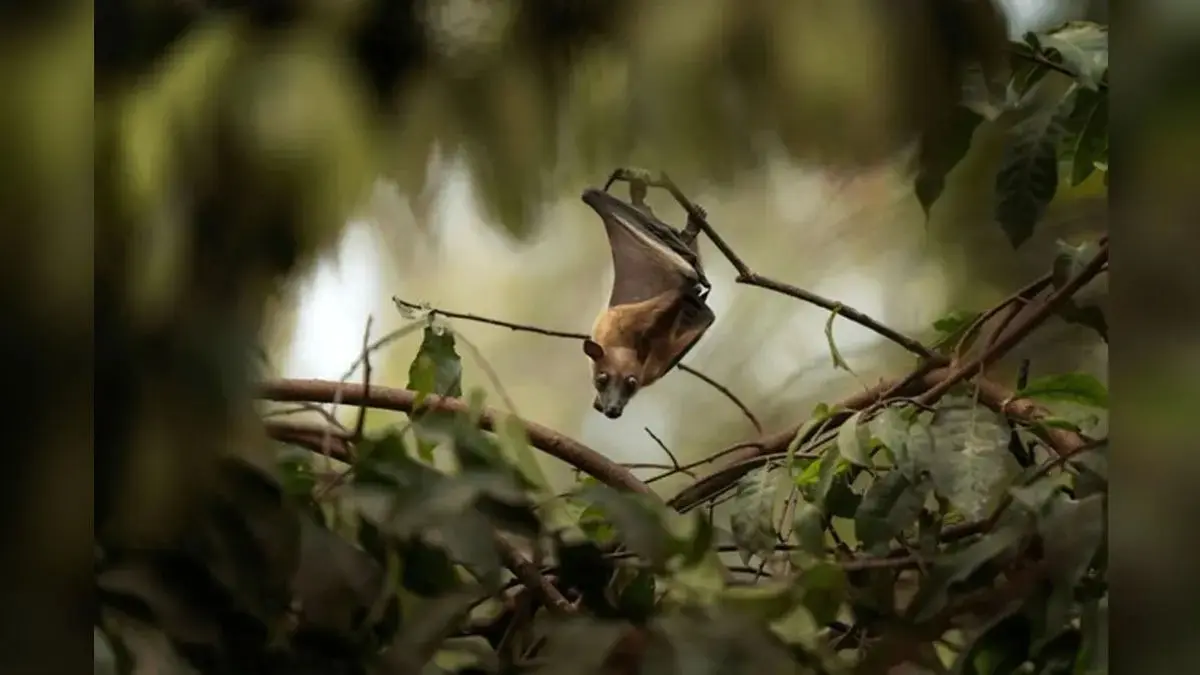
New Delhi: Dr Rajeev Jayadevan, Ex-President of IMA Cochin and Convener of the Research Cell, Kerala, on Monday warned that the Nipah virus spreads from bats to humans and can cause severe illness with a high death rate, stressing the importance of early detection to prevent further spread.
In a video message, Jayadevan said, “Nipah virus circulates freely among bats, and they don't seem to die from it. But when human beings come into contact with bats, either directly or indirectly, the virus may accidentally jump into man, the virus can cause a severe form of brain infection or pneumonia, both of which carry a very high fatality rate. The death rate from Nipah can range from 73 per cent to 91 per cent. The initial symptoms are fever, body ache, headache, but in people who develop brain infection after that, they may get seizures or epilepsy, confusion, paralysis or coma. The symptoms are similar to those of other types of brain infection caused by other viruses. Sometimes a diagnosis of Nipah can be missed because it is not specifically tested for. The problem with Nipah is that it can also spread from patient to patient. So it's extremely important to identify the first patient who develops the infection.”
He said early diagnosis, isolation, and contact tracing are crucial to prevent the spread of the Nipah virus, as it can pass from person to person through close contact and body fluids, including to healthcare workers and caregivers.
"Unfortunately, in many cases, the first patient is either very ill or may have died by the time the diagnosis is ascertained, which means this person may have passed on this virus to other people, and these other people if they develop symptoms like cough, vomiting or seizures and get admitted to a hospital, sometimes people who treat this person like nurses or doctors or other hospital staff may also get infected. Other caregivers at the patient's home who tend to the patient's body fluids can also get infected; it is extremely important, one, to make an early diagnosis. Two, to isolate a patient, and three, to treat the patient with standard precautions such as masks and gloves. Even more important is tracking the contacts of these patients, because the Nipah virus can jump from person to person and cause a potentially fatal infection, which is why contact tracing is of great value in limiting the size of the outbreak. Fortunately, unlike covid, Nipah does not have the ability to spread fast from person to person. Typically, it occurs through very close bodily contact or by handling the person's body fluids, or exposure to the person's body fluids," he said.
Advertisement
Jayadevan said there is no specific treatment or vaccine for the Nipah virus, making supportive care and contact tracing critical to prevent its spread, while noting that Nipah is a zoonotic disease that can jump from animals to humans.
"Unfortunately, the Nipah virus has no effective antiviral treatment or vaccine that is available. Therefore, the treatment measures are only supportive and are extremely important for limiting the size of the outbreak and preventing the virus from spreading far and wide to many people. This is why contact tracing is so valuable. Nipah is one of several viruses that may accidentally jump from animals to humans, and this category of disease is called a zoonosis. A common zoonosis that we are all familiar with is rabies. It commonly circulates in wild foxes that may come into contact with dogs while searching for food in the border areas of the jungle. These viruses circulate among stray dogs and can also jump onto pet cats and dogs, especially if they are not vaccinated," he said.
Advertisement
Get Current Updates on India News, Entertainment News, Cricket News along with Latest News and Web Stories from India and around the world.