
‘No One Is Above Constitution’: Justice Bhuyan’s Blunt Warning On Voting Rights Amid SIR Controversy
Justice Ujjal Bhuyan warns mass voter exclusion could create “second class citizens”, stressing that Article 326 and the right to vote cannot be undermined.
- India News
- 6 min read

;'%3e%3cpath%20d='m8,15.99c4.41,0,7.99-3.58,7.99-7.99S12.41,0,8,0,0,3.59,0,8s3.58,7.99,7.99,7.99Z'%20style='stroke:%23fff;%20stroke-miterlimit:10;%20stroke-width:.02px;'/%3e%3cpath%20d='m3.08,3.37l3.82,5.11-3.84,4.15h.87l3.37-3.64,2.72,3.64h2.94l-4.04-5.39,3.58-3.87h-.86l-3.1,3.35-2.5-3.35h-2.94Zm1.27.64h1.35l5.97,7.99h-1.35l-5.97-7.99Z'%20style='fill:%23fff;'/%3e%3c/g%3e%3c/svg%3e)


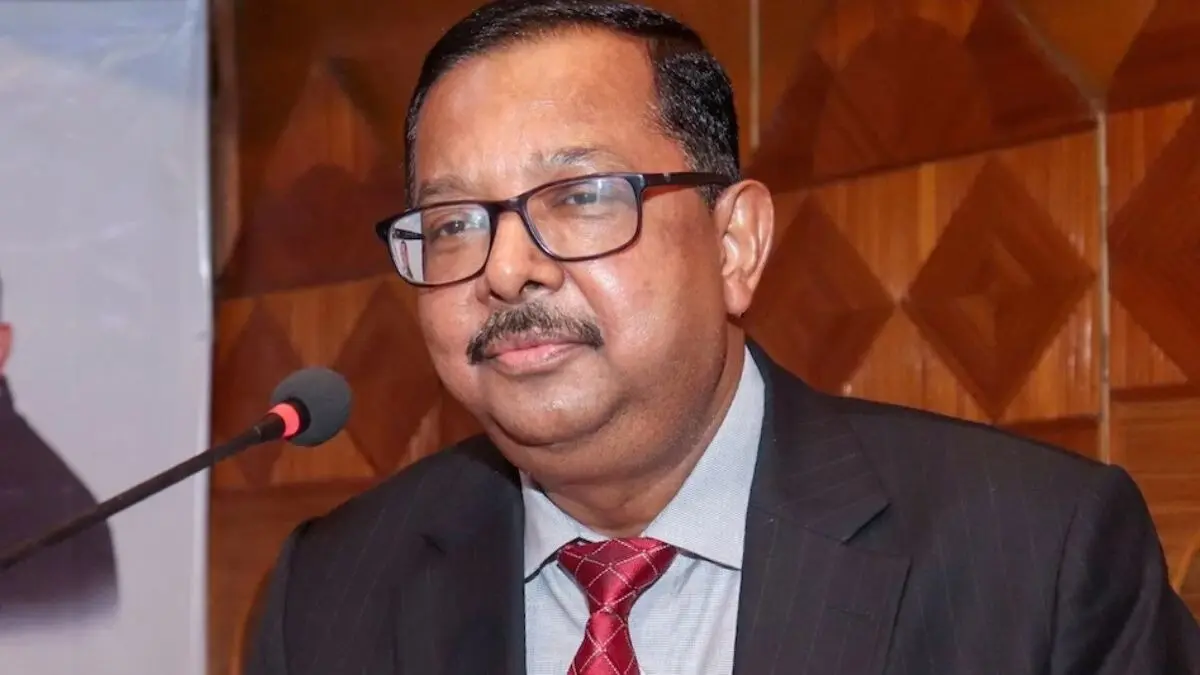
New Delhi: “No amount of whataboutery can justify it,” Supreme Court judge Justice Ujjal Bhuyan said on Sunday, warning against any exercise that could result in millions of Indian citizens being denied their right to vote. Such mass disenfranchisement would be “intrinsically arbitrary” and could turn eligible voters into “second class citizens in their own country”, he said.
Justice Bhuyan made the remarks while delivering the valedictory address at the 19th NALSAR-Justice BR Sawhney Memorial Moot Court Competition in Hyderabad. He said no administrative or legal justification could make such exclusion acceptable if it undermined the constitutional guarantee of adult suffrage.
He warned that an exercise leading to mass voter exclusion would strike at the heart of the Constitution and amount to “a negation of the constitutional order which we have adopted under the Constitution of India”.
The judge’s remarks come amid the ongoing controversy over the Election Commission’s Special Intensive Revision (SIR) of electoral rolls. The exercise has faced legal and political scrutiny over the deletion of voters’ names, the grounds on which verification notices are being issued and the large number of appeals filed by affected electors.
Advertisement
‘One man, one vote’ cannot create two classes of citizens
Justice Bhuyan stressed that the Constitution does not envisage one category of citizens who can vote and another that cannot. He said citizenship and the right to vote are closely connected, arguing that the franchise cannot simply be separated from a citizen’s place in a democratic society.
“Theoretically, citizenship and franchise are intertwined; one cannot be divorced from the other,” he said.
Advertisement
He pointed to the Constitution's promise of giving every adult citizen the right to vote, remembering how the Constituent Assembly decided to give each adult Indian an equal vote even though many were illiterate, poor, and the task was very difficult to organize.
Justice Bhuyan said the decision was made because he believed in ordinary public and wanted to help India become more equal, especially since the country has different groups based on caste and money.
He mentioned Articles 325 and 326 of the Constitution. Article 325 says that each constituency should have one main list of voters, and it stops people from being left out just because of their religion, race, caste, or gender. Article 326 says that elections for the Lok Sabha and state legislative assemblies are held based on adult voting rights, but there are some disqualifications that are allowed by the constitution.
He said the focus was on "every citizen of India." A person can be registered as a voter unless they are not allowed to vote because of reasons mentioned in Article 326.
Justice Bhuyan also mentioned BR Ambedkar's warning that India might face a "life of contradictions," where people would have equal rights in politics but still experience unequal conditions in society and economy. He explained that the idea of “one person, one vote, and each vote having equal value” shows the promise of equality in the Constitution.
A billionaire and a rickshaw puller, he said, both have votes that count the same. The same is true for a temple priest who has a good social position and someone who is made to work as a manual scavenger.
Lakhs excluded from rolls as courts examine SIR process
The issues raised by Justice Bhuyan come as courts look into how SIR affects voters in various states. In Delhi, people who have filed a petition have informed the Supreme Court that 47.56 lakh names were not included in the draft electoral list released on August 31. Another 33.13 lakh electors were sent notices because there was no proper mapping or some logical issues.
On September 22, a court panel led by Chief Justice of India Surya Kant asked the Election Commission to reply to petitions that questioned the process. Justice Joymalya Bagchi asked the poll panel to check if the notices were being made automatically, while the Chief Justice wanted to know what exactly is considered a "logical discrepancy."
The Election Commission said to the court that no voter will be removed unless the proper steps are followed. This problem has also caused a big pile of appeal cases in West Bengal. In September, the Election Commission informed the Supreme Court that out of the 27.16 lakh electors who were removed through adjudication, 22.21 lakh had filed appeals against their exclusion.
Another 16.10 lakh appeals questioned whether certain voters should be included, which brings the total number of appeals to 38.31 lakh. Over 37 lakh appeals were still not resolved, so the Commission suggested raising the number of appellate tribunals from 19 to 42. The Supreme Court will listen to the case on October 5.
Justice Bhuyan cites safeguards against voter deletion
Justice Bhuyan also talked about earlier decisions made by the Supreme Court regarding removing names from voter lists. He mentioned the 1995 court decision in Lal Babu Hussain Vs Electoral Registration Officer, and explained that, unless the person is deceased, a name that is already on the voter list cannot be taken off without first informing the person and giving them a chance to respond.
He also mentioned People’s Union for Civil Liberties v. Union of India and Anoop Baranwal v. The Union of India stated that the Supreme Court has acknowledged the importance of the right to vote in the constitution, even though it is not considered a fundamental right.
He said the franchise is very important for free and fair elections, and these elections are considered part of the Constitution's basic structure. Important point is that Justice Bhuyan mentioned that the limits set by the constitution on limiting the right to vote apply not just to laws made by the legislature, but also to actions taken by the administrative bodies.
“If this is true for a legislation, it is equally true, if not more, for any administrative exercise,” he said, cautioning against an irrational or unreasonable curtailment of the franchise. For Justice Bhuyan, removing a citizen’s voting right amounts to something far deeper than taking away a statutory entitlement.
“It will be like taking out the soul from the body,” he said, stressing that a citizen’s identity and voting right cannot be treated as entirely separate. He ended his address with a categorical warning on the limits of constitutional power, “Article 326 cannot be tinkered with at all, “No authority can do it; no court can condone it. No one is above the Constitution.”
Quoting constitutional lawyer Nani Palkhivala’s reminder that freedom cannot simply be inherited and must be defended by every generation, Justice Bhuyan asked: “And what is the worth of a citizen without her voting right.”
Get Current Updates on India News, Entertainment News, Cricket News along with Latest News and Web Stories from India and around the world.