
'Nobody Can Browbeat Judiciary': SC Pulls Up Rahul Gandhi for His Conduct During Anti-CEC Protest
The Supreme Court pulled up Rahul Gandhi over the INDIA bloc's October 12 march to its premises against CEC Gyanesh Kumar. The bench stressed that the judiciary cannot be browbeaten and sought an explanation over the protest, which was linked to opposition allegations of electoral roll irregularities.
- India News
- 3 min read

;'%3e%3cpath%20d='m8,15.99c4.41,0,7.99-3.58,7.99-7.99S12.41,0,8,0,0,3.59,0,8s3.58,7.99,7.99,7.99Z'%20style='stroke:%23fff;%20stroke-miterlimit:10;%20stroke-width:.02px;'/%3e%3cpath%20d='m3.08,3.37l3.82,5.11-3.84,4.15h.87l3.37-3.64,2.72,3.64h2.94l-4.04-5.39,3.58-3.87h-.86l-3.1,3.35-2.5-3.35h-2.94Zm1.27.64h1.35l5.97,7.99h-1.35l-5.97-7.99Z'%20style='fill:%23fff;'/%3e%3c/g%3e%3c/svg%3e)


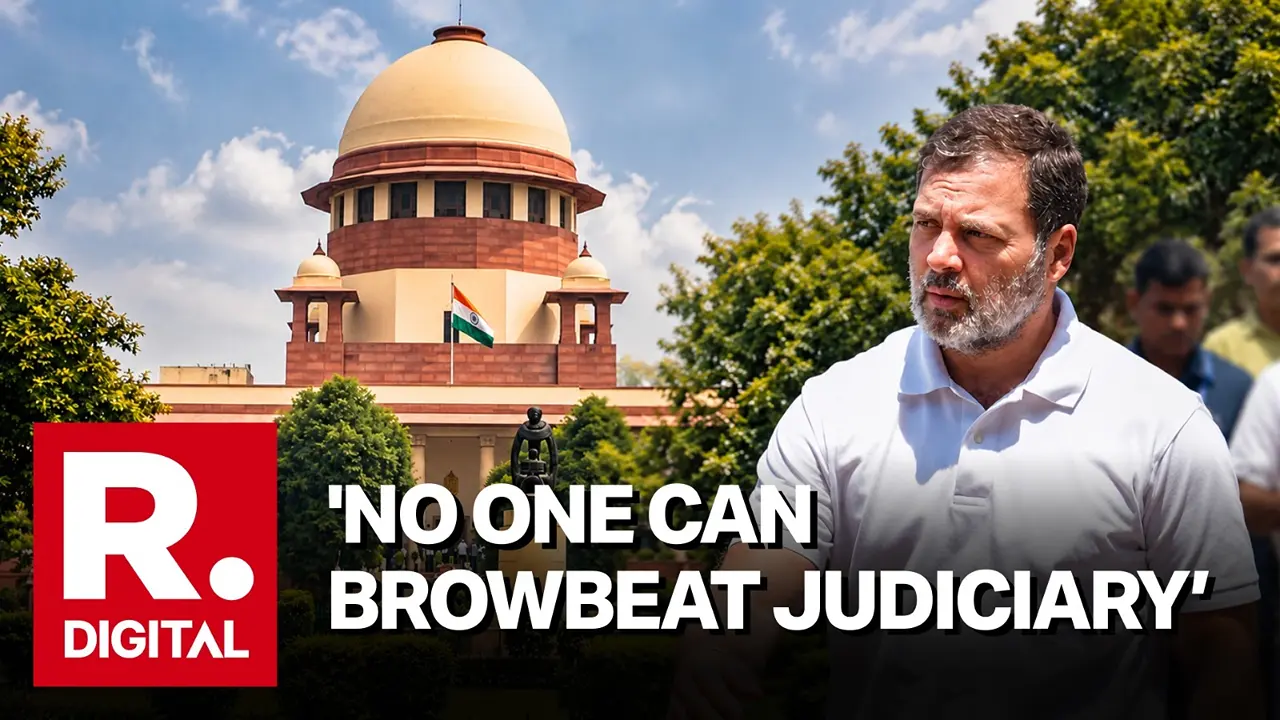
New Delhi: The Supreme Court on Thursday pulled up Congress leader Rahul Gandhi over his conduct during the INDIA bloc’s march to the apex court on October 12 to protest against Chief Election Commissioner Gyanesh Kumar, saying that the judiciary cannot be intimidated and that Gandhi must explain his actions.
The court’s observations came amid a hearing on petitions linked to the anti-CEC protests in Delhi and the opposition’s challenge to alleged irregularities in the Special Intensive Revision (SIR) of electoral rolls.
The INDIA bloc march, led by Gandhi and joined by several opposition leaders, was organised to press for action over alleged voter-list irregularities and demand accountability from the Election Commission. The opposition leaders had sought judicial intervention in the matter, including an independent audit of changes made to electoral rolls.
The Supreme Court expressed displeasure over the manner in which the protest was taken towards its premises, emphasising that the judiciary cannot be subjected to pressure through demonstrations or displays of political strength.
Advertisement
Chief Justice of India Surya Kant asked Gandhi to explain the intentions behind the march and the disorder that accompanied it. “Explain the intentions over the march and the disorder,” the CJI told the Congress leader, according to reports.
The court’s remarks underlined its concern over the entry of a large crowd into the court premises to submit the petition. The Supreme Court made it clear that the judicial institution cannot be browbeaten or pressured through political mobilisation.
Advertisement
Why Did Rahul Gandhi Lead The March?
On October 12, Gandhi joined INDIA bloc leaders and supporters in a march towards the Supreme Court amid the row over the Election Commission’s SIR exercise and demands for the removal of CEC Gyanesh Kumar.
The opposition has alleged irregularities in the revision of electoral rolls and sought judicial scrutiny of the process. Its petition sought an independent audit of voter deletions and modifications, along with greater transparency in the Election Commission’s records.
The march followed the opposition’s efforts to raise concerns over alleged voter deletions and the functioning of the Election Commission. The leaders sought intervention from the Supreme Court even as the court had earlier expressed reservations about political demonstrations being brought to its premises.
Chief Justice Surya Kant had previously said that democratic activities should take place at designated locations and that the Supreme Court should not be dragged into political controversies.
Supreme Court Hearing On Anti-CEC Protests
The October 15 hearing also comes against the backdrop of multiple petitions concerning the restrictions imposed in Delhi during the anti-CEC protests, including allegations of unlawful detentions and disruption of public movement.
The court is examining issues linked to the October 10 demonstrations, including restrictions affecting metro services, roads and the movement of lawyers and journalists.
The Delhi Metro Rail Corporation has submitted that restrictions were imposed on entry and exit at 45 of its 303 stations on October 10, while the remaining stations continued operating. It also tendered an unconditional apology to the Supreme Court over the restrictions.
The proceedings have brought the conduct of the protests, the authorities’ response and the opposition’s allegations against the Election Commission under judicial scrutiny.
The Supreme Court’s latest observations add another dimension to the political confrontation, with the court stressing the need to preserve judicial independence while dealing with petitions arising from the ongoing dispute over electoral rolls.
Get Current Updates on India News, Entertainment News, Cricket News along with Latest News and Web Stories from India and around the world.