
PDP Set To Table Controversial Land Rights Bill In J&K upcoming Assembly Session
The People's Democratic Party (PDP) plans to table the Jammu and Kashmir Land Rights and Regularisation Bill, 2025, during the legislative assembly's autumn session starting on October 23.
- India News
- 4 min read

;'%3e%3cpath%20d='m8,15.99c4.41,0,7.99-3.58,7.99-7.99S12.41,0,8,0,0,3.59,0,8s3.58,7.99,7.99,7.99Z'%20style='stroke:%23fff;%20stroke-miterlimit:10;%20stroke-width:.02px;'/%3e%3cpath%20d='m3.08,3.37l3.82,5.11-3.84,4.15h.87l3.37-3.64,2.72,3.64h2.94l-4.04-5.39,3.58-3.87h-.86l-3.1,3.35-2.5-3.35h-2.94Zm1.27.64h1.35l5.97,7.99h-1.35l-5.97-7.99Z'%20style='fill:%23fff;'/%3e%3c/g%3e%3c/svg%3e)


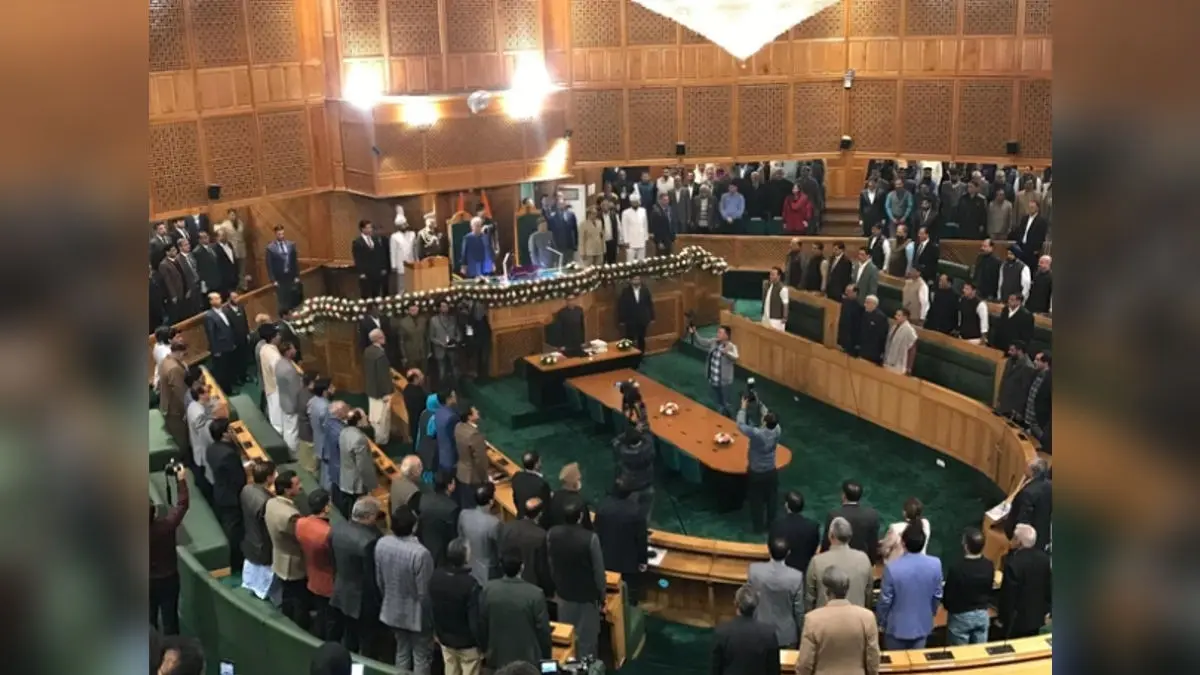
October 06: People's Democratic Party (PDP) is gearing up to table the Jammu and Kashmir Land Rights and Regularisation Bill, 2025, in the upcoming autumn session of the legislative assembly, a move that could reignite tensions over land ownership in the union territory.
The bill aims to vest ownership rights in long-term occupants of state land, echoing the now-defunct Roshni Act of 2001, and is expected to spark heated discussions on transparency, ecological safeguards, and the lingering fallout from the 2019 abrogation of Articles 370 and 35A.
The autumn session, summoned by Lieutenant Governor Manoj Sinha, is slated to commence on October 23 in Srinagar and is anticipated to last five to seven sittings. PDP sources indicate the party plans to push the legislation as a means to recognize legal ownership for occupants in continuous possession for at least 30 years, promote tourism-related development, protect ecologically sensitive areas, and ensure fair assessment of circle fees.
"This is about fairness and transparency in land transfers. Long-term occupants deserve rights, especially after the chaos unleashed post-2019," a senior PDP leader told Republic on condition of anonymity. The party's stance, as per its leaders, aligns with its long-held opposition to the abrogation of Article 370, which it has repeatedly called "illegal" and a blow to local rights.
Advertisement

Pertinently, PDP president Mehbooba Mufti has been vocal on the issue, warning in the past that the abrogation has put "our identity, our land, our jobs" at risk. PDP has consistently demanded the restoration of special status, arguing that the revocation stripped away protections against outsiders acquiring land and jobs, leading to what they term a dilution of Kashmiri identity.
National Conference (NC), PDP's political rival yet ally in opposing the abrogation, shares similar concerns on land rights. NC leaders have vowed to fight for the reinstatement of Articles 370 and 35A, viewing them as essential to safeguarding local land ownership and preventing demographic shifts.
Advertisement
Omar Abdullah, NC's vice president and sitting chief minister of Jammu and Kashmir, has repeatedly been public about the existential threats posed by the changes. In 2024, he stated that the people of Jammu and Kashmir face a "threat to our very existence because of the removal of Article 370”.
Following the Supreme Court's 2023 upholding of the abrogation, Abdullah quoted poet Faiz Ahmad Faiz, affirming, “The people of Jammu and Kashmir are not going to lose hope or give up. Our fight for honour and dignity will continue regardless,”. He has further criticized the abrogation for harming the bond between J&K and the rest of India, and described the post-2019 normalcy as "forced" rather than organic.
"The abrogation wasn't an act of God; it can be undone," Abdullah has stated in the past, emphasizing the party's manifesto commitment to restore pre-2019 status, including protections for land and resources. Both parties staged protests on the sixth anniversary of the abrogation in August, revealing ongoing discontent over land issues.
Analysts predict a fiery session, with the Bharatiya Janata Party (BJP) likely to counter the bill vigorously. BJP legislators, who hold significant sway in the Jammu region, have historically framed post-abrogation changes as progressive, pointing to increased investment and prosperity in the Valley.
Debates could escalate over the bill's similarities to the Roshni Act, enacted under an NC-led government in 2001 to grant ownership to occupants of state land while raising funds for hydropower projects. That scheme, however, faced severe criticism for enabling land grabs by politicians and their allies, leading to its declaration as unconstitutional by the J&K high court in 2020 and a subsequent CBI probe.
Critics labelled it a "land jihad" and India's biggest scam, with allegations of misuse involving over 20 lakh kanals of land. Since 2019, at least 34 outsiders have purchased land in J&K, fuelling anxieties about settler colonialism and demographic engineering.
Notable cases include disputes over domicile rules allowing non-locals to buy property, leading to protests and legal challenges. In one high-profile instance, tribal communities in the Pir Panjal range contested evictions from forest lands, claiming historical rights amid new central laws. As the autumn session approaches, all eyes are on whether the PDP's land rights bill will sail through or erupt into yet another flashpoint in Jammu and Kashmir's polarized politics.
Mehbooba Mufti, who has directed the push through her 3 MLAs, framed it as a step toward dignity for residents. Yet, a political analyst, speaking on condition of anonymity, warned that with the Supreme Court upholding the Article 370 abrogation in 2023, any move to revert land policies could face constitutional hurdles.
Get Current Updates on India News, Entertainment News, Cricket News along with Latest News and Web Stories from India and around the world.