
ISRO EOS-N1 Mission: PSLV-C62 Launch Encounters 'Anomaly' During End Of Third Stage
The PSLV-C62 mission encountered an anomaly during the end of its third stage, ISRO said on Monday, minutes after the launch.
- India News
- 3 min read

;'%3e%3cpath%20d='m8,15.99c4.41,0,7.99-3.58,7.99-7.99S12.41,0,8,0,0,3.59,0,8s3.58,7.99,7.99,7.99Z'%20style='stroke:%23fff;%20stroke-miterlimit:10;%20stroke-width:.02px;'/%3e%3cpath%20d='m3.08,3.37l3.82,5.11-3.84,4.15h.87l3.37-3.64,2.72,3.64h2.94l-4.04-5.39,3.58-3.87h-.86l-3.1,3.35-2.5-3.35h-2.94Zm1.27.64h1.35l5.97,7.99h-1.35l-5.97-7.99Z'%20style='fill:%23fff;'/%3e%3c/g%3e%3c/svg%3e)


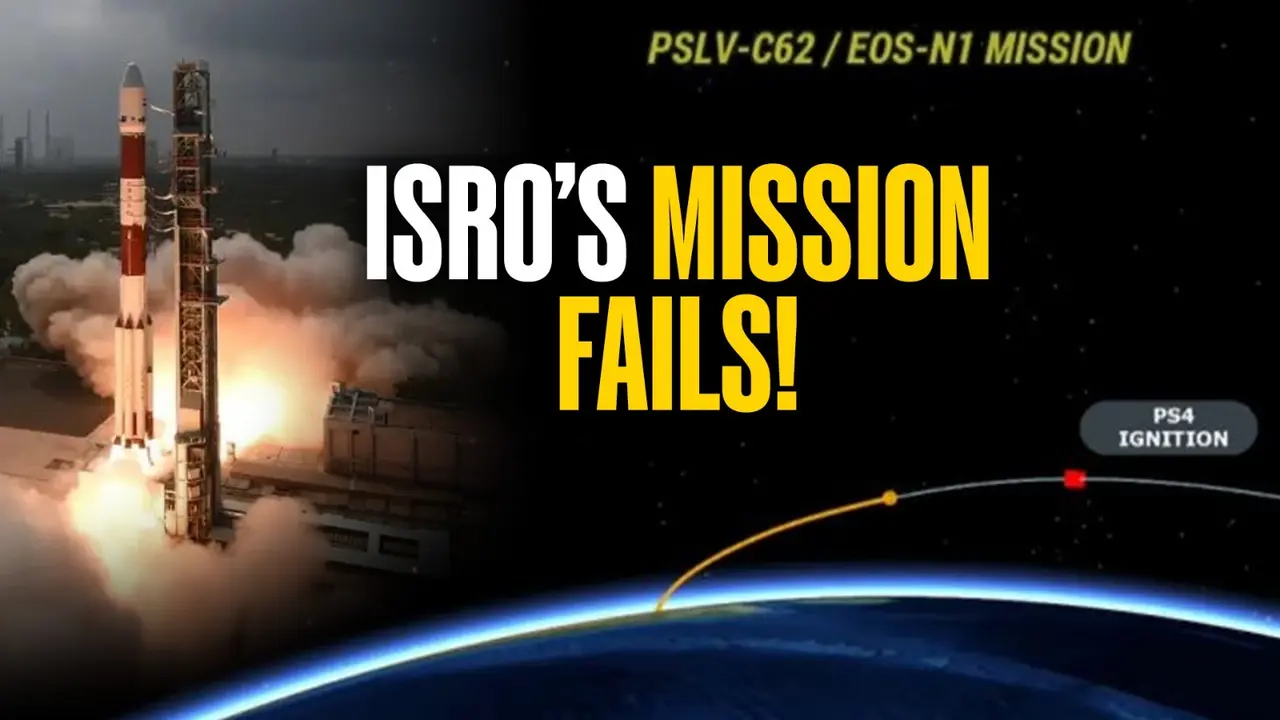
Sriharikita: Minutes after the Indian Space Research Organisation (ISRO) launched the Polar Satellite Launch Vehicle (PSLV) C62 from the Satish Dhawan Space Centre as part of its EOS-N1 mission, it encountered an anomaly during end of its third stage which has reportedly led to a deviation from its intended flight path.
A detailed analysis has been initiated, ISRO mentioned.
“Today, we attempted the PSLV-C62 EOS-N1 mission. The PSLV vehicle is a four-stage vehicle with two solid stages and two liquid stages. The performance of the vehicle up to the end of the third stage was as expected. Close to the end of the third stage, we observed slightly higher disturbance in the vehicle roll rates, and subsequently, a deviation in the flight path. We are analysing the data and will come back at the earliest,” ISRO Chairman Dr. V. Narayanan said sharing an update on the mission.
ISRO's highly-anticipated mission, the first launch this year, carrying the 'Anvesha'/EOS-N1 satellite and 15 other satellites into the sun-synchronous polar orbit (SSO), was launched on PSLV, one of India's most trusted launch systems. The mission was carried out by NewSpace India Limited and represents the ninth dedicated commercial mission to build and launch an Earth Observation satellite.
Advertisement
For the first time, a Hyderabad-based Indian private company, Dhruva Space, contributed seven satellites to the mission.
"We launched four satellites that we have built, three for customers and one for us, and we also help other companies with part of the integration of the satellite onto the rocket. Essentially, a total of nine of our systems, which we have built, are going onto the rocket. So, quite exciting that that's a good number," Chaitanya Dora Surapureddy, CFO and Co-founder of Dhruva Space, said.
Advertisement
"The satellites that we launched are all for low data rate communication. Amateur radio operators can utilise it towards that, and also a good demonstration for these satellites, and also for low data rate communication that can be done," Surapureddy added.
Some Lows For PSLV
Monday's mission marked the second recent unsuccessful launch for PSLV. Earlier on May 18, 2025, PSLV failed to place an Earth observation satellite into orbit as it developed a fault minutes after its launch.
During that mission, the PSLV-C61 achieved a liftoff at 5:59 AM, but experienced an anomaly in the 12th minute of flight. ISRO Chairman V. Narayanan had stated that a drop in the motor case's chamber pressure led to the failure.
Monday's mission was only the fourth failure in the history of the PSLV. Prior to 2025, the only failures occurred during its inaugural flight in 1993 and a 2017 mission involving a navigation satellite.
The PSLV has completed 63 missions so far, and had been instrumental in carrying landmark payloads like Chandrayaan-1, the Mars Orbiter Mission and Aditya-L1.
Get Current Updates on India News, Entertainment News, Cricket News along with Latest News and Web Stories from India and around the world.