
‘Represented India Abroad’: Ex-Envoy Navdeep Suri Having ‘Trouble Establishing Citizenship’ During Punjab SIR
In a series of posts on X, Navdeep Suri He said he visited a Booth Level Officer (BLO), submitted his voter ID and Aadhaar card, and was assured that everything was in order. However, he later received a message from a volunteer stating that some details did not match the 2003 SIR records.
- India News
- 3 min read

;'%3e%3cpath%20d='m8,15.99c4.41,0,7.99-3.58,7.99-7.99S12.41,0,8,0,0,3.59,0,8s3.58,7.99,7.99,7.99Z'%20style='stroke:%23fff;%20stroke-miterlimit:10;%20stroke-width:.02px;'/%3e%3cpath%20d='m3.08,3.37l3.82,5.11-3.84,4.15h.87l3.37-3.64,2.72,3.64h2.94l-4.04-5.39,3.58-3.87h-.86l-3.1,3.35-2.5-3.35h-2.94Zm1.27.64h1.35l5.97,7.99h-1.35l-5.97-7.99Z'%20style='fill:%23fff;'/%3e%3c/g%3e%3c/svg%3e)


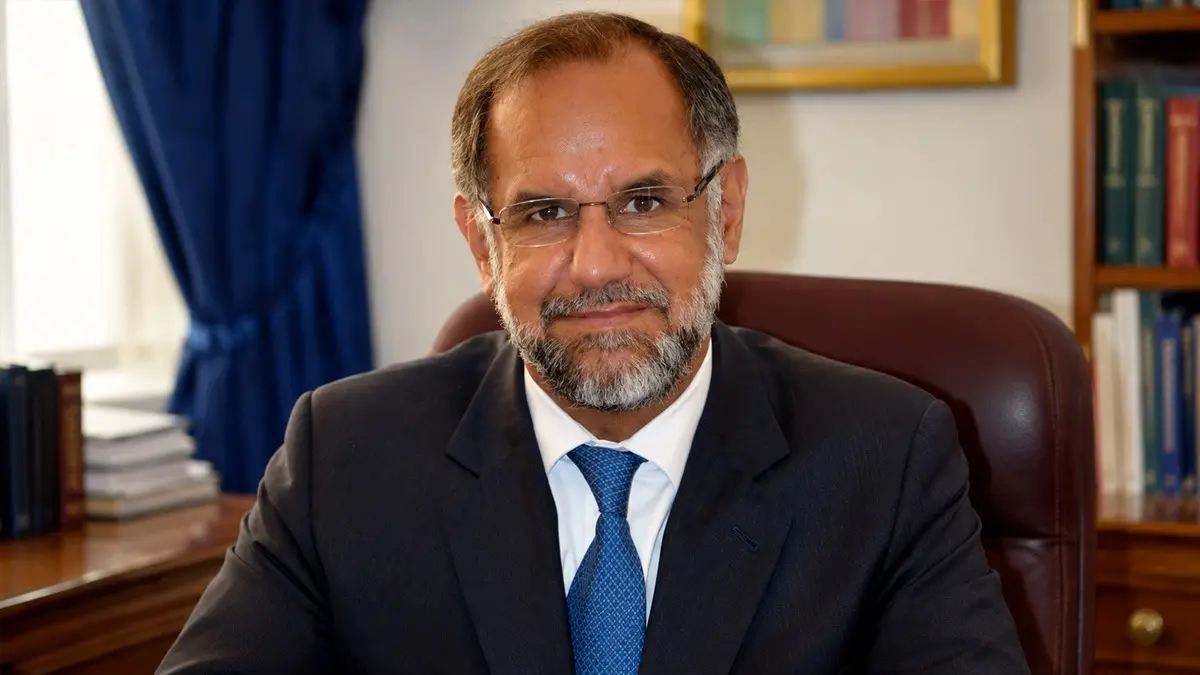
New Delhi: Former Indian diplomat Navdeep Suri, who has represented the country as ambassador to the UAE and Egypt and as high commissioner to Australia, has raised concerns over the Special Intensive Revision (SIR) of electoral rolls in Punjab after facing difficulties "establishing" his citizenship despite submitting standard identity documents.
In a series of posts on X, Suri described his experience with the ongoing voter list clean-up exercise. He said he visited a Booth Level Officer (BLO), submitted his voter ID and Aadhaar card, and was assured that everything was in order. However, he later received a message from a volunteer stating that some details did not match the 2003 SIR records.
When he contacted the BLO again, Suri was told to collect a notice and return with “unspecified documents” proving he is an Indian citizen. After explaining that he was not in India in 2003, officials asked for his passport as proof.
“I happen to have documents other than voter ID and Aadhaar card. But can’t help asking: If I have trouble establishing my citizenship after representing India in three countries, what’s the fate of the common citizen? Ease of Living, I presume!” Suri wrote, tagging the Election Commission of India.
Advertisement
The SIR process requires individuals whose names do not appear in the 2002 or 2003 electoral rolls to provide documentary evidence linking them to entries in those legacy lists. The Election Commission initially prescribed 11 acceptable documents (excluding Aadhaar). Following Supreme Court proceedings, Aadhaar was added to the list. The court has observed that while the ECI has powers to revise rolls, these must adhere to principles of transparency and natural justice.
Similar issues have previously arisen for other public figures, with discrepancies usually resolved after further scrutiny. The exercise, first conducted in Bihar in June 2025, led to the removal of over 60 lakh names (including deceased voters). In West Bengal, around 90 lakh names were deleted ahead of assembly elections.
Advertisement
Suri’s posts have drawn attention to the practical challenges ordinary citizens may face during the verification process.
Get Current Updates on India News, Entertainment News, Cricket News along with Latest News and Web Stories from India and around the world.