
Satyamev Jayate: How India Emerged Victorious Over Pakistan's Treachery In Kargil Conflict | A Timeline | Kargil Vijay Diwas
The Kargil War is regarded as one of the worst conflicts between neighboring nations, resulting in substantial casualties and damage on both sides.
- India News
- 3 min read

;'%3e%3cpath%20d='m8,15.99c4.41,0,7.99-3.58,7.99-7.99S12.41,0,8,0,0,3.59,0,8s3.58,7.99,7.99,7.99Z'%20style='stroke:%23fff;%20stroke-miterlimit:10;%20stroke-width:.02px;'/%3e%3cpath%20d='m3.08,3.37l3.82,5.11-3.84,4.15h.87l3.37-3.64,2.72,3.64h2.94l-4.04-5.39,3.58-3.87h-.86l-3.1,3.35-2.5-3.35h-2.94Zm1.27.64h1.35l5.97,7.99h-1.35l-5.97-7.99Z'%20style='fill:%23fff;'/%3e%3c/g%3e%3c/svg%3e)


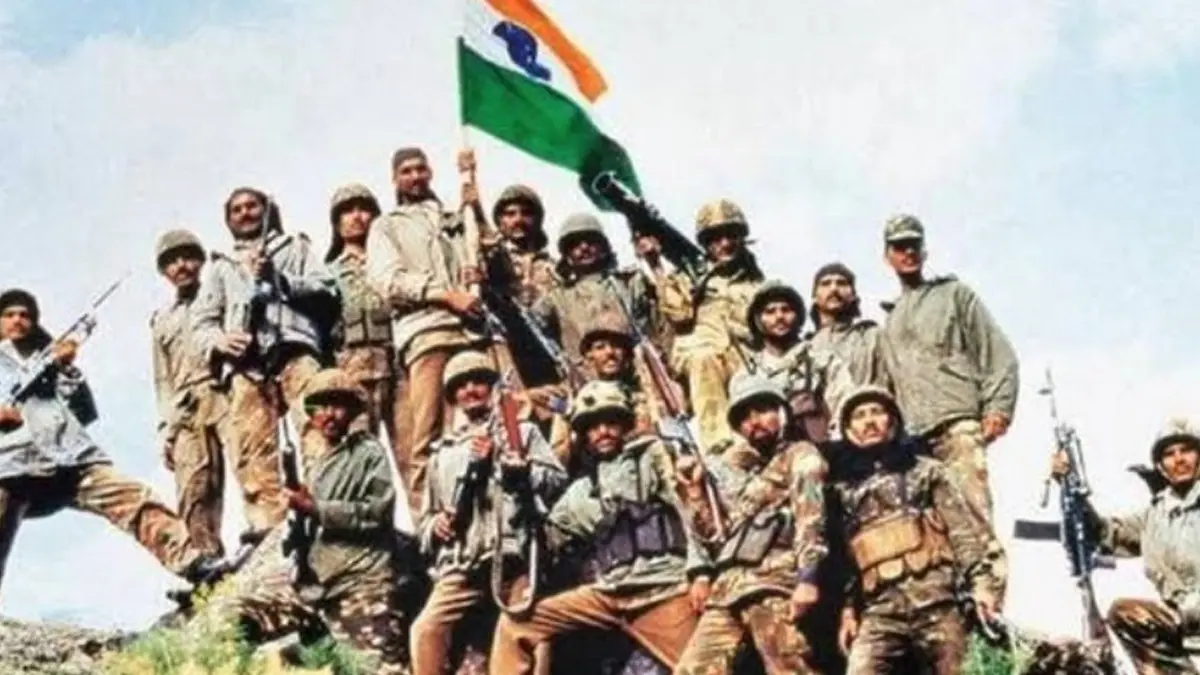
The Kargil Conflict: There is double celebration for India on the occasion of Kargil Vijay Diwas on Saturday as it comes after the recent success of Operation Sindoor against Pakistan. As India is celebrating the 26th Kargil Vijay Diwas, it is important to know how India triumphed Pakistan in the 1999 Kargil conflict.
The Kargil Conflict, also known as the Kargil War, began in May 1999 when Pakistani intruders crossed the Line of Control (LoC) and occupied Indian posts on towering ridges, aiming to capture National Highway 1A, the vital artery connecting Srinagar to Leh. Upon detecting the intruders, India launched Operation Vijay, a testament to the valor, indomitable spirit, and firm resolve of Indian forces to expel every intruder and restore control over all occupied posts.
The tri-services of the Indian Armed Forces fought for over 60 days in harsh conditions to ensure the success of Operation Vijay. The war concluded on July 26, 1999, marking a significant victory for India.
Here's a timeline of the events that led to the deadly clashes and massive destruction on both sides.
Advertisement
How It Started
May 3, 1999: Local residents reported unusual movements in the Batalik sector of the Kargil district to the Indian Army. An investigation was launched following this.
May 5-9, 1999: Indian patrols discovered that Pakistani soldiers and infiltrators had treacherously occupied key posts on the Indian side of the LoC, with the intent of capturing National Highway 1A.
Advertisement
How It Intensified
May 10-15, 1999: The Indian Army launched Operation Vijay to drive out the Pakistani intruders. This involved deploying additional forces, conducting aerial reconnaissance, and using artillery shelling to gather intelligence.
May 26, 1999: The Indian Air Force launched Operation Safed Sagar, deploying fighter jets and helicopters to conduct airstrikes against Pakistani positions.
The Real War
June 1999: Intense battles erupted across regions including Dras, Kaksar, Batalik, and Mushkoh. Indian soldiers displayed remarkable resilience, braving extreme weather to recapture Tololing, Point 5140, and Point 4875, restoring Indian control in these areas.
July 4, 1999: Indian forces recaptured the heavily fortified Tiger Hill, a significant milestone that gave them an edge over the Pakistani intruders.
International Intervention
June-July 1999: The international community urged India and Pakistan to de-escalate military tensions. Global leaders pressured Pakistan to withdraw its forces from the region.
July 4-5, 1999: Following heavy losses, Pakistani Prime Minister Nawaz Sharif met U.S. President Bill Clinton, who firmly demanded Pakistan's immediate withdrawal.
How It Ended
July 11, 1999: Pakistan announced a phased withdrawal of its forces.
July 14, 1999: Indian Prime Minister Atal Bihari Vajpayee declared the success of Operation Vijay, as India regained control over all posts occupied by Pakistani intruders.
Kargil Vijay Diwas
July 26, 1999: The war formally ended, with Kargil Vijay Diwas celebrated to honor the valor and sacrifices of the Indian Armed Forces. This day has been commemorated annually ever since.
What Happened After The Conflict
The Kargil War is regarded as one of the worst conflicts between neighboring nations, resulting in substantial casualties and damage on both sides. India-Pakistan relations deteriorated further after the war. Since then, India has enhanced its surveillance and military preparedness along its borders.
Get Current Updates on India News, Entertainment News, Cricket News along with Latest News and Web Stories from India and around the world.