
Supreme Court Scraps Tribunal Rulings Built On Fake AI-Generated Case Law, Demands ‘Zero Tolerance’ For Hallucinated Citations
The Supreme Court of India has cancelled two rulings after discovering that lower tribunals relied on fake AI-generated case references. The court warned of serious risks from AI misuse in the judiciary, compared it to a “poisonous gas leak,” and directed the Bar Council of India to draft strict rules for lawyers and judges.
- India News
- 4 min read

;'%3e%3cpath%20d='m8,15.99c4.41,0,7.99-3.58,7.99-7.99S12.41,0,8,0,0,3.59,0,8s3.58,7.99,7.99,7.99Z'%20style='stroke:%23fff;%20stroke-miterlimit:10;%20stroke-width:.02px;'/%3e%3cpath%20d='m3.08,3.37l3.82,5.11-3.84,4.15h.87l3.37-3.64,2.72,3.64h2.94l-4.04-5.39,3.58-3.87h-.86l-3.1,3.35-2.5-3.35h-2.94Zm1.27.64h1.35l5.97,7.99h-1.35l-5.97-7.99Z'%20style='fill:%23fff;'/%3e%3c/g%3e%3c/svg%3e)


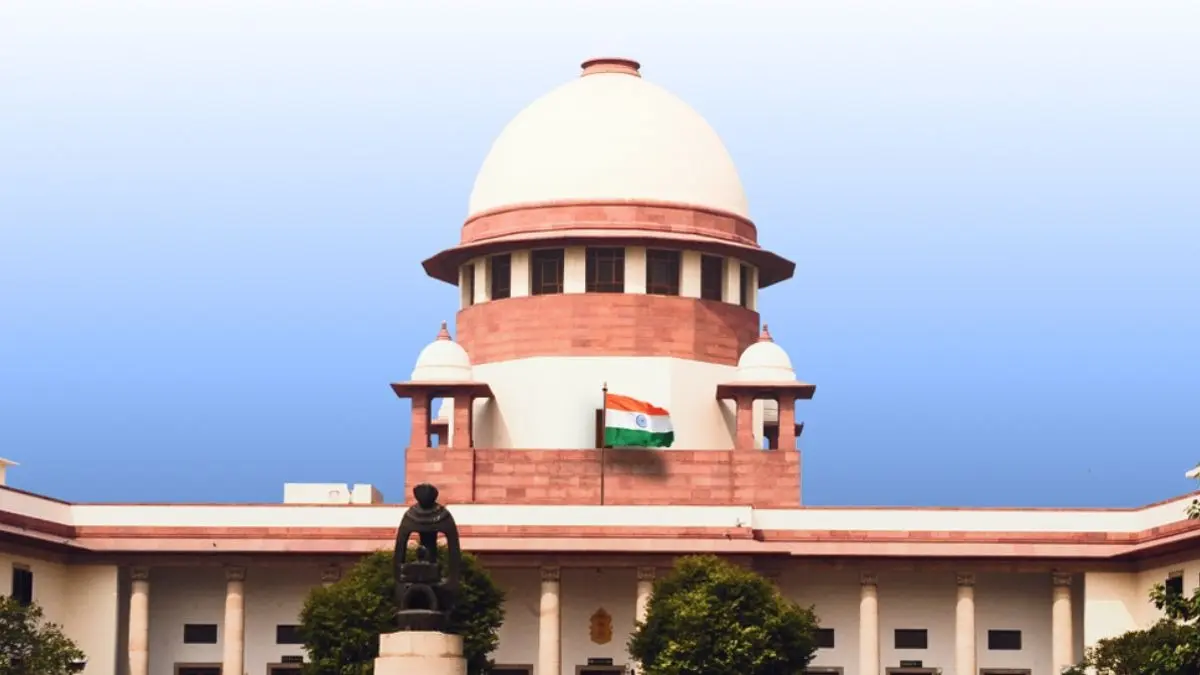
The Supreme Court has cancelled two rulings made by lower courts after finding out something troubling - the judges had used fake legal cases that were made up by artificial intelligence. These fake cases were treated as if they were real, past court decisions, even though they never actually happened.
What went wrong
The problem came from two bodies that handle company and bankruptcy matters - the National Company Law Tribunal (NCLT) and the National Company Law Appellate Tribunal (NCLAT). While making their decisions, they used old case references that sounded real but were completely fake. Some of these cases never existed at all. Others were real cases, but with extra lines added into them by AI that were never actually part of the original judgment.
Two Supreme Court judges, Justice P.S. Narasimha and Justice Alok Aradhe, looked into this and were very clear about it: if a court decision is based on something fake, then in the eyes of the law, that decision doesn't count as a real decision at all.
How the case started
This whole issue came out of a money dispute. Jammu and Kashmir Bank had gone to the NCLT saying that a company called Essel Infraprojects Ltd. owed it money and should be taken through bankruptcy proceedings. A director from that company, Pooja Ramesh Singh, disagreed with this and challenged it in court.
Advertisement
Her lawyer, senior advocate Madhavi Divan, told the court that many of the old case examples the NCLT had used to support its decision were not real, or had fake text mixed into them.
When the Supreme Court checked these cases themselves, they found the lawyer was right. Some cases simply didn't exist anywhere in the records. Others were real cases, but with fake paragraphs stuck in that were never actually written by any judge.
Advertisement
The bank says it wasn't their fault
Jammu and Kashmir Bank told the court that their own lawyers never gave the tribunal these fake cases. According to the bank, the tribunal must have found these fake cases on its own, maybe while doing its own research, possibly using AI tools without checking if the results were true.
A serious warning from the top court
The Supreme Court did not take this lightly. They compared the danger of fake AI-made court cases spreading through the legal system to a poisonous gas leak, something you can't see happening at first, but which causes huge damage once it's noticed. This is a strong comparison, and it shows how seriously the judges are treating this issue.
At the same time, the court said it is not against using AI to help with legal work. But it made one thing very clear — a human judge must always be the one in control of the final decision. AI can help, but it cannot replace human judgment in any court of law.
Rules for lawyers and judges
The court also laid down some strict expectations. If a lawyer brings a fake AI-made case to court without checking if it's real first, that counts as misconduct. And if a judge uses fake information like this to make a decision, that is also seen as a serious mistake on the judge's part.
The court went even further, saying that even if just a small bit of fake information is used in a decision, that is enough reason to cancel the whole decision. There is no small amount of fakeness that is considered acceptable.
What the Bar Council must now do
To stop this from happening again, the Supreme Court has asked the Bar Council of India to form a special group to study this problem. This group is expected to come up with clear rules for lawyers on how to handle AI tools properly, along with punishments for anyone who breaks these rules by presenting fake AI-generated cases in court.
What happens now
The original money dispute case has been sent back to the NCLT to be heard all over again, this time without using any of the fake AI-generated cases. The tribunal has been told to make a fresh decision within two weeks. The Supreme Court did not say anything about who is right or wrong in the actual money dispute, it only dealt with the problem of fake case references. Both sides have been told to keep things as they are until the new decision comes.
The bank's side of the case was handled by advocate Sumesh Dhawan, along with a legal team from Dua Associates led by advocate Sanjana Dua.
Get Current Updates on India News, Entertainment News, Cricket News along with Latest News and Web Stories from India and around the world.