
Supreme Court To Hold Rare Sunday Sitting On Delhi Transport Contempt Plea Amid CJP Protest
Supreme Court's special Sunday bench will hear contempt plea alleging officials disobeyed its October 9 order by shutting Metro stations and trains during CEC protests.
- India News
- 3 min read

;'%3e%3cpath%20d='m8,15.99c4.41,0,7.99-3.58,7.99-7.99S12.41,0,8,0,0,3.59,0,8s3.58,7.99,7.99,7.99Z'%20style='stroke:%23fff;%20stroke-miterlimit:10;%20stroke-width:.02px;'/%3e%3cpath%20d='m3.08,3.37l3.82,5.11-3.84,4.15h.87l3.37-3.64,2.72,3.64h2.94l-4.04-5.39,3.58-3.87h-.86l-3.1,3.35-2.5-3.35h-2.94Zm1.27.64h1.35l5.97,7.99h-1.35l-5.97-7.99Z'%20style='fill:%23fff;'/%3e%3c/g%3e%3c/svg%3e)


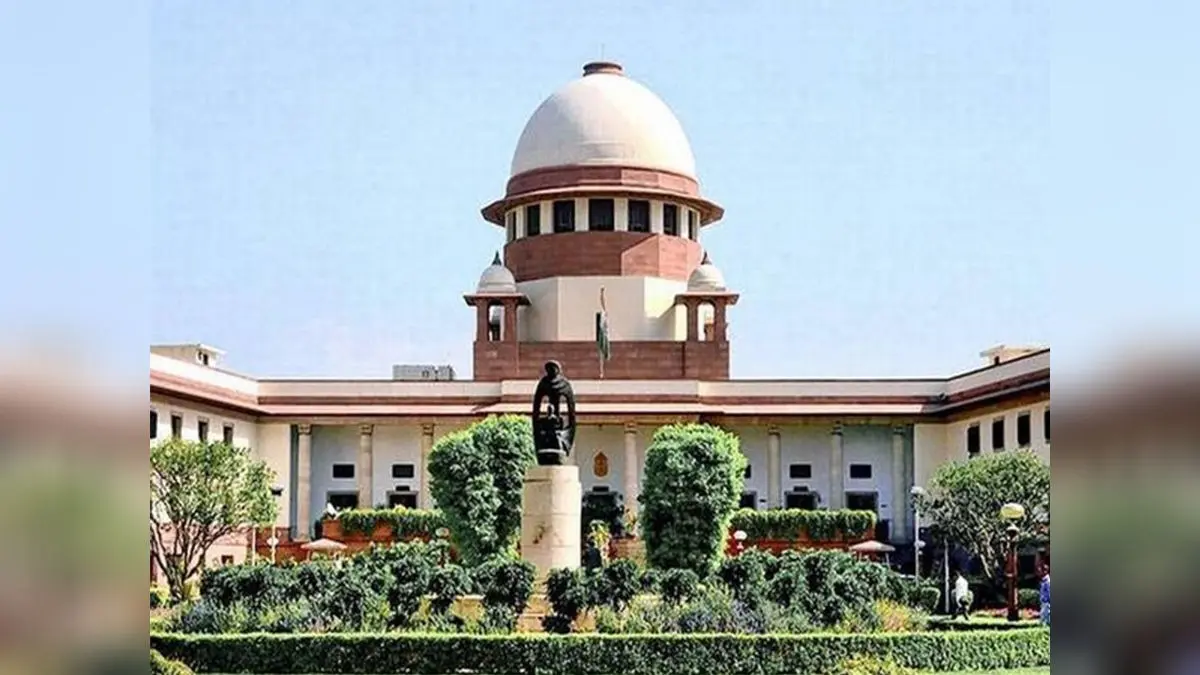
New Delhi: The Supreme Court is set to convene a special sitting on Sunday to examine a contempt petition alleging that central and New Delhi officials defied the Apex Court's earlier directive. In the petition, it has been alleged that by continuing to shut Delhi Metro stations and halt train services during the October 10 protests against Chief Election Commissioner (CEC) Gyanesh Kumar, the concerned agencies violated the directives.
The petition claimed that despite a clear order from the Top Court to keep public transport running in a regulated manner, commuters were left stranded as restrictions remained in force. The matter has been listed before a special bench of Justice Joymalya Bagchi and Justice V Mohana, who will take up both the contempt plea and a related habeas corpus petition.
The second petition, filed by senior advocate Menaka Guruswamy, concerned the detention of protesters during Saturday's protests in the national capital. Both matters will be heard together during the special weekend session.
Contempt Allegations Against Top Officials
The contempt petition has been filed by advocate Shailendra Mani Tripathi in the Supreme Court. It seeks initiation of contempt proceedings against Union Home Secretary Govind Mohan, Delhi Police Commissioner Anurag Kumar, and Delhi Metro Rail Corporation (DMRC) Chairperson D Thara for allegedly wilfully disobeying the court's October 9 directions.
Advertisement
According to the petitioner, the officials continued to impose sweeping restrictions on public transport even after the Supreme Court had directed that metro and railway services should not be completely suspended for the October 10 protests. The plea asserted that the prolonged closure of stations and cancellation of trains caused inconvenience to commuters and disrupted normal life in Delhi.
What The Court Directed On October 9
The present contempt plea revolves around the Supreme Court's October 9 order in MA Baby vs Union of India. The order dealt with restrictions on public transport imposed ahead of planned protests by the Cockroach Janta Party (CJP) and Opposition parties against the CEC.
Advertisement
During the hearing, the bench comprising Chief Justice of India (CJI) Surya Kant, Justice Joymalya Bagchi and Justice V Mohana examined communications issued by Delhi Police which had directed the closure of 57 metro stations and the restriction of mail and express trains arriving at New Delhi and Hazrat Nizamuddin railway stations.
However, the DMRC had later scaled down the closures to 45 metro stations. Questioning the move, the bench observed that the notifications appeared to be "overreaching" as they imposed a complete ban on essential public transportation.
The court clarified that there should be no outright prohibition on metro train movements. It said that the authorities could regulate metro and other railway services appropriately, taking into account security concerns and the principle of proportionality.
The bench also emphasised that transport arrangements should be publicised to prevent inconvenience to commuters. It directed the officials to issue traffic advisories and to consider suitable alternative locations equipped with basic amenities for peaceful protests. The special sitting on Sunday will now consider whether those directions were complied with, and the court's observations will determine the next steps in the proceedings.
Get Current Updates on India News, Entertainment News, Cricket News along with Latest News and Web Stories from India and around the world.