
Tea Powder, Leftover Biscuits, and 17 Years of Service: Jharkhand HC Slams Peon's Sacking as 'Injustice Brimming With Insensitivity'
The Jharkhand High Court has reinstated a peon dismissed after 17 years of service for allegedly taking leftover tea powder and biscuits, calling the punishment “injustice brimming with insensitivity.” The court ordered his return to duty with 50% back wages, slamming vague notices and violations of natural justice.
- India News
- 5 min read

;'%3e%3cpath%20d='m8,15.99c4.41,0,7.99-3.58,7.99-7.99S12.41,0,8,0,0,3.59,0,8s3.58,7.99,7.99,7.99Z'%20style='stroke:%23fff;%20stroke-miterlimit:10;%20stroke-width:.02px;'/%3e%3cpath%20d='m3.08,3.37l3.82,5.11-3.84,4.15h.87l3.37-3.64,2.72,3.64h2.94l-4.04-5.39,3.58-3.87h-.86l-3.1,3.35-2.5-3.35h-2.94Zm1.27.64h1.35l5.97,7.99h-1.35l-5.97-7.99Z'%20style='fill:%23fff;'/%3e%3c/g%3e%3c/svg%3e)


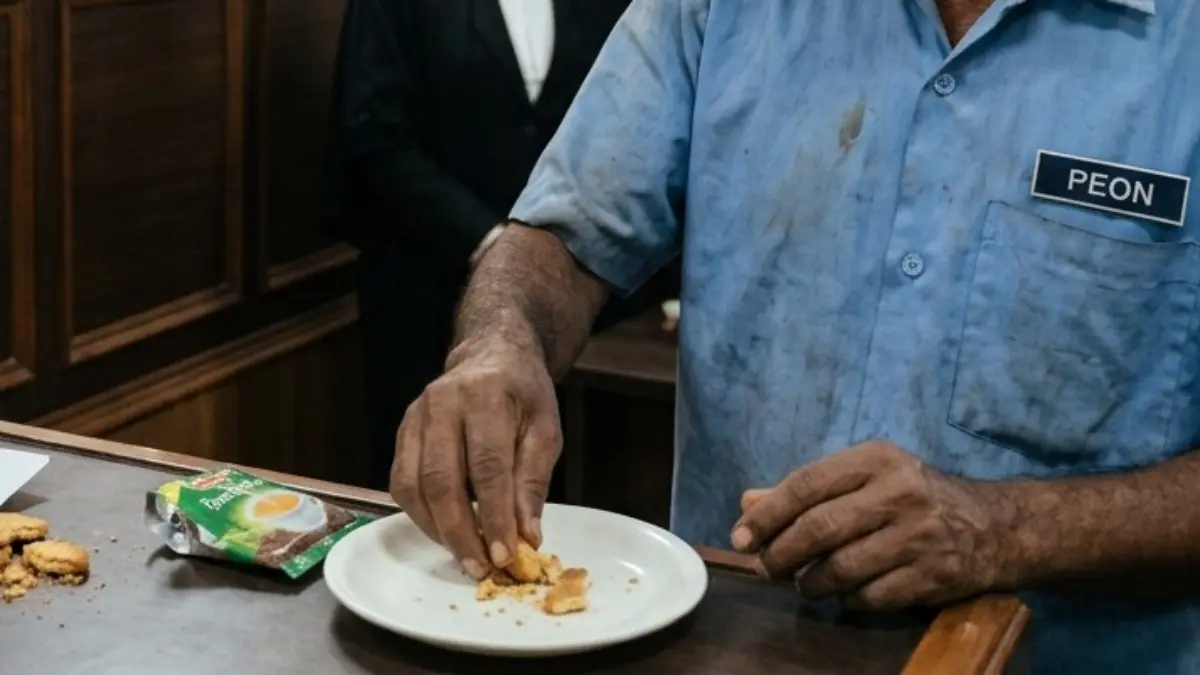
A man gave 17 years of his life to a government office. He lost his job over some tea powder and a few biscuits. Now, after a long court fight, he has finally won it back.
The Jharkhand High Court has ordered the District Rural Development Agency (DRDA) in Bokaro to take back Ranjeet Kumar Himanshu, a peon who was sacked in 2022. The court did not just call the punishment harsh. It called it "injustice brimming with insensitivity."
A Job Lost Over Nothing
Himanshu joined the DRDA as a contractual peon way back in 2005. For 17 years, he showed up, did his work, and stayed in the same low-paid job. Then, in March 2022, everything changed. He was handed a notice accusing him of taking "some material" from the office for his own use.
The notice never said what this "material" actually was. No name, no amount, nothing. Just a vague accusation hanging over a man who had spent almost two decades in service.
Advertisement
Himanshu gave his explanation. It wasn't accepted. By May 2022, he was terminated. Just like that, 17 years of work ended with one unclear notice and one unfair order.
What Was He Actually Accused Of?
It was only later, during the court hearing, that the truth came out. The "material" in question was leftover tea powder and a handful of biscuits lying around the office. That's it. And Himanshu had reportedly returned these items as soon as the notice reached him.
Advertisement
Think about that for a moment. A man's 17-year career, his only source of income for a family of six, was taken away over tea powder and biscuits.
"As Vague As Vagueness Can Be"
Himanshu first challenged his termination in court, but a single-judge bench dismissed his case in January this year. He did not give up. He took his fight to a larger bench.
This time, the outcome was different. A Division Bench of Chief Justice M.S. Sonak and Justice Rajesh Shankar looked closely at how the whole matter had been handled, and they were not impressed.
The judges described the original show-cause notice in one sharp line: "as vague as vagueness can be." They said a notice that doesn't clearly state what someone is accused of is really no notice at all. How can a man defend himself against a charge nobody bothered to explain?
The court was equally unhappy with the termination order itself. It simply said Himanshu's explanation was "not satisfactory," without giving a single reason why, and without any sign that his response had even been properly read.
The Human Side of the Story
What makes this case hard to forget is what Himanshu wrote in his own defence. He told the authorities he had served for 17 years, that he had a family of six depending on him, his wife, three daughters, and his younger sister, and that losing this job would leave them with nothing. He apologised for any mistake he may have made, unintentionally, and asked for forgiveness with folded hands.
The court said this was completely ignored by the authorities. Nobody weighed his years of service. Nobody considered what dismissal would do to his family. Nobody even looked at the appreciation certificates he had earned from previous senior officers over the years, praising his work.
"This Shocks the Conscience"
The bench made it clear it wasn't saying what Himanshu did was right. But it said dismissing a low-paid contractual worker after 17 years of loyal service, for what looked like a single small incident, "shocks the conscience."
In the court's own words: "This is certainly not justice tempered with mercy, but injustice brimming with insensitivity."
The judges pointed out there was no allegation that Himanshu had a habit of taking things from the office. This was, as far as the record showed, a one-time incident, blown completely out of proportion.
The Court's Order
The High Court has now ordered Himanshu's reinstatement by July 1. He will also receive 50 per cent of his back wages for the years he was kept out of work. The court said losing the other half of his wages was punishment enough, if there was even any wrongdoing to begin with.
The bench didn't stop there. It also raised concern over what it called "persistent administrative lethargy" when it comes to following court orders. To make sure this doesn't happen again, it directed the Deputy Commissioner and Deputy Development Commissioner of Bokaro to personally ensure the order is carried out, and asked the Deputy Commissioner to file compliance affidavits confirming that Himanshu has been reinstated and paid.
A Small Case With a Big Message
At the heart of it, this is a story about how easily a life can be turned upside down over something small, and how long it can take for fairness to catch up. Seventeen years of service, reduced to a notice that named nothing, and a job lost over tea powder and biscuits.
Ranjeet Kumar Himanshu fought back. And in the end, the court reminded everyone of something simple: punishment must fit the wrong, and sometimes, the most powerless people deserve the most careful justice.
Get Current Updates on India News, Entertainment News, Cricket News along with Latest News and Web Stories from India and around the world.