
The FCRA Files: Republic Investigation Exposes Foreign Funding Network Behind Conversion Racket; ED Probe Points to Multi-State Money Trail
Republic's investigation alleges a foreign funding network linked to TTI used US debit cards to bypass FCRA rules, with agencies probing ₹92 crore transactions and alleged illegal conversions.
- India News
- 5 min read

;'%3e%3cpath%20d='m8,15.99c4.41,0,7.99-3.58,7.99-7.99S12.41,0,8,0,0,3.59,0,8s3.58,7.99,7.99,7.99Z'%20style='stroke:%23fff;%20stroke-miterlimit:10;%20stroke-width:.02px;'/%3e%3cpath%20d='m3.08,3.37l3.82,5.11-3.84,4.15h.87l3.37-3.64,2.72,3.64h2.94l-4.04-5.39,3.58-3.87h-.86l-3.1,3.35-2.5-3.35h-2.94Zm1.27.64h1.35l5.97,7.99h-1.35l-5.97-7.99Z'%20style='fill:%23fff;'/%3e%3c/g%3e%3c/svg%3e)


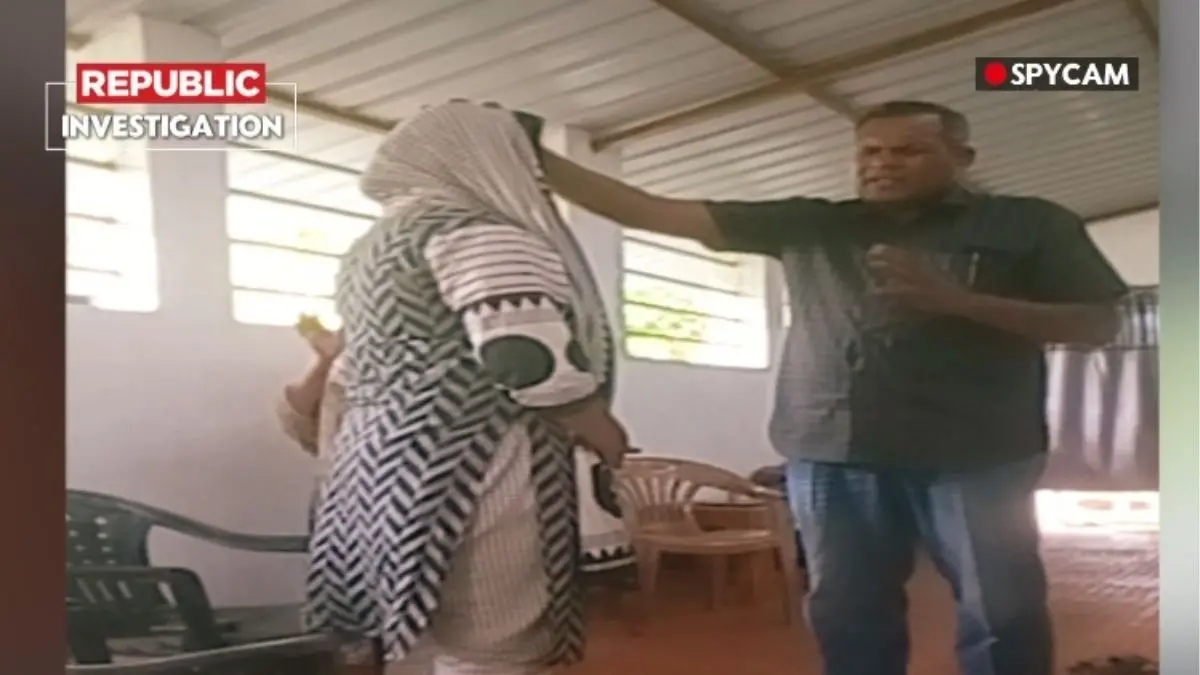
New Delhi: A deep-dive investigative series by Republic Media Network has blown the lid off a sophisticated, pan-India financial web designed to circumvent the Foreign Contribution Regulatory Act (FCRA). The network allegedly pumps millions into the country to carry out forced religious conversions, fund protests, and fuel Left-Wing Extremism (LWE) in Naxal-affected areas.
At the absolute center of this unfolding national security probe is a United States-based church body known as The Timothy Initiative (TTI). TTI operates under tax-exempt status in the U.S. and actively champions an aggressive "church planting" strategy targeting unreached populations globally.
The Modus Operandi: America to Naxal Belts Via ATM Withdrawals
As regulatory crackdowns by the Indian government lead to the cancellation of numerous FCRA licenses of shadowy NGOs every year, foreign deep-state actors and evangelical entities have evolved their tactics.
The Enforcement Directorate (ED) and Bengaluru Police uncovered a criminal system utilizing international banking channels. Instead of direct wire transfers, which trigger immediate regulatory flags under the tightened FCRA regime, operatives are using foreign debit cards issued by Truist Bank, one of the top 10 banking institutions in the United States.
Advertisement
The Suspected TTI Funding Loop
Foreign Origin: US-based evangelical organization The Timothy Initiative (TTI) allegedly issues American debit cards (linked to US bank accounts) to bypass India's strict Foreign Contribution Regulation Act (FCRA) monitoring systems.
Indian Operatives: Local handlers smuggle these debit cards into India. Many cards are printed with generic names (like "Santosh Kumar") to hide the real users.
Advertisement
Cash Withdrawals: Operatives repeatedly withdraw large sums of cash from ATMs, particularly targeting rural and sensitive Naxal-affected belts (such as Bastar in Chhattisgarh) to keep the funds off official banking radars. Over ₹92 crore is alleged to have been routed this way.
End Use: Authorities allege the untraceable cash is used to fund illegal religious conversions and support local unrest in sensitive regions.
These debit cards are handed to local Indian conduits who travel into remote, economically vulnerable pockets of the country. Operating far out of view of mainstream financial monitors, the conduits pull millions in local currency straight from small-finance bank ATMs. In a single ATM located in Dhamtari, Chhattisgarh, agencies tracked an astonishing ₹3.2 crore in cash withdrawals routed through this exact method.
According to intelligence reports and police filings, this parallel cash economy is subsequently deployed to brainwash illiterate, economically distressed citizens, and in the worst cases, manipulate them into taking up arms against the state.
The Airport Arrest That Sparked the Nationwide Probe
The entire network began unraveling at Bengaluru’s Kempegowda International Airport when the Bureau of Immigration intercepted Micah Mark (43) on a lookout circular issued by the ED. Mark, identified as the critical financial linchpin for TTI’s operations in India, was caught red-handed with 24 foreign debit cards in his possession.
Follow-up searches and transaction history checks revealed a staggering cash flow totaling over ₹92.55 crore pumped directly into the country through these cards between late 2025 and mid-2026. The gravity of the operation has prompted law enforcement to register cases under the Foreign Exchange Management Act (FEMA), the FCRA, and India's rigorous anti-terror law, the Unlawful Activities (Prevention) Act (UAPA).
On-the-Ground Reality: Paper Trails to Empty Plots
Republic Media Network sent an undercover investigative team across three states and 25 villages, tracing the network from Bengaluru to Bastar, Dhamtari, Jagdalpur, and up to Golpara in Assam, to physically verify the official addresses listed in the FIR. The findings lay bare a calculated apparatus of deception:
- Jonathan S. Rajan: Described by the ED as the primary Operations In-Charge for TTI in India. Rajan supposedly distributed the money drawn from the Dhamtari ATMs to bankroll radicalization camps. While his address technically exists on paper, local residents had no record of him ever living there.
- Ajit Varghese Mathai & Supreme Joy: Named as co-conspirators, their listed addresses in Mysuru led investigators to barren, empty plots rather than homes or functional offices.
- Varghese Chacko: A Dhamtari resident living minutes away from the compromised ATM, Chacko went missing the exact moment the ED initiated its searches, leaving behind house staff instructed to withhold his contact numbers.
- Bablu Kurmi: In Golpara, Assam, the brother of the accused admitted under camera that bank account details belonging to their entire family were harvested for high-volume transactions, despite having zero understanding of where the funds originated.
A Pattern of Sabotaging National Infrastructure
Senior security analysts note that foreign-backed engineering of social upheaval is a recurring tool used to depress India's macroeconomic growth. Security experts draw parallels to the highly volatile Kudankulam Nuclear Power Plant protests in Tamil Nadu nearly a decade ago, where subsequent federal investigations exposed how gaps in the FCRA were utilized by American-funded operatives to trigger violent disruptions.
As law enforcement agencies dismantle TTI's multi-state network, public pressure is mounting on lawmakers to overhaul the loopholes in the FCRA framework. The emergence of international debit card systems highlights a dangerous evolution in economic subversion, forcing Indian enforcement agencies to look well beyond conventional wire transfers to protect domestic security.
For a comprehensive analysis of the regulatory updates and the ongoing political debate regarding how foreign funds are managed in religious contexts, you can check out this FCRA 2.0 Debate on Foreign Funded Conversions, which features an intense discussion with experts on both sides of the issue.
Get Current Updates on India News, Entertainment News, Cricket News along with Latest News and Web Stories from India and around the world.