
The Untold Story of How Bal Gangadhar Tilak Made Ganesh Chaturthi a Symbol of India’s Independence
Discover how Bal Gangadhar Tilak transformed Ganesh Chaturthi from a private ritual into a grand public festival, using it to unite Indians and inspire the freedom struggle.
- India News
- 3 min read

;'%3e%3cpath%20d='m8,15.99c4.41,0,7.99-3.58,7.99-7.99S12.41,0,8,0,0,3.59,0,8s3.58,7.99,7.99,7.99Z'%20style='stroke:%23fff;%20stroke-miterlimit:10;%20stroke-width:.02px;'/%3e%3cpath%20d='m3.08,3.37l3.82,5.11-3.84,4.15h.87l3.37-3.64,2.72,3.64h2.94l-4.04-5.39,3.58-3.87h-.86l-3.1,3.35-2.5-3.35h-2.94Zm1.27.64h1.35l5.97,7.99h-1.35l-5.97-7.99Z'%20style='fill:%23fff;'/%3e%3c/g%3e%3c/svg%3e)


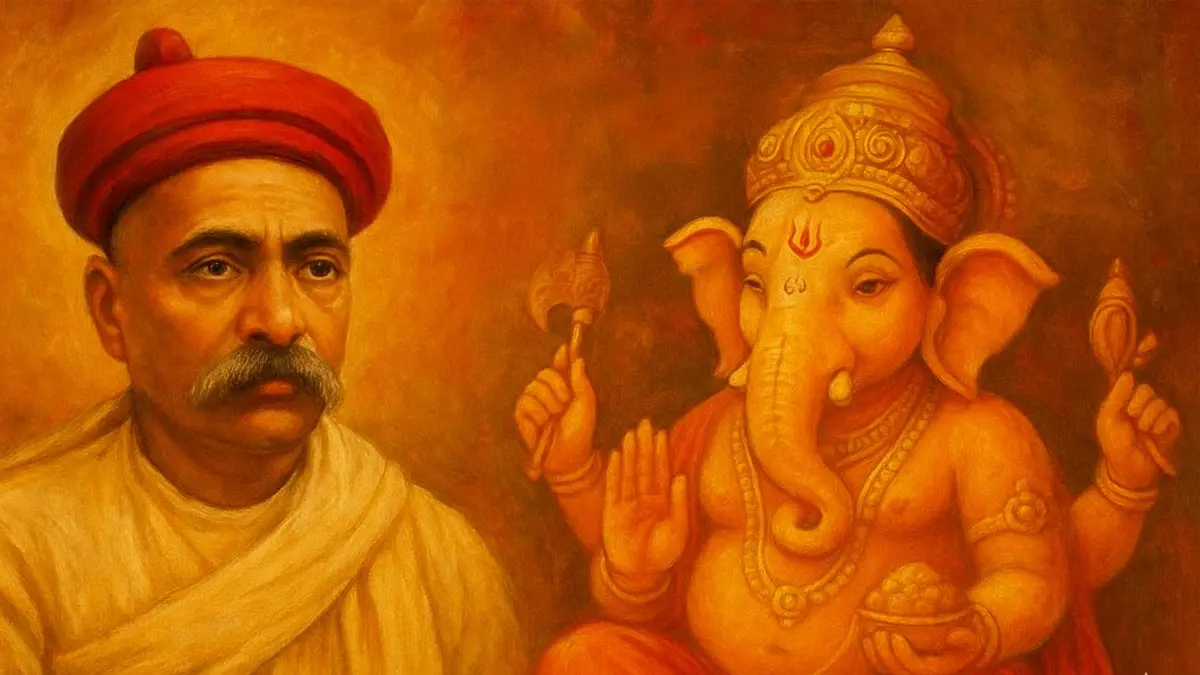
New Delhi: "Swaraj is my birthright, and I shall have it.": Bal Gangadhar Tilak. When we think of Ganesh Chaturthi today, we imagine streets decorated with lights, vibrant processions, and communities coming together to celebrate the elephant-headed deity. But few know that this now-public festival owes much of its grandeur and social significance to Bal Gangadhar Tilak, one of India’s most influential freedom fighters.

From Private Homes to Public Celebrations
Before Tilak’s intervention in the late 19th century, Ganesh Chaturthi was primarily a domestic, one-day event, observed mainly by Brahmins and upper castes within their homes. It had little social or political influence and was considered a personal religious ritual.
Tilak, however, recognised the festival’s potential to unite people across castes and communities. He envisioned Ganesh Chaturthi as a public spectacle that could foster unity and awaken nationalist sentiment. His idea was simple yet revolutionary: turn a private religious occasion into a platform for social and political mobilisation.
The Birth of Grand Pandals
Tilak popularised the creation of pandals, large, elaborately decorated tents housing grand idols of Lord Ganesha. He also introduced the now-famous tradition of immersing the Ganesha idol on the 10th day, transforming the festival from a quiet ritual into a 10-day community celebration. This made Ganesh Chaturthi more inclusive and accessible to people from all social strata, bridging divisions between Brahmins and non-Brahmins.
Advertisement
A Festival with a Nationalist Spirit
Tilak did not stop at cultural revival. He imbued the festival with patriotic fervour, presenting Lord Ganesha as the remover of obstacles, a symbol of unity, and a silent call to resist colonial rule. Patriotic songs, nationalist messages, and public speeches were integrated into the celebrations, turning religious devotion into a subtle yet powerful platform for political awareness.
His wider nationalist agenda included founding the newspapers Kesari (Marathi) and Mahratta (English) in 1881, with G.G. Agarkar. Through these publications, Tilak advocated for political rights, Swaraj, and resistance against British exploitation, reinforcing the festival’s role in India’s freedom struggle.
Advertisement
The Visionary Behind the Movement
Tilak’s strategy was both strategic and symbolic. Public gatherings were restricted under British rule, yet Ganesh Chaturthi offered a socially acceptable reason for crowds to assemble. Tilak leveraged Hindu deities and cultural symbols to foster a shared identity, encouraging unity among diverse communities and inspiring a sense of national pride.
Criticism and Controversy
Despite his contributions, Tilak faced criticism. Some argued that he introduced a communal dimension to the freedom struggle, and his early conservative views on women’s rights and caste reforms were questioned.
In 1893, during communal tensions between Hindus and Muslims, Tilak openly criticised the British for exacerbating divisions and accused them of favouring Muslims. However, later in life, Tilak softened his stance—he accepted tea from a Muslim, visited the Ajmer dargah of Sufi saint Moinuddin Chishti in 1920, and received warm welcomes from both Hindu and Muslim communities during his tour of Sindh. Towards the end of his life, he even began engaging with communist ideas, reflecting his evolving worldview.
A Lasting Legacy
Tilak’s transformation of Ganesh Chaturthi left a profound impact. What was once a private ritual became a festival of community, culture, and political awakening. His approach demonstrated the power of cultural events to mobilise society and inspire change, a legacy that continues today.
Every year, as Ganesh Chaturthi lights up homes and streets, it is a celebration not only of devotion but also of unity and freedom, reminding us of Bal Gangadhar Tilak’s visionary role in shaping the festival and strengthening India’s struggle for independence.
Get Current Updates on India News, Entertainment News, Cricket News along with Latest News and Web Stories from India and around the world.