
Trump Destroys QUAD? What Do India-China And US New Dynamics Under Trump 2.0 Mean For The Group's Future | Explained
The QUAD's future is uncertain due to Trump's tariffs and diplomatic approach, straining relationships with India, Australia, and Japan, and apparently driving them closer to China.
- India News
- 6 min read

;'%3e%3cpath%20d='m8,15.99c4.41,0,7.99-3.58,7.99-7.99S12.41,0,8,0,0,3.59,0,8s3.58,7.99,7.99,7.99Z'%20style='stroke:%23fff;%20stroke-miterlimit:10;%20stroke-width:.02px;'/%3e%3cpath%20d='m3.08,3.37l3.82,5.11-3.84,4.15h.87l3.37-3.64,2.72,3.64h2.94l-4.04-5.39,3.58-3.87h-.86l-3.1,3.35-2.5-3.35h-2.94Zm1.27.64h1.35l5.97,7.99h-1.35l-5.97-7.99Z'%20style='fill:%23fff;'/%3e%3c/g%3e%3c/svg%3e)


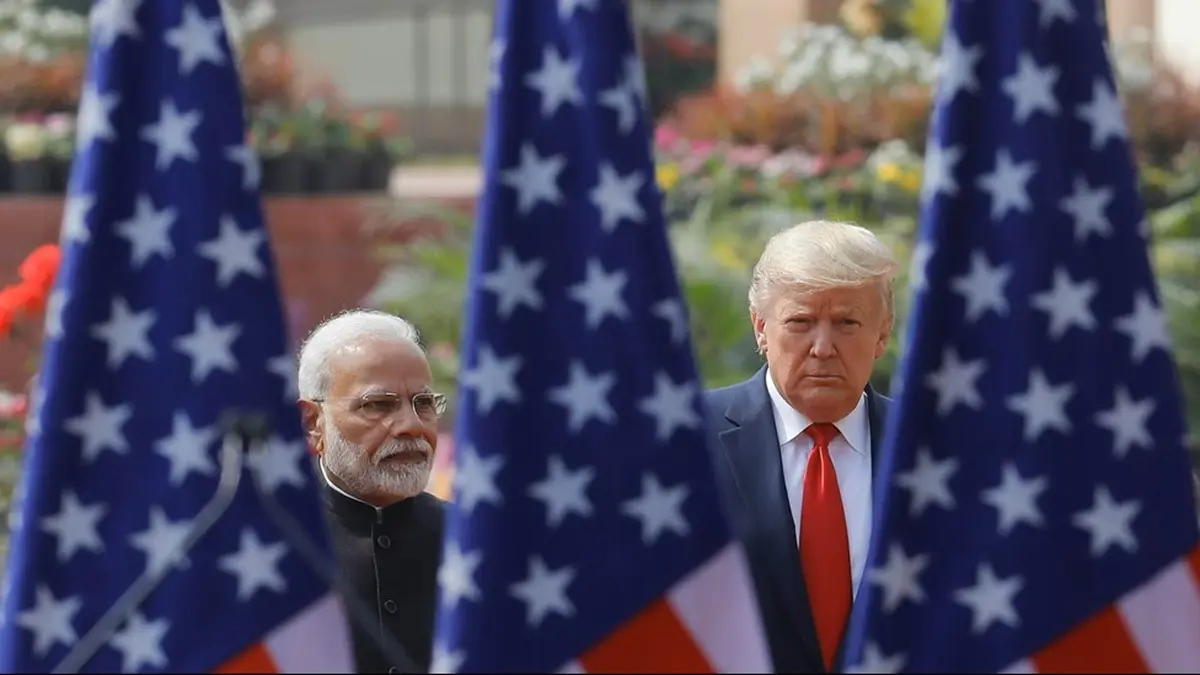
The QUAD has been a cornerstone of regional cooperation in the Indo-Pacific, which was established with an objective to counter China's growing influence. However, with Donald Trump's return to the White House and his shocking diplomatic moves, the group has been put in a situation where its future seems uncertain. Trump's tariff war, diplomatic leanings, and biased double-standard moves have dealt a massive blow to the group, raising questions about the QUAD’s viability, particularly with regard to India.
Additionally, the US tariffs have driven India and China closer to each other with a growing sense of mutual understanding and warmth between the two neighbours, further deepening concerns regarding the group’s future. To further reset and strengthen the bilateral relationship, Prime Minister Narendra Modi has embarked on a visit to China, where he will attend the Shanghai Cooperation Organisation (SCO) summit in Tianjin and is likely to hold bilateral talks with Chinese President Xi Jinping. During the meeting, the two leaders are expected to discuss various bilateral issues and foster ties.
The experts suggest that with China strengthening ties with India amid escalating trade tensions with the US, the supremacy of QUAD is likely to fade away, given India’s strategic role in the group. Here, we will try to understand how Donald Trump’s out-of-the-world and impractical diplomacy moves have single-handedly blown away the motives of QUAD and its aspirations.
QUAD Formation And Objectives
The Quadrilateral Security Dialogue, commonly referred to as the QUAD, is a diplomatic partnership between four nations, which include Australia, India, Japan, and the United States. The grouping was initiated in 2007 by Japanese Prime Minister Shinzo Abe, with the support of Australian Prime Minister John Howard, India's Prime Minister Manmohan Singh, and US Vice President Dick Cheney.
Advertisement
The QUAD's primary objective is to promote regional security and economic cooperation in the Indo-Pacific region, focusing on delivering outcomes that support an open, stable, and prosperous Indo-Pacific. The partnership focuses on areas such as health security, climate change, infrastructure, critical and emerging technology, cyber security, humanitarian assistance, and disaster relief.
Initially, the Quad focused on humanitarian assistance and disaster relief, but over time, its scope has expanded to include counterterrorism, economic cooperation, connectivity, and regional stability. The partnership emphasises democratic values, free and open trade, and adherence to international law. Despite its name, the Quad is not a security-focused grouping but rather a diplomatic partnership.
Advertisement
The Quad's evolution has been marked by periods of dormancy and revival. It was discontinued in 2008 after Australia pulled out due to growing tensions between the US and China, but was revived in 2017 amid China's growing assertiveness in the Indo-Pacific region. Since its revival, the Quad has institutionalised its efforts through regular meetings, working groups, and initiatives.
QUAD Is India, Japan, Australia And US Strategic Partnership
The QUAD is a strategic partnership between the United States, India, Japan, and Australia. Trump's administration has imposed massive tariffs on India, reaching 50% on August 6, in an attempt to coerce New Delhi into abandoning its purchase of Russian crude. The move drew massive backlash globally, citing the massive purchase of LNG by the European Union and over 20 percent surge in US-Russia relations after Trump's inauguration in his second term.
However, the move has led to the eruption of serious questions about the Quad's effectiveness and impact amid the US-India surging diplomatic tensions following Trump’s tariff on Indian goods, given India's important role in the grouping.
Trump's trade policies have also strained relationships with other QUAD members, including Australia and Japan, pointing that the US President's policy doesn't align with QUAD's goal. The US president's preference for bilateral deals over multilateral engagements has raised concerns about the QUAD's relevance.
Trump's Tariff War And Diplomatic Leanings
The foreign affairs experts believed that the QUAD, designed to counter China's expansionist policies in the Indo-Pacific region, has been crippled by Donald Trump's tariff war and diplomatic leanings. Despite calling these nations friends and allies, US President Trump has imposed punishing tariffs on each partner, especially India, straining relationships and undermining the QUAD's effectiveness.
Trump's tariff war has been relentless, with India facing a 25% tariff plus penalties, leading to a total tariff of 50%, Japan bearing a 15% tariff apart from the reciprocal tariffs, and Australia shouldering massive steel and aluminium levies.
Trump's trade policies have been criticised for being overly simplistic, with little relation to actual trade barriers. The economists have warned that these tariffs will raise costs for US consumers and businesses, harming the economy.
Trump And QUAD’s Point Of Contention
India's position within the QUAD has been unique, given its shared border with China and history of reluctance to engage in military posturing. New Delhi has sought to maintain strategic autonomy, prioritising economic cooperation and diplomatic engagement over security-centric initiatives.
However, the trade tensions escalated by Donald Trump appear to have destroyed the dynamics. India's response to Trump's tariffs has been cautious, with Prime Minister Narendra Modi stating that the US and India will work towards a mutually beneficial trade agreement without confirming immediate tariff reductions.
The situation has been further complicated by Trump's decision to impose a 25% secondary tariff on India as a penalty for purchasing Russian oil. The step has raised questions about the QUAD's future and India's role within the grouping. Trump's tariffs have been seen as a heavy-handed approach, driving countries closer to China.
The US has also imposed unprecedented powers under the National Emergencies Act (NEA) and the International Emergency Economic Powers Act (IEEPA) to enact tariffs quickly without congressional approval.
QUAD's Uncertain Future
The Quad's future hangs in the balance as Trump's administration prioritises bilateral engagements and transactional diplomacy. The grouping's ability to adapt to Trump's diplomatic approach and find common ground among its members will determine its viability.
Earlier, Mike Waltz, the then US National Security Advisor, had indicated that the Trump administration would continue to strengthen the Indo-Pacific strategy, with a focus on countering China. However, Trump's tariff war and diplomatic leanings have raised concerns about the Quad's effectiveness in achieving its goals.
India's Ministry of External Affairs has termed the US actions as "unfair, unjustified, and unreasonable," asserting that India will take necessary measures to safeguard its national interests and economic security.
India To Host QUAD Summit This Year
With the next QUAD Leaders' Summit being hosted by India later this year, and the likelihood of President Donald Trump or his representative participating, there will be some tough questions to be addressed sooner than later.
Notably, the trade relationship between India and the US has evolved rapidly over the past few years, with exports to the US growing heavily, especially in sectors like information technology, pharmaceuticals, and textiles. The US and India remain critical markets for each other, and the tariffs could disrupt the growth trajectory of the bilateral trade.
India has been working on preemptive strategies to mitigate damage from Trump's tariffs. The government has initiated discussions with key stakeholders in the industry to assess the situation and prepare for any fallout. Importantly, India may also focus on diversifying its trade partnerships to reduce over-reliance on the US market.
Get Current Updates on India News, Entertainment News, Cricket News along with Latest News and Web Stories from India and around the world.