
Weapon Wrapped in Tricolour; Pakistan’s Tactical Shift or Desperation?
An analysis of the Anantnag attack on Head Constable Ashiq Hussain, exposing how Pakistan-backed proxies are using desperate tactics amid a collapsing terror network in Kashmir.
- India News
- 4 min read

;'%3e%3cpath%20d='m8,15.99c4.41,0,7.99-3.58,7.99-7.99S12.41,0,8,0,0,3.59,0,8s3.58,7.99,7.99,7.99Z'%20style='stroke:%23fff;%20stroke-miterlimit:10;%20stroke-width:.02px;'/%3e%3cpath%20d='m3.08,3.37l3.82,5.11-3.84,4.15h.87l3.37-3.64,2.72,3.64h2.94l-4.04-5.39,3.58-3.87h-.86l-3.1,3.35-2.5-3.35h-2.94Zm1.27.64h1.35l5.97,7.99h-1.35l-5.97-7.99Z'%20style='fill:%23fff;'/%3e%3c/g%3e%3c/svg%3e)


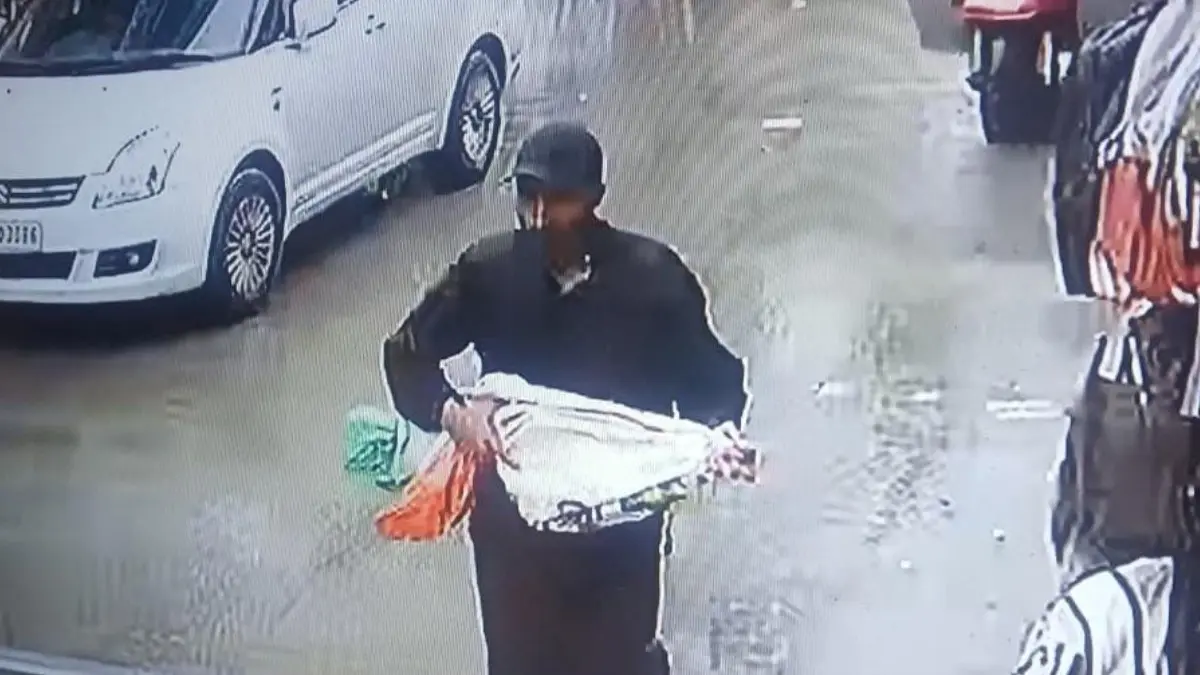
If your terrorists are forced to conceal AK‑47s in the Indian Tricolour, what does that reveal about your collapsing playbook in Kashmir? Is this camouflage a tactical innovation or the desperate theatre of proxies who have lost their hideouts, their networks, and the support of locals? The brazen daylight killing of Head Constable Ashiq Hussain in South Kashmir’s Anantnag today forces this question to the forefront, exposing the influence of Pakistan’s terror infrastructure in the Valley.
At 12:35 pm, Lal Chowk area of Anantnag bustling marketplace turned into a stage of horror. CCTV footage shows a lone assailant, dressed in black with a cap and beard, standing barely a metre away from Hussain, and firing at point‑blank range. He then fled with his weapon wrapped in the national flag. The optics were chilling: a terrorist staging theatre in full public view, under surveillance cameras, in a crowded civilian market. This was not invisibility; it was exposure.
For decades, terrorism in Kashmir thrived on local recruitment, safe houses, and community cover. That ecosystem has collapsed. Joint security forces have dismantled hideouts, detained hundreds of overground workers, and tightened surveillance. Kashmiris are refusing to provide shelter, and recruitment of locals has dropped sharply. Pakistan’s proxies are being squeezed from all sides. Their networks are collapsing, their sanctuaries gone, and their operatives are forced into reckless improvisation.
Resistance Front (TRF), a Lashkar‑e‑Toiba proxy designed to mask Pakistan’s hand, claimed responsibility. Yet the optics of today’s attack show the mask slipping. A lone gunman operating in a busy market under CCTV surveillance, concealing his weapon in the national flag, is not a sign of dominance but of desperation. Pakistan’s proxies, stripped of sanctuaries, are improvising recklessly, hiding in symbols because they have no other refuge.
Advertisement

The timing underscores the desperation as the Valley is under heightened security due to the Amarnath Yatra and a surge in tourism. High‑end equipment, layered surveillance, and heavy deployment are in place. Yet the attacker chose to strike in daylight, in a crowded market, under the gaze of cameras. This brazenness was not confidence—it was compulsion. Foreign terrorists, inserted to compensate for dwindling local recruitment, lack community cover and are forced into reckless exposure.
The symbolism is striking as in recent years, ‘Tiranga yatras’ have swept across Kashmir, with thousands of citizens—schoolchildren, elders, marching with the national flag. Lieutenant Governor Manoj Sinha has often led these processions, turning the Tricolour into a lived identity embraced by Kashmiris. Against this backdrop, Pakistan‑backed groups exploiting the same flag as camouflage is collapse, not power. When citizens rally around the Tricolour, Pakistan’s proxies are left with no choice but to exploit it as a disguise, exposing their desperation in the process.
Advertisement
Security has now been further tightened across south Kashmir and Srinagar, with cordons, intensified frisking, and mass detentions of suspected overground workers. Intelligence agencies stress this is not about neutralizing one attacker but dismantling the remnants of Pakistan’s proxy infrastructure. Every such act exposes Pakistan as a terror state. Recruitment is down, support is gone, and their proxies are being hunted.
The larger picture is unmistakable: Pakistan’s proxies are losing relevance. Young Kashmiris are choosing education, jobs, and civic participation over terrorism. The social fabric is shifting, leaving foreign operatives isolated and compelled into reckless daylight attacks. The killing of Head Constable Hussain underscores both the risks joint security forces face and the weakness of Pakistan’s terror machinery; terrorists reduced to theatre, disguising weapons in flags, and risking exposure under surveillance.
Has Pakistan changed its strategy? Yes—but not out of strength. It has changed because it is losing. Anantnag attack was not a demonstration of power. It was a desperate attempt to cling to relevance, revealing the collapse of Pakistan’s terror infrastructure in Kashmir.
India’s question to Pakistan must remain blunt: if your terrorists are forced to hide in the Tricolour, what does that say? This is not dominance—it is desperation. And it is a reminder that while terrorism adapts, it is also weakening, compelled into risks that expose its decline more than its strength.
The optics of today’s attack will linger. A lone gunman, weapon wrapped in the national flag, striking in daylight under cameras, is not a portrait of invincibility. It is a portrait of collapse. Pakistan’s proxies are improvising because they have no other option. They are compelled to stage theatre in daylight, disguising weapons in symbols, and risking exposure under surveillance. EXCLUSIVE ANALYTICAL PIECE ON TODAYS ATTACK Can go a lead pic
Get Current Updates on India News, Entertainment News, Cricket News along with Latest News and Web Stories from India and around the world.