
What Did Shrimad Rajchandraji Teach? The Six Truths at the Heart of His Best-Known Work
Discover Shri Atmasiddhi Shastra, the 142-verse Jain text written by Shrimad Rajchandraji in just 90 minutes in 1896, its six truths about the soul, and why it continues to inspire seekers worldwide.
- India News
- 4 min read


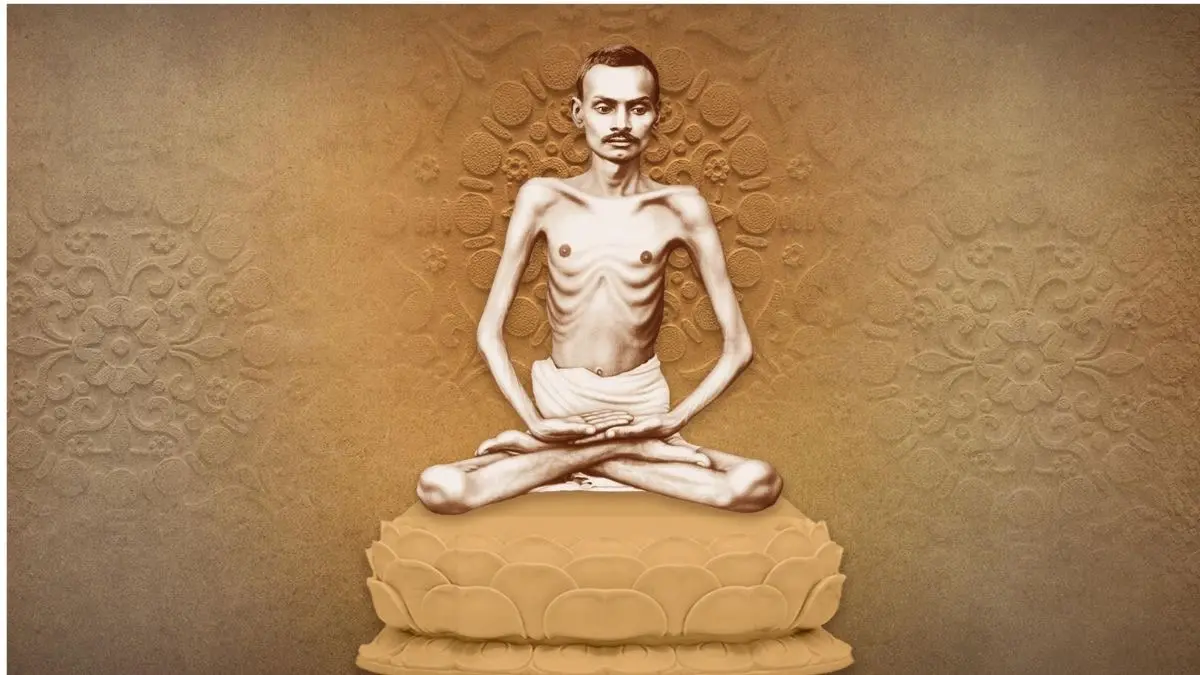
Written in a single sitting in 1896, Shri Atmasiddhi Shastra is still read by seekers around the world. Here is what it says, and why it mattered in its time
Shrimad Rajchandraji, the Jain saint whose birth anniversary falls on Kartik Purnima which is today, often introduced as the man Mahatma Gandhi turned to in his moments of doubt. To his followers, though, he is remembered first for what he taught.
At the centre of that teaching is Shri Atmasiddhi Shastra, a 142-verse Gujarati text he wrote in Nadiad in 1896, at the age of 28. According to traditional accounts, he composed it in about an hour and a half, after his devotee Saubhagyabhai asked him to put the six fundamental truths of the soul into verse so that they could be memorised. Another devotee, Ambalalbhai, held a lantern while he wrote.
The text is a conversation between a seeker and a teacher. The seeker raises doubts, and the teacher answers them one by one.
Advertisement
The six truths
1. The soul exists. It is conscious and separate from the body, in the way a sword is separate from its sheath.
2. The soul is eternal. The body is born, ages and dies; the soul is neither created nor destroyed.
Advertisement
3. The soul is the doer of its karma. When it does not remain conscious or does not remain conscious of its true nature, it gets influenced by ignorance and attachment and acquires karmic bondage. .
4. The soul bears the results of its karma. No outside power hands out reward or punishment; the soul experiences the fruit of its own actions.
5. Liberation is possible. Bondage is not the soul's permanent state. Its inherent nature is pure, conscious and blissful.
6. There is a path to liberation, made up of right faith, right knowledge and right conduct, followed with the guidance of an enlightened teacher.
Taken together, the six move from "Who am I?" to "What do I do about it?", which is part of why the text is still studied by people with no background in philosophy.
A return to the basics
Rajchandraji lived at a time when, as his followers see it, religious life had become heavily about ritual and sect identity. He did not set up a new sect. His argument was that practices like pratikraman, the Jain ritual of reflection and repentance, mattered only if they led to inner change.
When a monk, Mohanlalji Muni, asked him how to answer people who wanted to know which sect they belonged to and what kind of pratikraman they performed, Rajchandraji told him to say they were "Sanatan Jains", and that turning away from sin was their pratikraman.
He was also unwilling to tailor his teaching to patrons. According to an account by his friend Popatbhai Manjibhai Desai, when a group of wealthy followers of one sect asked him to preach its views in return for their support, he told them he would speak only what he believed to be true.
The Jain scholar Pandit Sukhlalji later wrote that for Jain aspirants, Atmasiddhi Shastra is "equivalent to the Gita".
Where it is read today
More than a century after his death in 1901 at the age of 33, Rajchandraji's teachings are followed by millions of people across the world, and a number of institutions in India and abroad are dedicated to studying his work.
Among them is Shrimad Rajchandra Mission Dharampur (SRMD), founded in 1994 by Pujya Gurudevshri Rakeshji, who wrote a doctoral thesis of over 3,000 pages on Atmasiddhi Shastra. Marking 125 years of the text, he gave a nine-month series of discourses on it in English, which became a commentary now available in English, Gujarati and Hindi. The Mission has also published the original text in 60 languages, 30 Indian and 30 international.
In Nadiad, the house where the text was written has been restored as a memorial, the Shri Atmasiddhi Shastra Rachnabhoomi, with the verses displayed in Rajchandraji's handwriting. The holy site will soon house the Shrimad Rajchandra Ashram, to spread Rajchandraji’s teachings through wisdom retreats, youth workshops and much more.
The Mission's seva work, from charitable hospitals,to rural schools and women's livelihood programmes, also runs in Rajchandraji's name, which his followers see as the practical side of the same teaching. Taking inspiration from Rajchandraji’s compassion and Gurudevshri Rakeshji’s guidance, these seva initiatives have benefitted millions of lives globally.
Get Current Updates on India News, Entertainment News, Cricket News along with Latest News and Web Stories from India and around the world.