
Gas Cylinder Facts: Why Do LPG Cylinders Have Small Holes At The Bottom? Explained
Have you ever noticed the small holes at the bottom of an LPG Gas Cylinder? These holes are not for design but play a crucial safety role by allowing air circulation, preventing moisture buildup and helping control temperature to reduce corrosion and gas leak risks.
- India News
- 2 min read

;'%3e%3cpath%20d='m8,15.99c4.41,0,7.99-3.58,7.99-7.99S12.41,0,8,0,0,3.59,0,8s3.58,7.99,7.99,7.99Z'%20style='stroke:%23fff;%20stroke-miterlimit:10;%20stroke-width:.02px;'/%3e%3cpath%20d='m3.08,3.37l3.82,5.11-3.84,4.15h.87l3.37-3.64,2.72,3.64h2.94l-4.04-5.39,3.58-3.87h-.86l-3.1,3.35-2.5-3.35h-2.94Zm1.27.64h1.35l5.97,7.99h-1.35l-5.97-7.99Z'%20style='fill:%23fff;'/%3e%3c/g%3e%3c/svg%3e)


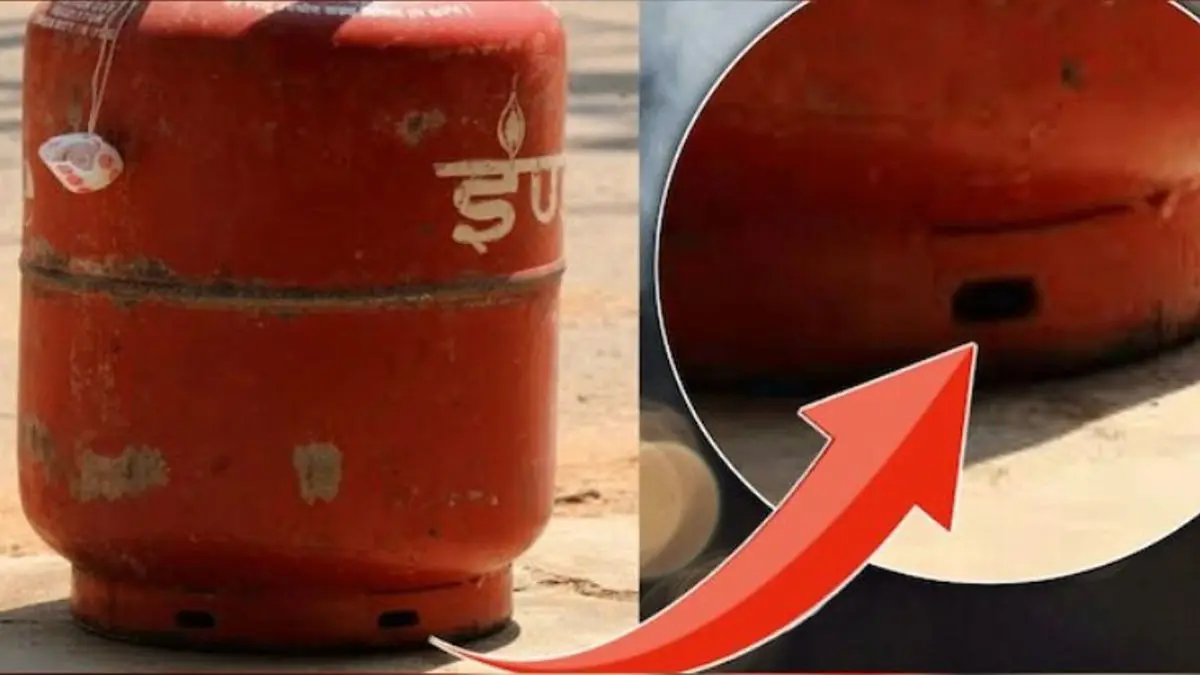
New Delhi: While the bright red liquefied petroleum gas (LPG) cylinder is a staple in millions of Indian households, one of its most critical safety features often goes unnoticed: the small, uniform holes encircling the metal ring at the base.
Far from being a decorative choice or a manufacturing fluke, these ventilation gaps play a vital role in preventing domestic accidents and ensuring the container's structural integrity.
Temperature Regulation and Airflow
The primary function of these holes is to manage temperature. LPG is stored under high pressure, making it highly sensitive to external heat.
If the base of the cylinder were a solid, enclosed ring, it would trap pockets of hot air underneath the heavy metal body.
Advertisement
This localised heat could raise the gas temperature inside, increasing internal pressure to dangerous levels.
By incorporating these small apertures, manufacturers ensure a continuous flow of air. This natural ventilation allows cool air to circulate beneath the cylinder, disperse heat and maintain a stable temperature for the compressed fuel.
Advertisement
Preventing Corrosion
These holes serve a crucial mechanical purpose: moisture control. In many Indian kitchens, floors are frequently cleaned with water, or cylinders are kept in damp utility areas.
Without ventilation, water and humidity would become trapped inside the hollow base ring.
Stagnant water at the bottom of the cylinder leads to rapid corrosion. Since the base supports the entire weight of the pressurised tank, a rusted, weakened bottom could lead to a structural failure or a silent leak that goes undetected.
Proper airflow ensures that the floor beneath the cylinder remains dry, preventing the growth of mould or the accumulation of grime that could eventually eat away at the metal.
Engineering for Domestic Safety
The design of the LPG cylinder is governed by strict industrial standards that prioritise fail-safes. Because LPG is heavier than air, any minor leak tends to settle at the lowest possible point.
The holes at the bottom prevent gas from pooling inside the base ring, allowing it to disperse more easily into the open air, where it can be detected by smell.
Understanding these small engineering details highlights the sophisticated safety protocols built into everyday appliances.
From preventing rust to managing thermal expansion, those tiny holes are a silent guardian in the modern kitchen.
Get Current Updates on India News, Entertainment News, Cricket News along with Latest News and Web Stories from India and around the world.