
Do Dogs Really Watch TV or Just Pretend? Know What New Study Says
A groundbreaking study published in Scientific Reports in July 2025 reveals that dogs do respond to television. Learn more details here.
- Lifestyle News
- 2 min read

;'%3e%3cpath%20d='m8,15.99c4.41,0,7.99-3.58,7.99-7.99S12.41,0,8,0,0,3.59,0,8s3.58,7.99,7.99,7.99Z'%20style='stroke:%23fff;%20stroke-miterlimit:10;%20stroke-width:.02px;'/%3e%3cpath%20d='m3.08,3.37l3.82,5.11-3.84,4.15h.87l3.37-3.64,2.72,3.64h2.94l-4.04-5.39,3.58-3.87h-.86l-3.1,3.35-2.5-3.35h-2.94Zm1.27.64h1.35l5.97,7.99h-1.35l-5.97-7.99Z'%20style='fill:%23fff;'/%3e%3c/g%3e%3c/svg%3e)


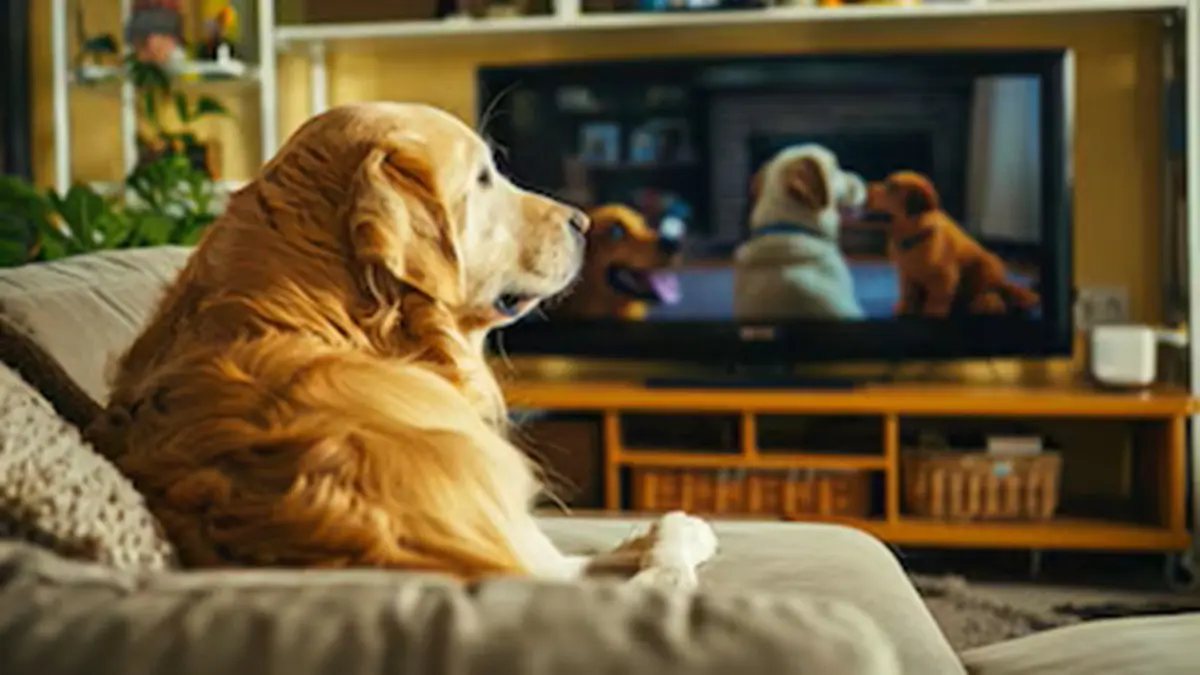
Have you ever wondered if your dog watches TV and reacts to what they see? Do they get upset when they see other dogs or show signs of anxiety, like barking or growling, at animals on screen? A groundbreaking study published in Scientific Reports in July 2025 reveals that dogs do respond to television. However, their level of interest, attention span, and reactions vary based on their individual traits.
Here's what the study says

Researchers from Auburn University surveyed 453 dog owners across the U.S using a newly developed Dog Television Viewing Scale (DTVS), and the results that came were surprising:
Result 1: 88.3 % of dogs responded to the television at some level.
Result 2: The average dog watched TV for 14 minutes and 8 seconds per session.
Advertisement
Result 3: Dogs were most reactive to animal sounds like barking or howling.
Result 4: Visual interest was higher in social, excitable or curious dogs,
Advertisement
Result 5: Fearful or anxious dogs were somewhat sensitive to sudden noises but visually disengaged.
Which traits do dogs love watching on TV?
Curious dogs: Dogs with playful traits were far more likely to engage with the screens. They tracked moving visuals like other animals, balls, or running people.
Anxious or featural dogs: Shy Dogs didn't react to the visuals that much. However, they strongly reacted to the sounds, especially doorbells, thunder, or barking.
Age doesn't matter: Dogs of all ages, from 4 to 16 years, showed potential to watch television. But apparently, personality was what really mattered.
What type of TV content do dogs prefer?
The study showed dogs responded mostly to:
Animals' sounds: Barking, howling and squeaking.
Natural movements: Animals running, playing, jumping,
Realistic visuals: shows with animals, nature scenes, or pets.
Although they responded less to the human voices, cartoon visuals, and electronic or mechanical noises.
How does this study benefit dogs?
It helps to understand your dog's viewing habits, which can improve their well-being by:
Choosing suitable content for your dog when you leave
Using audio-visual cues to assist with behavioural exercises.
Playing ideal content inside their shelters for stimulation and stress relief.