
Onam 2025: Significance Of Sadya And Traditional Food Items Prepared
Onam Sadya is not just about food. It represents prosperity, unity and the spirit of sharing.
- Lifestyle News
- 2 min read

;'%3e%3cpath%20d='m8,15.99c4.41,0,7.99-3.58,7.99-7.99S12.41,0,8,0,0,3.59,0,8s3.58,7.99,7.99,7.99Z'%20style='stroke:%23fff;%20stroke-miterlimit:10;%20stroke-width:.02px;'/%3e%3cpath%20d='m3.08,3.37l3.82,5.11-3.84,4.15h.87l3.37-3.64,2.72,3.64h2.94l-4.04-5.39,3.58-3.87h-.86l-3.1,3.35-2.5-3.35h-2.94Zm1.27.64h1.35l5.97,7.99h-1.35l-5.97-7.99Z'%20style='fill:%23fff;'/%3e%3c/g%3e%3c/svg%3e)


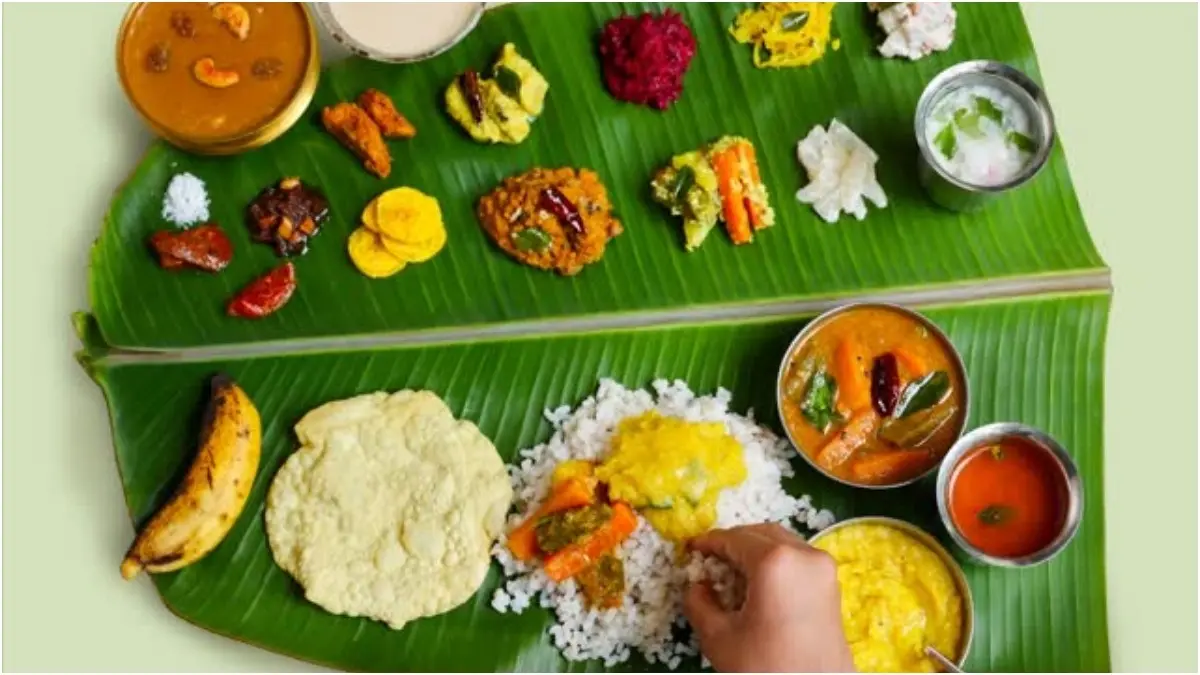
Onam, the harvest festival of Kerala, is celebrated with joy and togetherness for over a week. This year, the festival celebration begins on August 25 and end on September 5. One of its most iconic traditions is the Onam Sadya, a grand vegetarian feast served on a banana leaf. The Sadya is not just about food. It represents prosperity, unity and the spirit of sharing.
What is the significance of Onam Sadya?
It is believed to welcome King Mahabali, whose annual visit marks the festival. The lavish spread symbolises abundance and gratitude for a good harvest. Each dish in the Sadya reflects the rich culinary heritage of Kerala and emphasises balance, with six essential tastes- sweet, sour, salty, bitter, pungent and astringent. It ensures harmony in every meal. The communal act of eating together on banana leaves fosters equality and togetherness.
Advertisement

Food items that are mandatorily prepared for Onam Sadya
A traditional Sadya can include over 20–25 dishes, though simpler versions may have fewer.
Rice: The base of the meal.
Advertisement
Sambar: Lentil and tamarind-based curry with vegetables.
Parippu (dal curry): Served with ghee for the first course.
Avial: Mixed vegetables in coconut and yogurt.
Thoran: Stir-fried vegetables with grated coconut.
Olan: Ash gourd and cowpeas in coconut milk.
Kalan: Yam and raw banana in yogurt gravy.
Pulissery: A tangy curd-based curry.
Inji curry: A sweet and spicy ginger chutney.
Pickles and pappadam: To enhance flavor and texture.
Payasam (dessert): A sweet pudding made with rice, lentils, or vermicelli, often cooked in jaggery and coconut milk.