
Sursock Palace in Beirut: Know its significance, history and other details
Sursock Palace in Beirut was built in 1860 in heart of historical Beirut on a hill overlooking the now-obliterated port. Read on to know its significance.
- Lifestyle News
- 3 min read

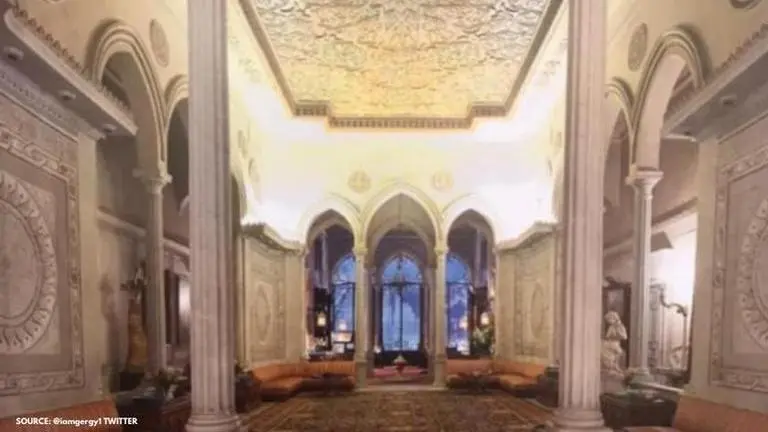
Sursock Palace was a grand residence in the city of Beirut in Lebanon. It was located on Rue Sursock. The 160-year-old Sursock Palace in Beirut withstood two world wars, the fall of the Ottoman Empire and the French mandate and Lebanese independence. However, after the Beirut blast, the palace was destroyed. Here's the history and significance of Sursock Palace.
Sursock Palace in Beirut
Completed in 1860, by Moïse Sursock, the palace was a symbol of the Sursock family's rich history. After the country's 1975-1990 civil war, it took 20 years for the family to carefully restore and bring the palace back to its former glory. Sursock Palace is located on the historic Sursock Street, in the Achrafieh district of Beirut and was surrounded by beautiful gardens. The surrounding area was also occupied by people for special events such as weddings, cocktail parties and more.
It was destroyed during the 2020 Beirut explosions, but there are plans to rebuild the palace. Roderick Sursock, owner of Beirut's landmark Sursock Palace, said in a statement that everything was destroyed again in a split second. He stepped carefully over the collapsed ceilings, walked through rooms covered in dust, broken marble and crooked portraits of his ancestors hanging on the cracked walls. "The level of destruction from the massive explosion at Beirut's port last week is ten times worse than what 15 years of civil war did," he said.
Sursock Palace's history
The Sursock palace was built in 1860, a three-story mansion, and was a landmark in Beirut. The spacious garden surrounding saw several cocktail parties and receptions over the years. The place was also a go-to destination for the tourists. The Sursock palace had beautiful works of arts, furniture, marble and paintings from Italy, collected by three long-lasting generations of the Sursock family.
Advertisement
There was also a Sursock museum in the neighbourhood, which is known as the Nicolas Ibrahim Sursock Museum. The Sursock Museum building epitomises Lebanese architecture and Ottoman architectural imprints. The museum is located in the Achrafieh district of Beirut. The museum was also home to The Fouad Debbas Collection, a photographic collection comprising over 30,000 images from the Middle East, from 1830 till the 1960s.
Advertisement
Sursock Palace's photos
#Sursok Palace
— We Are Lebanon (@WeAreLebanon) June 21, 2014
قصر #سرسق
By @nhajaig#WeAreLebanon pic.twitter.com/RUmajdQRtk
Pictures of sursock palace taken earlier today, this is heartbreaking https://t.co/n6CFf0bjXE pic.twitter.com/KMyiaoFbxa
— kev (@kevinwazen) August 5, 2020
More photos of Sursok palace here. Unfortunately I don’t know the source of these photos as I received them over WhatsApp as a forward. pic.twitter.com/T8kQ0Vtc6v
— Lil’Yan (@FunkyOzzi) August 6, 2020
Just received photos of Sursok museum :/ #BeirutExplosion pic.twitter.com/iTm2DuFPdk
— Lil’Yan (@FunkyOzzi) August 6, 2020
Also Read | Egypt to shift 'hazardous materials' from airports to safer locations after Beirut blast
Sursok Museum pic.twitter.com/jLpEUf1e3I
— Bana@Bana LF (@bana_ouweti71) February 3, 2016