
Flexible office spaces surge in India as corporations adapt to new work norms
Post-pandemic, work-life balance is a top priority for employees, driving organisations to adopt flexible working models that enhance productivity.
- Republic Business
- 2 min read

;'%3e%3cpath%20d='m8,15.99c4.41,0,7.99-3.58,7.99-7.99S12.41,0,8,0,0,3.59,0,8s3.58,7.99,7.99,7.99Z'%20style='stroke:%23fff;%20stroke-miterlimit:10;%20stroke-width:.02px;'/%3e%3cpath%20d='m3.08,3.37l3.82,5.11-3.84,4.15h.87l3.37-3.64,2.72,3.64h2.94l-4.04-5.39,3.58-3.87h-.86l-3.1,3.35-2.5-3.35h-2.94Zm1.27.64h1.35l5.97,7.99h-1.35l-5.97-7.99Z'%20style='fill:%23fff;'/%3e%3c/g%3e%3c/svg%3e)


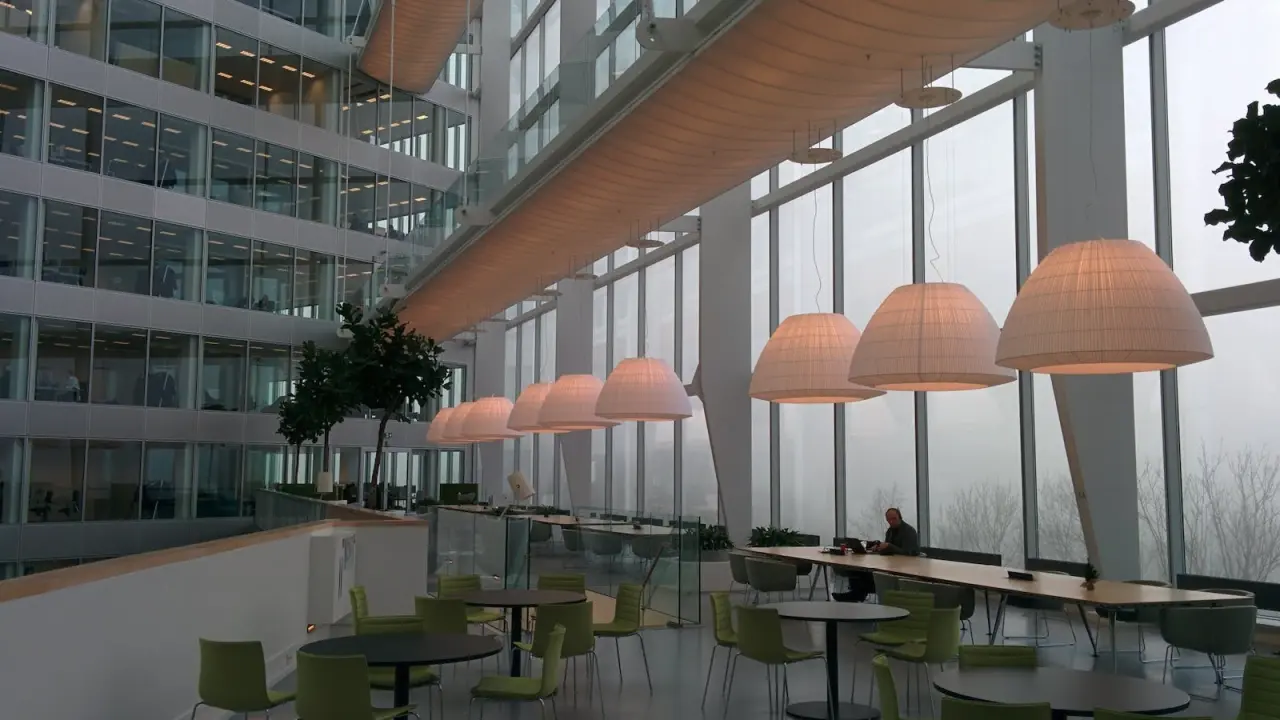
India's corporate landscape has transformed due to remote and hybrid work models, leading to a 10 to12 per cent share of flexible office spaces in corporate real estate portfolios, up from 5 to 8 per cent during the pandemic, driven by changing office culture, according to Colliers.
"Post-pandemic, work-life balance is a top priority for employees, driving organisations to adopt flexible working models that enhance creativity, collaboration, and engagement. Flexible office spaces support this need for innovation in traditional practices," Sanjay Choudhary, Founder & CEO, Incuspaze told Republic.
Factors driving flexible office growth in India
Flexible office spaces provide corporations with a workspace without the burden of long-term lease commitments. These spaces are designed with smaller working suites connected to common areas such as reception areas, cafeterias, and pantries. Organisations can choose from various space options tailored to their specific preferences, breaking away from the confines of a standard office layout. Additionally, scaling up or down is a seamless process, enhancing cost-effectiveness. Modern amenities and technology-enabled workplaces further drive the demand for flexible office spaces.

Cost effectiveness
Startups and SMEs carefully manage their budgets. The flexibility of membership plans in flexible office spaces allows businesses to pay only for the space they utilise, avoiding the financial strain of hefty rentals and long-term leases associated with traditional offices. This guarantees cost reductions, making it an option for corporations seeking cost-effectiveness.
Advertisement
Customisation and scalability
Flexibility is a key reason corporations are turning to flexible office spaces. They offer the freedom to plan and customise the workspace according to individual requirements, including office layouts and features. Moreover, businesses can easily scale up or down based on their evolving needs, accommodating rapid expansion or downsizing as necessary.
Tech-enabled workplaces
Flexible office spaces come equipped with modern amenities that boost productivity and convenience. Features like high-speed internet, fully equipped meeting rooms, and administrative support cater to operational requirements. Artificial intelligence (AI) is harnessed to automate maintenance tasks, from adjusting lighting to regulating temperature based on occupancy. Machine learning (ML) algorithms create predictive models for seat allocation, while real-time heat maps optimise space utilisation.
"With the current trajectory, it is anticipated that modern flexible office spaces will continue to gain prominence in the coming years. A report by real estate consultant Vestian projects that flexible office space operators will expand their portfolio from 53.4 million square feet to an estimated 81 million square feet by 2025," Choudhary said.