
Pakistan's Convenient Neutrality Isn't Fooling Anyone
'Despite public neutrality and peace efforts in the 2026 Iran war, Pakistan covertly aids US operations via airspace, F-16s, and data sharing, risking Iranian retaliation as oil spikes and civilians face crossfire.'
- Opinion News
- 3 min read

;'%3e%3cpath%20d='m8,15.99c4.41,0,7.99-3.58,7.99-7.99S12.41,0,8,0,0,3.59,0,8s3.58,7.99,7.99,7.99Z'%20style='stroke:%23fff;%20stroke-miterlimit:10;%20stroke-width:.02px;'/%3e%3cpath%20d='m3.08,3.37l3.82,5.11-3.84,4.15h.87l3.37-3.64,2.72,3.64h2.94l-4.04-5.39,3.58-3.87h-.86l-3.1,3.35-2.5-3.35h-2.94Zm1.27.64h1.35l5.97,7.99h-1.35l-5.97-7.99Z'%20style='fill:%23fff;'/%3e%3c/g%3e%3c/svg%3e)


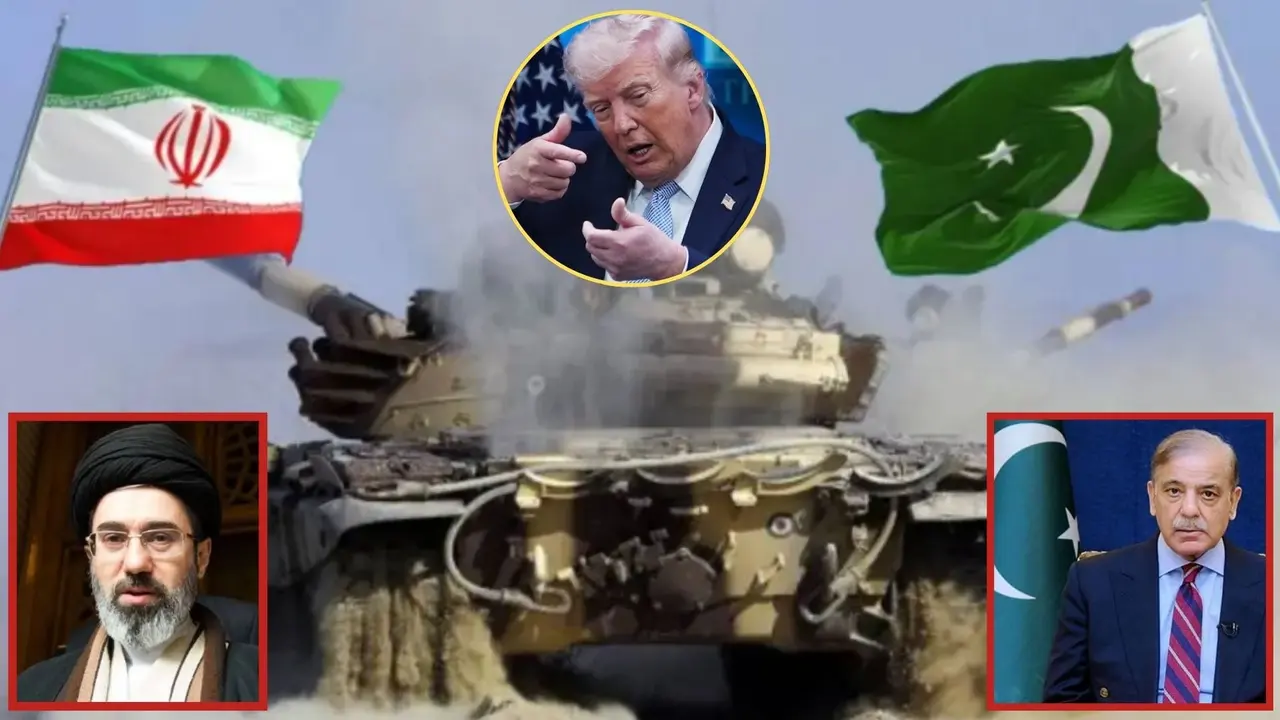
New Delhi: The gap between Islamabad's words and its actions in the Iran war grows wider by the day. The first important thing to do is to dispel the fiction that Pakistan is neutral in the 2026 Iran war. The truth remains that it has never been neutral.
The eloquent condemnations, the shuttle diplomacy, the peace conferences in Islamabad—these are the decorative canopy over a very different operational reality, one that Pakistan's military establishment has quietly constructed over the past several months with the methodical precision that Rawalpindi brings to everything it does covertly.
The allegations now circulating that Pakistani airspace has been opened to US surveillance and strike assets, that PAF F-16s have been providing active support to American carrier operations, that Pakistan's navy has been feeding the positional data of Iranian vessels to US targeting systems, are not the product of Indian disinformation or Iranian paranoia, though both countries have obvious incentives to amplify them.
They are the product of a straightforward reading of Pakistan's strategic incentives, its institutional history, and the very specific nature of the military hardware it has recently acquired from Washington.
Advertisement
Consider the December 2025 F-16 modernisation package--$686 million. The centrepiece--Link-16 tactical data links and Mode 5 IFF cryptographic systems. Now ask yourself a simple question. What does a country that is genuinely neutral in a conflict between the United States and Iran need with NATO-standard coalition interoperability systems? What counterterrorism mission on the Afghan border requires PAF aircraft to seamlessly exchange real-time targeting data with US Navy carrier air wings?
The answer, of course, is none. These are coalition warfare tools. They exist to allow Pakistani military assets to operate alongside American ones in a shared operational environment without shooting each other down. Their acquisition, in the months before the outbreak of hostilities, is not a coincidence. It is preparation.
Advertisement
This is not to say that Pakistan's diplomacy has been entirely cynical. The ceasefire that Islamabad brokered, the Islamabad Talks, the extraordinary personal investment of Ishaq Dar in shuttle communication between the belligerents, these efforts were real, and they mattered. Pakistan genuinely does not want a prolonged regional war. It cannot afford one.
Oil prices above $150 a barrel have already sent petrol costs rocketing past PKR 458 per litre, triggering mass protests and emergency austerity measures.
But not wanting a prolonged war is entirely compatible with providing the United States with operational support during one. Pakistan has always been capable of holding contradictory positions simultaneously—it is, one might argue, the country's defining institutional characteristic.
The real danger in this double game is not that it will be exposed—Pakistan has survived such exposures before. The danger is that Iran, which shares a 900-kilometre border with Pakistan and has already demonstrated its willingness to strike inside Pakistani territory, will decide that the evidence it possesses is sufficient grounds for retaliation.
At that point, the careful architecture of deniability that Rawalpindi has constructed will offer precisely no protection to Pakistani civilians living near the Iranian border, or to the millions of Pakistani workers in Gulf states who have no idea that their government's private military calculations have put them in the crossfire. Pakistan's generals are experienced players of the great game. They should remember that the game occasionally plays back.