
Updated 15 July 2025 at 15:19 IST
Indian Space Star Shubhanshu Shukla Returns Home from ISS, Axiom-4 Crew Safely Splashes Down in Pacific After 18-Day Mission
Group Captain Shubhanshu Shukla with other Axiom-4 crew members returned from the International Space Station with 260 Kg of research payload marking India’s first human spaceflight since Rakesh Sharma.
- Science News
- 4 min read

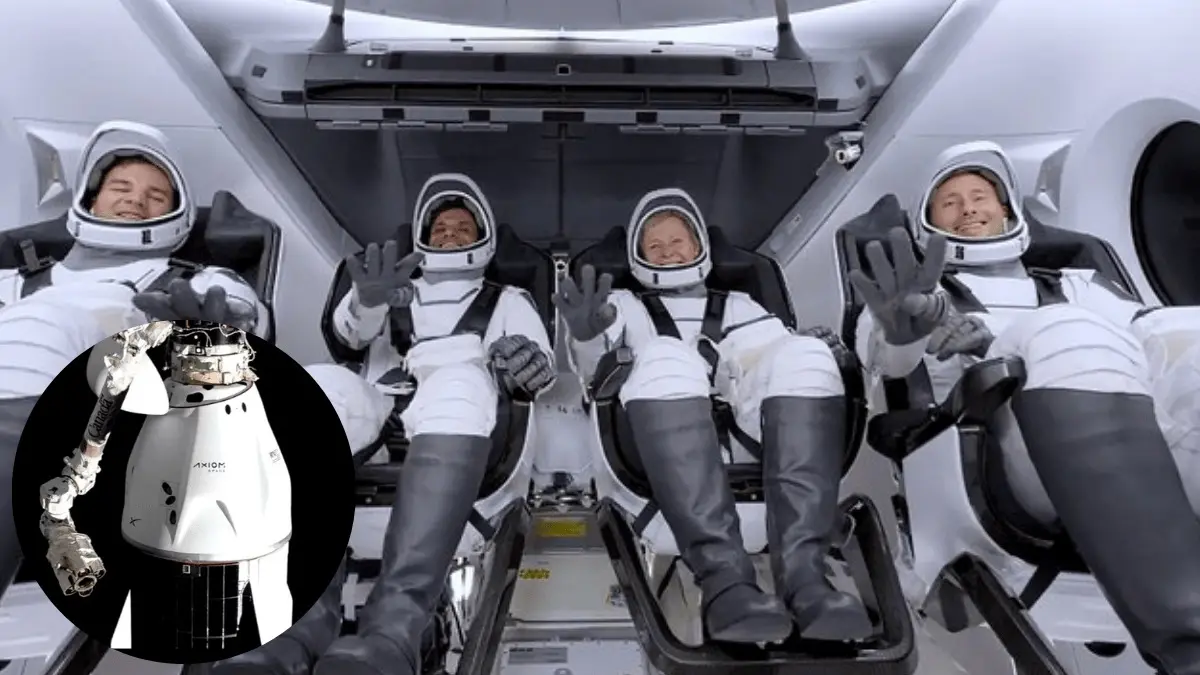
The Axiom-4 (Ax-4) mission concluded successfully on July 15 at 3:01 PM ISTas four astronauts Peggy Whitson, Sławosz Uznanski-Wisniewski, Tibor Kapu and Indian space star Shubhanshu Shukla safely splashed down in the Pacific Ocean off the coast of California, after spending 18 days aboard the International Space Station (ISS).
The journey of Shubhanshu Shukla as the first Indian in the Space after 41 years was funded by ISRO at an estimated Rs 550 crore. This is part of India's broader preparation for the Gaganyaan human spaceflight mission slated for 2027.
Axiom-4 A Global Milestone
The Axiom-4 mission has marked a milestone in the history of space exploration for three nations. India, Poland, and Hungary completed their first-ever government-backed missions to the ISS, more than four decades after their last human spaceflights.
NASA confirmed that over 580 pounds (260 kg) of research payload and hardware were returned with the crew from ISS.
Advertisement

Peggy Whitson, a spaceflight veteran and Axiom's director of human spaceflight, led the crew, which launched aboard a SpaceX Falcon 9 rocket from Kennedy Space Center on June 25 and docked at the ISS the next day.
Smooth Splashdown
After undocking from the ISS on Monday, July 14, Crew Dragon performed a series of orbital maneuvers before reentering Earth’s atmosphere and deploying parachutes for a controlled splashdown.
Advertisement
Watch Full Video Of Splashdown Here:
Shubhanshu Shukla And Crew To Undergo 7-day Rehab Measures
Shubhanshu Shukla, a Group Captain from the Indian Air Force and ISRO’s first astronaut to the ISS, along with three other Axiom-4 astronauts will now undergo a seven-day rehabilitation program to re-adapt to Earth’s gravity.
Why Do Astronauts Need Rehab After Returning from Space?
After spending days or weeks in microgravity aboard the International Space Station (ISS), astronauts undergo a carefully planned rehabilitation program to help their bodies readjust to Earth's gravity. The effects of space on the human body are wide-ranging and recovery doesn’t happen overnight.
What Happens to the Body in Space?
In the zero-gravity environment of space, the body starts to change rapidly:
Muscle weakening: Without gravity, muscles don’t work as hard leading to rapid loss of strength and coordination.
Bone loss: Bones lose minerals and density, increasing the risk of fractures both in space and after returning home.
Skin thinning: The skin becomes fragile and more prone to tears and injury.
Blurred vision: Fluid shifts in the body can affect the eyes, leading to temporary blurred vision and increased risk of cataracts.
Radiation exposure: Space radiation can damage cells and DNA, raising the risk of long-term issues like Alzheimer’s and cancer.
Motion sickness and disorientation: The inner ear loses track of ‘up’ and ‘down’, often causing nausea and confusion.
Weakened immune system: Astronauts become more susceptible to illness as immunity significantly drops in microgravity.
60 Experiments Across Fields
During their time aboard the ISS, the crew conducted more than 60 experiments covering areas such as medicine, agriculture, cancer research, astronaut mental health, and microgravity physics.
Captain Shubhanshu Shukla focused on experiments studying muscle and bone degradation, as well as growing microalgae as a future nutrition source. His playful and stunning demonstration of water surface tension in zero gravity went viral as he referred to himself as a ‘water bender’ on the station.
All You Need To Know About The 7 Groundbreaking Experiments by Shubhanshu Shukla
Group Captain Shubhanshu Shukla personally led seven key experiments aboard the International Space Station, including:
- Muscle Atrophy in Space: Studying muscle degradation in zero gravity
- Microalgae Metabolism: Growing algae for food and oxygen in orbit
- Crop Seed Germination: Testing how wheat and rice seeds sprout in space
- Tardigrade Resilience: Monitoring survival of microscopic life under stress
- Cyanobacteria Photosynthesis: Evaluating oxygen production in space
- Biofilm Formation: Studying bacterial growth on spacecraft surfaces
- Space Protein Crystals: Crystallizing proteins for drug development
What Is Axiom Mission 4?
The Ax-4 mission ‘realised the return’ to human spaceflight for India, Poland, and Hungary, with each nation’s first government-sponsored flight in more than 40 years. While Ax-4 marks these countries' second human spaceflight mission in history, it became the first time all three nations executed a mission on board the International Space Station. This historic mission underscores how Axiom Space is redefining the pathway to low-Earth orbit and elevating national space programs globally.
Published By : Moumita Mukherjee
Published On: 15 July 2025 at 15:03 IST