
The Finalissima That Never Was: Cancelled Match Reborn as Historic World Cup Final Between Argentina and Spain
Spain faces Argentina in a historic 2026 World Cup Final after the cancelled Finalissima. Will Messi break the 1962 curse? Read the full preview.
- SportFit
- 5 min read

;'%3e%3cpath%20d='m8,15.99c4.41,0,7.99-3.58,7.99-7.99S12.41,0,8,0,0,3.59,0,8s3.58,7.99,7.99,7.99Z'%20style='stroke:%23fff;%20stroke-miterlimit:10;%20stroke-width:.02px;'/%3e%3cpath%20d='m3.08,3.37l3.82,5.11-3.84,4.15h.87l3.37-3.64,2.72,3.64h2.94l-4.04-5.39,3.58-3.87h-.86l-3.1,3.35-2.5-3.35h-2.94Zm1.27.64h1.35l5.97,7.99h-1.35l-5.97-7.99Z'%20style='fill:%23fff;'/%3e%3c/g%3e%3c/svg%3e)


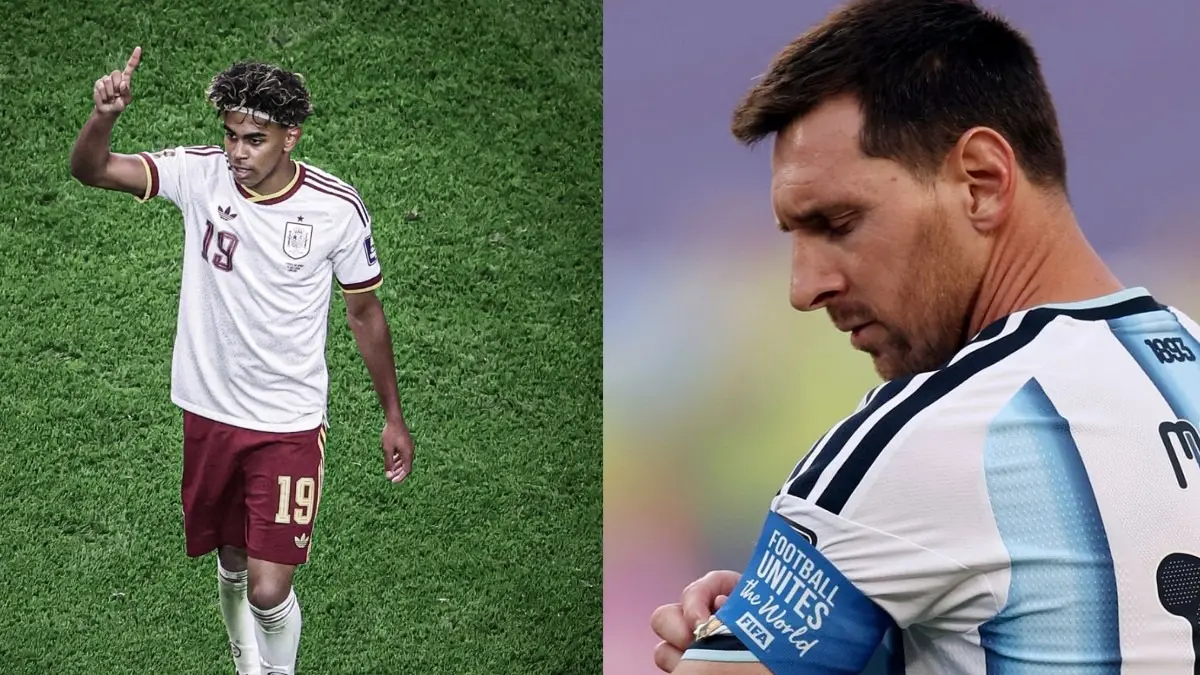
The "Finalissima"—a catchy title that might sound like a World Cup finale to the uninitiated—is actually the ultimate intercontinental showdown. It pits the reigning UEFA European Champions directly against the kings of CONMEBOL’s Copa América. If the concept sounds unfamiliar, don't worry. Only a single match has ever been contested under this official branding.
Football fans thought they were getting the dream matchup when Argentina and Spain were slated to collide. It was the Finalissima everyone desperately wanted to see, designed to resolve unfinished business between the world's two most dominant footballing regions.
For months, the global audience anticipated this heavyweight clash. However, a toxic mix of scheduling conflicts, venue disputes, and logistical nightmares ultimately broke the schedule, preventing the historic game from ever taking place.
From Qatar to Chaos: Why the Match Was Cancelled
Argentina earned their ticket to the showcase by capturing the 2024 Copa América, while Spain punched their ticket by hoisting the UEFA Euro 2024 trophy. The grand spectacle was locked in for March 27, 2026, at the iconic Lusail Stadium in Qatar—the very pitch where Argentina claimed World Cup glory in 2022.
Advertisement
Then, geopolitics intervened. Escalating international conflict involving the United States, Israel, and Iran rendered travel to the Middle East unsafe for the teams. With Qatar no longer a viable option, UEFA officially declared the original venue unusable. What followed was a frantic, ultimately doomed scramble to save the fixture.
The Tug-of-War Over the Venue
With the Middle East off the table, Spain and European football executives pushed heavily to move the crown-jewel match to Madrid, eyeing the Santiago Bernabéu Stadium.
Advertisement
This did not sit well with the Argentine Football Association (AFA). They argued that playing for a global title on Spanish soil handed La Roja an unfair competitive advantage. AFA President Claudio “Chiqui” Tapia dug his heels in, countering with a proposal to host the clash at the Estadio Monumental in Buenos Aires.
“Spain wants the Finalissima to be played in Spain, and I want it to be played at the Monumental,” Tapia stated bluntly during the tense negotiations.
With both sides rejecting a neutral territory, the talks rapidly deteriorated.
Two Sides, Zero Agreement
UEFA maintained that it offered multiple compromises, including a Madrid venue, a two-legged home-and-away series, or alternative European sites, claiming the Argentine federation rejected them all. Conversely, CONMEBOL and the AFA insisted Argentina was open to neutral ground, reiterating that playing strictly in Spain destroyed sporting equity.
Compounding the stadium feud was a claustrophobic international calendar. With the World Cup rapidly approaching, time simply ran out. The 2026 Finalissima was officially abandoned, leaving the trophy without a winner and following up on the 2022 edition where Argentina swept Italy 3–0 at Wembley.
The Ultimate Twist: A World Cup Final Destiny
While the official Finalissima trophy will go unawarded, the 2026 FIFA World Cup found an astonishing way to settle the score. In a historic twist, Spain and Argentina have marched all the way to the World Cup Final at the New York New Jersey Stadium in East Rutherford, New Jersey.
For the first time since the European Championship debuted in 1960—decades after the inaugural 1916 Copa América—the reigning champions of Europe and South America will battle in a World Cup Final. The stakes are no longer a collaborative intercontinental cup; they are playing for the absolute pinnacle of football.
Spain’s Flawless March vs. Argentina’s Gritty Survival
The contrasting paths both titans took to reach New Jersey highlight their unique strengths.
La Roja’s Smooth Sailing
Head coach Luis de la Fuente’s squad enjoyed a highly efficient knockout stage. Spain dismantled Austria 3–0 in the Round of 32, eliminated Cristiano Ronaldo’s Portugal courtesy of a late Mikel Merino strike, and saw Merino deliver at the death again to sink Belgium 2–1 in the Quarter-Finals.
Their Semi-Final display against France was a masterclass, neutralizing a terrifying frontline featuring Kylian Mbappé, Ousmane Dembélé, and Michael Olise. Mikel Oyarzabal netted his fifth goal of the tournament from a penalty created by teenage sensation Lamine Yamal, before Pedro Porro sealed the 2–0 victory early in the second half. Spain's defense, which has leaked only one goal all tournament, choked out the French attack, holding them to a meager 0.31 xG.
La Albiceleste’s Dramatic Escape
Argentina’s journey was a rollercoaster of survival. They were pushed into extra time by tournament darlings Cape Verde in the Round of 32. In the next round against Egypt, they trailed 2–0 by the 67th minute, saw Lionel Messi miss his second penalty of the tournament, and survived a disallowed Egyptian goal via a controversial VAR review. Yet, they rallied to win 3–2 in regulation, sparking post-match refereeing controversies among rival fans.
They survived extra time again in the Quarter-Finals to beat Switzerland 3–1, and had to come from behind once more against England in the Semi-Finals. Argentine attackers punished Thomas Tuchel’s ultra-defensive tactics after the Three Lions took the lead, securing a 2–1 win.
Messi’s Date with History and the Ghost of 1962
At the center of Argentina's universe is Lionel Messi. Playing in his sixth World Cup, the eight-time Ballon d’Or winner is tied with Kylian Mbappé for the Golden Boot with eight goals. More importantly, Messi has officially surpassed Germany’s Miroslav Klose as the highest scorer in World Cup history, pushing his lifetime tournament tally to an unprecedented 21 goals.
Now, Argentina stands on the precipice of football immortality. Can they achieve the ultimate title defense?
| Country | Years |
| Italy | 1934,1938 |
| Brazil | 1958,1962 |
No country has successfully defended the World Cup since Brazil did so 64 years ago in 1962, a tournament where a young Pelé watched the 3–1 final victory over Czechoslovakia from the sidelines due to injury. If Argentina defeats Spain, they join Italy and Brazil as the only nations to ever win back-to-back World Cups.
Adding flavor to this massive finale is a fascinating subplot on the sidelines. Years before Lionel Scaloni guided Argentina to global dominance, he completed his UEFA Pro Licence training in Spain. One of the master instructors whose tactical sessions he attended? None other than the man leading Spain from the opposing dugout on Sunday: Luis de la Fuente.