
81% of Calls Ignored: Inside the TRAI-Truecaller Standoff Over India's Spam Rules
TRAI and Truecaller are locked in a public fight over India’s official caller-ID rules, as loopholes in the 140 and 160 number series erode trust in banking and promotional calls. The dispute highlights the growing tension between regulation, technology, and user safety in India’s telecom ecosystem.
- Tech News
- 4 min read

;'%3e%3cpath%20d='m8,15.99c4.41,0,7.99-3.58,7.99-7.99S12.41,0,8,0,0,3.59,0,8s3.58,7.99,7.99,7.99Z'%20style='stroke:%23fff;%20stroke-miterlimit:10;%20stroke-width:.02px;'/%3e%3cpath%20d='m3.08,3.37l3.82,5.11-3.84,4.15h.87l3.37-3.64,2.72,3.64h2.94l-4.04-5.39,3.58-3.87h-.86l-3.1,3.35-2.5-3.35h-2.94Zm1.27.64h1.35l5.97,7.99h-1.35l-5.97-7.99Z'%20style='fill:%23fff;'/%3e%3c/g%3e%3c/svg%3e)


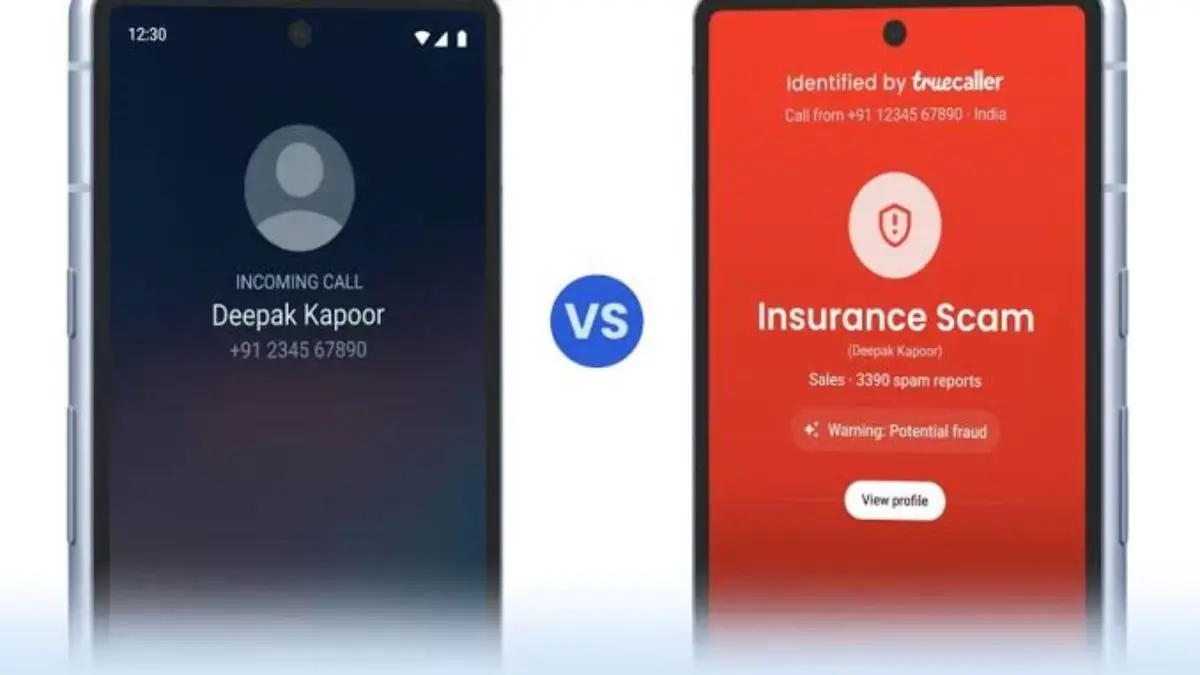
Your bank calls you with an urgent alert. You don't pick up. Not because you're busy, but because your phone gives you no reason to trust it's really your bank. That's the situation millions of Indians are dealing with right now, and it's at the center of a very public fight between the country's telecom regulator and the app most of us rely on to filter our calls.
What's the Fight About?
On one side is TRAI, the Telecom Regulatory Authority of India, the government body that decides how phone networks are run. On the other is Truecaller, the caller-ID app that hundreds of millions of people use every day to figure out who's calling before they pick up.
These two are now in an open disagreement, and the reason behind it is actually pretty simple once you break it down.
TRAI wanted people to be able to trust official calls, things like bank alerts or verified telemarketing calls. So it created two special number series- 140 for promotional calls, and 160 for banking and financial service calls.
Advertisement
The rule that came with it was clear. Apps like Truecaller were told never to mark these numbers as spam, no matter what. The goal was to protect real businesses from being blocked by mistake.
The Backfiring
According to Truecaller, that rule ended up backfiring. Because numbers in these series could never be flagged, scammers and aggressive marketers found a loophole. They started using the same number ranges to send out unwanted calls, knowing full well those calls would never get tagged as spam.
Advertisement
The numbers Truecaller has shared are hard to ignore. People are now ignoring 81% of calls from the 140 series and 79% of calls from the 160 series. That means even legitimate banks and businesses trying to reach their own customers are getting ignored, simply because people can no longer tell which of these calls are actually safe.
Truecaller's Workaround, and Why TRAI Isn't Happy
Instead of directly breaking the rule, Truecaller came up with a new label called "Frequently Blocked." It doesn't call a number spam outright, but it does let users know that a lot of other people have chosen to block it.
TRAI wasn't pleased with this either. The regulator has now approached the Ministry of Electronics and IT, asking for legal powers under the IT Act so it can take action against caller-ID apps that it feels are working around its rules.
The Two Sides of the Argument
TRAI's position is that if apps keep flagging or discouraging calls from these official number series, real businesses might eventually just give up and go back to using regular 10-digit numbers. And that, TRAI argues, would make things worse, because it would become even harder for people to tell a genuine call apart from a scam. TRAI also points out that Truecaller is a digital app, not a telecom company, which is exactly why it wants direct oversight over how the app operates.
Truecaller sees it very differently. CEO Rishit Jhunjhunwala has been blunt about it, saying the proposed regulation "makes absolutely no sense." His argument comes down to this: punishing the tool that's trying to protect people doesn't solve anything. Go after the scammers instead. Truecaller maintains that restricting apps like theirs only ends up hurting the very users they were built to protect.
What Now
Truecaller says it plans to hand over its call data and user statistics to the Ministry, hoping the numbers will show just how much trust has eroded under the current rules. Meanwhile, TRAI's request for enforcement powers over apps like Truecaller is still sitting with the government, waiting to be decided.
Until then, it's ordinary phone users who are stuck in the middle, left wondering whether to trust the call, the app, or the rulebook, when none of the three seem fully in sync right now.