
Apple Is Changing How Kids Use Their iPhone This Fall, Here’s What You Need to Know
Apple is rolling out major child safety and parental control updates for iPhones this fall. Here's what the new features mean for kids, parents, app downloads, age verification and online safety.
- Tech News
- 3 min read

;'%3e%3cpath%20d='m8,15.99c4.41,0,7.99-3.58,7.99-7.99S12.41,0,8,0,0,3.59,0,8s3.58,7.99,7.99,7.99Z'%20style='stroke:%23fff;%20stroke-miterlimit:10;%20stroke-width:.02px;'/%3e%3cpath%20d='m3.08,3.37l3.82,5.11-3.84,4.15h.87l3.37-3.64,2.72,3.64h2.94l-4.04-5.39,3.58-3.87h-.86l-3.1,3.35-2.5-3.35h-2.94Zm1.27.64h1.35l5.97,7.99h-1.35l-5.97-7.99Z'%20style='fill:%23fff;'/%3e%3c/g%3e%3c/svg%3e)


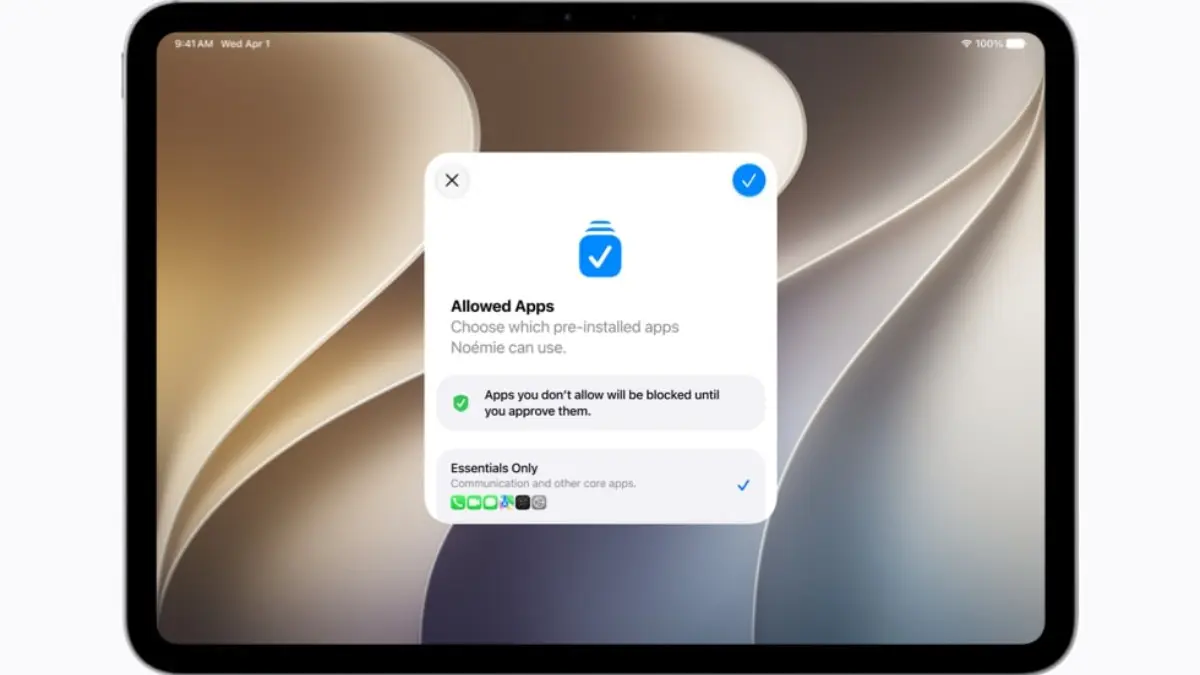
Handing a smartphone to a kid often feels like opening a door to a world you can't control. This autumn, Apple is trying to change that dynamic by completely rebuilding how its devices handle parental supervision.
Launching alongside iOS 27, this update moves away from the old method of simply locking a child out of their phone. Instead, the tech giant is shifting toward a system of gradual freedom, giving parents automated tools to filter web access, block explicit messaging, and easily manage daily screen limits.
Crucially, this rollout happens as tech companies face intense global pressure to protect minors from online harm at the device level.
Freezing the Web with "Ask to Browse"
For years, Apple's "Ask to Buy" feature has successfully stopped kids from draining their parents' bank accounts on random mobile games. Now, that same logic is being applied to the entire internet through a tool called Ask to Browse.
Advertisement
Previously, blocking inappropriate web content meant parents had to manually plug in endless lists of blocked websites, a clumsy system that was easily bypassed. Under the new setup, when a child tries to open an unapproved link or website in Safari, the page locks up. A notification is instantly sent to the parent's device via Messages, letting them review and approve or deny the link with a single tap.
AI Filters Out Graphic Violence
Apple is also expanding its built-in Communication Safety filters. While modern iPhones already look for and blur nudity in Messages and FaceTime, the system has historically ignored other types of upsetting media.
Advertisement
With the upcoming update, the phone's on-device AI will automatically detect and blur graphic violence and gore in shared images and videos. Before a minor can open a violent image, the phone will intervene with an explicit warning screen. Additionally, children will be blocked from messaging or saving new, unverified phone numbers unless a parent approves the contact first.
Grouping App Limits Together
The redesigned Screen Time dashboard attempts to fix a tool that many parents found too tedious to manage. Instead of forcing you to set time limits on dozens of apps individually, a new feature called Time Allowances lets you set a single time limit across entire categories, such as "Games" or "Social Media.”
To assist parents who aren't sure where to start, the system provides age-specific baseline recommendations created in partnership with child health experts. The update also introduces an instant override button, allowing a parent to temporarily freeze all non-essential apps during dinner or outdoor play without messing up their weekly schedule.
Forcing Apps to Behave (Without Giving Up Privacy)
One of the hardest parts of digital parenting is making third-party apps behave safely without forcing kids to hand over sensitive personal data, like their exact birthday.
To solve this, Apple is introducing the Declared Age Range API. This tool tells a downloaded app a kid's broad age bracket (like "11 to 13 years old") without sharing their private details. The app can then automatically disable public chat rooms or filter its content internally, while the child's actual identity remains completely hidden.
These features will arrive later this year as free software updates on iOS 27, iPadOS 27, and macOS 27.