Chinese Startup Moonshot's Kimi K3 AI Model Halts New Subscription As Demand Swaps Capacity
The development highlighted challenges faced by Chinese AI models in serving a growing user base at home and abroad at a time the U.S.-China tech race is heating up.
- Tech News
- 3 min read

;'%3e%3cpath%20d='m8,15.99c4.41,0,7.99-3.58,7.99-7.99S12.41,0,8,0,0,3.59,0,8s3.58,7.99,7.99,7.99Z'%20style='stroke:%23fff;%20stroke-miterlimit:10;%20stroke-width:.02px;'/%3e%3cpath%20d='m3.08,3.37l3.82,5.11-3.84,4.15h.87l3.37-3.64,2.72,3.64h2.94l-4.04-5.39,3.58-3.87h-.86l-3.1,3.35-2.5-3.35h-2.94Zm1.27.64h1.35l5.97,7.99h-1.35l-5.97-7.99Z'%20style='fill:%23fff;'/%3e%3c/g%3e%3c/svg%3e)


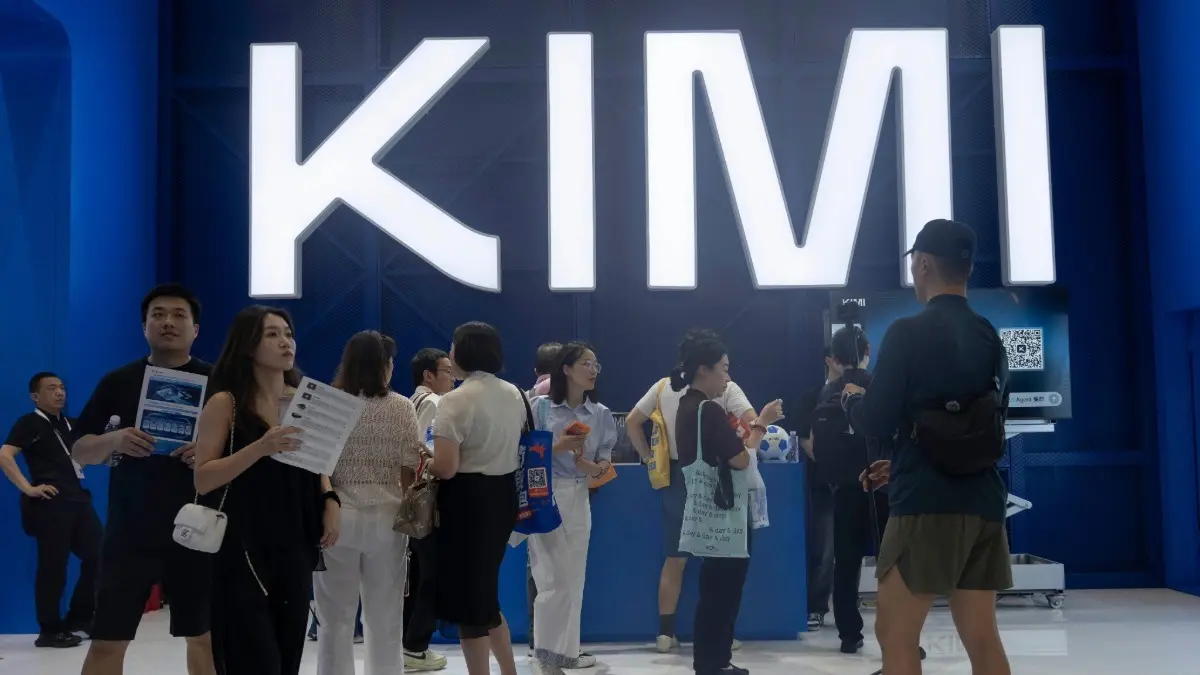
The new, powerful Chinese artificial intelligence model Kimi K3, which has caused a stir in the US tech industry, has suspended new subscriptions after a flood in demand overwhelmed capacity within days of the launch.
The development highlighted challenges faced by Chinese AI models in serving a growing user base at home and abroad at a time the US-China tech race is heating up.
Chinese open-source, lower-cost advanced AI models, including DeepSeek’s latest V4, have been moving fast in gaining global attention. In early 2025, DeepSeek shook world markets and helped China to be recognized as a serious competitor to the US, where Chinese frontier AI models are largely open source, meaning they are made accessible for people to examine and build upon.
“Kimi K3 has received far more love than we expected,” Moonshot AI, which is Beijing-based, wrote in a X post late on Sunday. “Over the past 48 hours, demand has pushed close to the limits of our current capacity.”
Advertisement
Moonshot said that it’s prioritising existing subscribers and would be temporarily pausing new ones. “We’re adding capacity as fast as we can and will reopen new subscription spots in batches," it added. The AI startup also posted a similar message on Chinese social media.
K3’s public rollout late last week, aiming at challenging more advanced AI models by Anthropic,OpenAI and others, has rattled US rivals. At 2.8 trillion parameters, a measurement of an AI model’s capabilities, it's deemed as the world’s largest open-source AI model.
Advertisement
“New model releases generally trigger massive interest, which can strain existing compute infrastructure,” said Lian Jye Su, a chief analyst at the technology research and advisory group Omdia. “This does show Moonshot AI does not have sufficient compute chips to serve the current surge in demand.”
Su said that the key reason was more likely due to Moonshot not fully anticipating the surge in K3’s popularity. K3 is “very demanding” in terms of compute requirements, he said, making compute allocation challenging and expensive.
By measure of front-end coding capability, a metric for AI models’ performances, Kimi K3 topped the chart of the major advanced AI models in rankings on Arena — an AI model evaluation platform — after its public release.
K3’s release has also put pressure on stocks of American technology titans on worries that more affordable Chinese AI models may undercut the pricing power and demand at the US. AI companies, even as US-led restrictions have already barred China from accessing some of the world’s advanced technologies, including the most cutting-edge chips.
K3 is one of the latest new Chinese AI models coming out that have drawn strong global reactions.
Over the weekend, China’s Alibaba also previewed its latest Qwen3.8 Max AI model, which the tech giant said had 2.4 trillion parameters as one of the world’s most powerful models and was second only to Anthropic’s Fable 5. Last month, Chinese startup Zhipu, or Z.ai, also rolled out its GLM-5.2 model, which saw rapid adoption across the world.