
Reinventing a Legacy: How Keshav Bansal Is Preparing Intex For India's Next Consumer Electronics Boom
India's consumer electronics market is entering a new phase of growth. Rising incomes, greater digital adoption, expanding electrification and a growing appetite for smart, energy-efficient products are reshaping consumer expectations.

;'%3e%3cpath%20d='m8,15.99c4.41,0,7.99-3.58,7.99-7.99S12.41,0,8,0,0,3.59,0,8s3.58,7.99,7.99,7.99Z'%20style='stroke:%23fff;%20stroke-miterlimit:10;%20stroke-width:.02px;'/%3e%3cpath%20d='m3.08,3.37l3.82,5.11-3.84,4.15h.87l3.37-3.64,2.72,3.64h2.94l-4.04-5.39,3.58-3.87h-.86l-3.1,3.35-2.5-3.35h-2.94Zm1.27.64h1.35l5.97,7.99h-1.35l-5.97-7.99Z'%20style='fill:%23fff;'/%3e%3c/g%3e%3c/svg%3e)


India's consumer electronics market is entering a new phase of growth. Rising incomes, greater digital adoption, expanding electrification and a growing appetite for smart, energy-efficient products are reshaping consumer expectations. Households are no longer buying appliances solely on price. They are looking for better technology, dependable service and products that deliver long-term value.
This shift has intensified competition, with global brands expanding aggressively while new players continue to enter the market. Yet, amid this changing landscape, established Indian brands are discovering that familiarity, trust and an understanding of local consumers remain powerful competitive advantages.
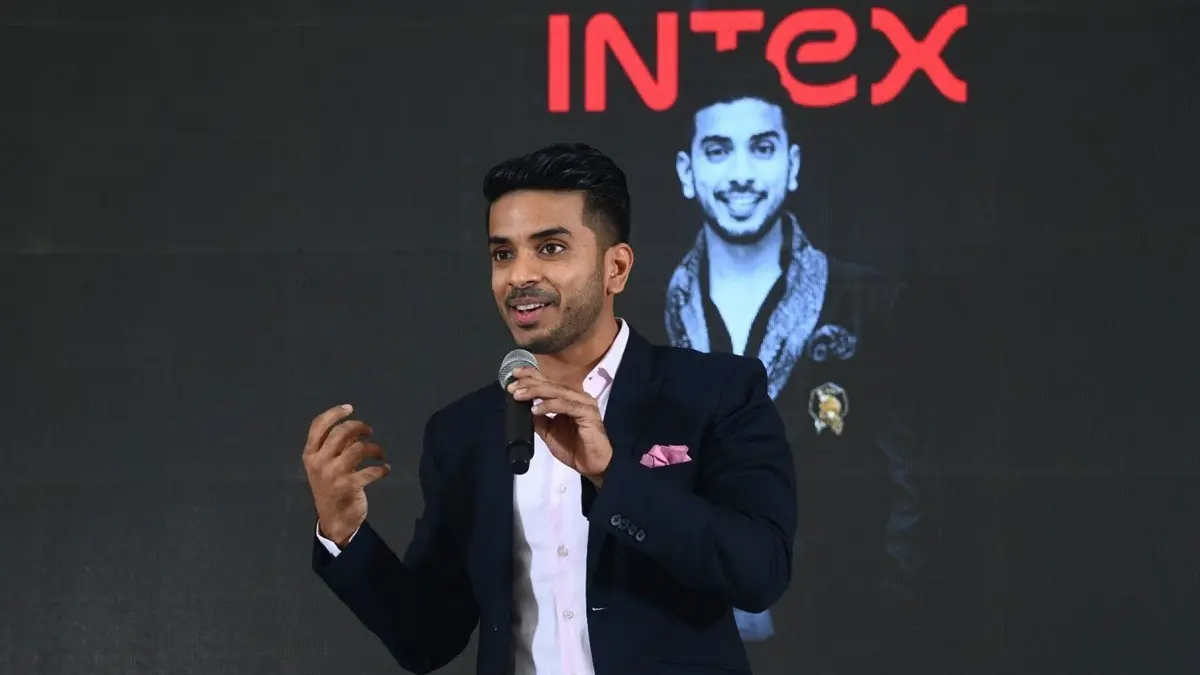
Among them is Intex Technologies, a company that has spent nearly three decades evolving alongside the Indian consumer. What began in the mid-1990s with Ethernet cards and PC accessories has transformed into a diversified consumer electronics business spanning smart televisions, air conditioners, washing machines, air coolers, home appliances, display solutions and security products. Under the leadership of Keshav Bansal, Director, Intex Technologies, the company is now positioning itself to capture the next wave of growth in India's rapidly expanding consumer electronics market. The company's latest growth strategy reflects not only changing market dynamics but also a broader shift in how Indian consumers are choosing technology for their homes.
"Our journey has always been about evolving with the aspirations of Indian consumers while staying true to our core purpose of making technology accessible and relevant," says Keshav Bansal, Director, Intex Technologies. "Consumers continue to value brands they can trust, brands that offer reliable products, dependable service and genuine value. That trust remains one of our greatest strengths."
Advertisement
That trust is increasingly becoming a differentiator in a market where purchase decisions extend well beyond product specifications. Consumers today evaluate ownership experience, energy efficiency, service support and product longevity just as carefully as they compare prices.
The company's recent performance reflects the opportunities emerging in this space. Consumer durables have become Intex's primary growth engine, with the segment recording more than 80 percent year on year growth during FY2025-26. Rather than pursuing expansion across every category, the company is concentrating on segments where consumer demand continues to strengthen, including smart televisions, air conditioners, washing machines, air coolers and home appliances.
Advertisement
The timing appears favourable. Penetration levels for several consumer durable categories remain relatively low across India, particularly outside major metropolitan cities. As disposable incomes improve and aspirations rise, millions of households are expected to upgrade from basic appliances to smarter, larger and more energy-efficient alternatives.
Those changing aspirations are visible across purchasing behaviour. Consumers are increasingly opting for larger television screens, connected entertainment platforms and appliances that reduce electricity consumption without significantly increasing acquisition costs. While premium features are attracting attention, affordability continues to influence buying decisions, particularly in Tier II and Tier III markets.
According to Bansal, innovation must ultimately solve everyday problems rather than simply showcase technology.
"We're seeing consumers upgrade faster, especially in categories like televisions, while energy efficiency has become a major consideration," he explains. "Technology doesn't create value until it improves everyday life. That's the principle that continues to guide every product we bring to market."
This philosophy has shaped the company's recent product introductions, including larger 65-inch and 75-inch QLED televisions, energy-efficient air conditioners and BLDC technology fans that reduce power consumption. Rather than positioning premium technology as exclusive, Intex is attempting to make advanced features accessible to a much wider audience through value-driven pricing.
That balance between affordability and innovation has long defined the brand's identity. However, maintaining it requires more than competitive pricing. Efficient sourcing, disciplined product engineering, local manufacturing and supply chain optimisation have become essential for delivering advanced features without compromising product quality or after-sales support.
For Intex, affordability has never been viewed as offering less. Instead, it is about making better technology available to more households without sacrificing reliability.
Another significant pillar of the company's strategy is domestic manufacturing. As India strengthens its position as a global electronics manufacturing hub through localisation initiatives and policy support, companies with established manufacturing ecosystems are gaining greater operational flexibility.
Today, nearly 95 percent of Intex's product portfolio is manufactured in India through its own facilities and manufacturing partners. Beyond improving supply chain resilience, local production enables faster responses to market demand while allowing products to be designed specifically for Indian usage conditions.
The emphasis on localisation extends beyond manufacturing alone. Indian consumers often have distinct expectations shaped by climate, regional preferences, infrastructure and household budgets. Products that succeed nationally frequently require adaptations that global standardised offerings may not always address effectively.
"Being a homegrown brand gives us an inherent advantage because we understand India's diversity in a way very few global companies can," says Keshav Bansal, Director, Intex Technologies. "That understanding influences everything from product development and pricing to distribution and after-sales service."
Distribution itself remains one of the company's strongest competitive assets. While e-commerce continues to expand rapidly, consumer durables often remain high-involvement purchases where physical product experience and local service assurance influence buying decisions.
Intex currently reaches more than 18,000 pin codes through over 500 distributors, 25,000 retail partners and more than 500 authorised service centres across the country. This extensive offline network complements the company's digital presence rather than competing with it.
Consumers increasingly begin their purchase journey online, comparing features, prices and reviews before visiting nearby retailers to experience products firsthand. The ability to combine digital discovery with physical availability and dependable after-sales support has become increasingly valuable as purchase decisions become more informed.
Service, particularly outside metropolitan markets, often determines long-term brand loyalty. For many families investing in appliances such as washing machines or air conditioners, confidence that assistance will be available years after purchase is as important as the product itself.
Looking ahead, Intex sees India's consumer electronics opportunity extending well beyond first-time buyers. The next growth cycle is expected to be driven by upgrades as households replace older appliances with smarter, larger and more energy-efficient alternatives.
The company's long-term ambition reflects this transition. Rather than measuring success solely through revenue or market share, Intex is focused on strengthening consumer trust, expanding manufacturing capabilities, deepening its distribution network and continuously improving customer experience.
"Our vision is to establish Intex as one of India's most trusted and admired consumer electronics brands," says Keshav Bansal, Director, Intex Technologies. "If, over the next decade, Intex becomes an indispensable part of every upgrading Indian household, we will consider that our greatest milestone."
As India's consumer electronics industry enters its next phase of expansion, competition will undoubtedly intensify. Yet brands that combine local understanding with manufacturing strength, accessible innovation and dependable service are likely to remain well positioned. For Intex, the next chapter is less about reinventing its identity and more about building on the credibility it has earned over nearly three decades while adapting to the aspirations of a new generation of Indian consumers.