Xiaomi 17T Review: The 5x Camera Phone That Doesn't Need an Extra Lens
While some competing phones rely on optional lens extender kits to achieve longer focal lengths, the Xiaomi 17T puts a dedicated 50MP Leica 5x periscope telephoto camera directly inside the phone.
- Tech News
- 10 min read

;'%3e%3cpath%20d='m8,15.99c4.41,0,7.99-3.58,7.99-7.99S12.41,0,8,0,0,3.59,0,8s3.58,7.99,7.99,7.99Z'%20style='stroke:%23fff;%20stroke-miterlimit:10;%20stroke-width:.02px;'/%3e%3cpath%20d='m3.08,3.37l3.82,5.11-3.84,4.15h.87l3.37-3.64,2.72,3.64h2.94l-4.04-5.39,3.58-3.87h-.86l-3.1,3.35-2.5-3.35h-2.94Zm1.27.64h1.35l5.97,7.99h-1.35l-5.97-7.99Z'%20style='fill:%23fff;'/%3e%3c/g%3e%3c/svg%3e)


The smartphone industry appears to have found its latest obsession: making flagship-grade cameras slightly more affordable.
The Xiaomi 17T arrives as a trimmed-down alternative to the Xiaomi 17, aimed at people who want a serious camera phone without paying flagship prices. At ₹59,999, it enters a category that is suddenly becoming crowded with devices such as the Vivo X300 FE and OPPO Find X9s, where manufacturers prioritise cameras while making calculated compromises elsewhere.
Xiaomi, however, has an interesting answer to its rivals.
While some competing phones rely on optional lens extender kits to achieve longer focal lengths, the Xiaomi 17T puts a dedicated 50MP Leica 5x periscope telephoto camera directly inside the phone. Xiaomi isn't particularly subtle about the comparison either. Its pitch is effectively a jibe at phones that require you to attach an extra piece of hardware to achieve similar zoom capabilities.
Advertisement
After using the Xiaomi 17T, I think the argument mostly holds up.
This isn't a flagship killer in the traditional sense. The MediaTek Dimensity 8500-Ultra isn't a top-of-the-line processor, and some compromises become apparent once you start pushing the phone. But when it comes to photography, particularly zoom photography, the Xiaomi 17T delivers something genuinely different at this price.
Advertisement

What's Good
A premium design that gets people asking questions
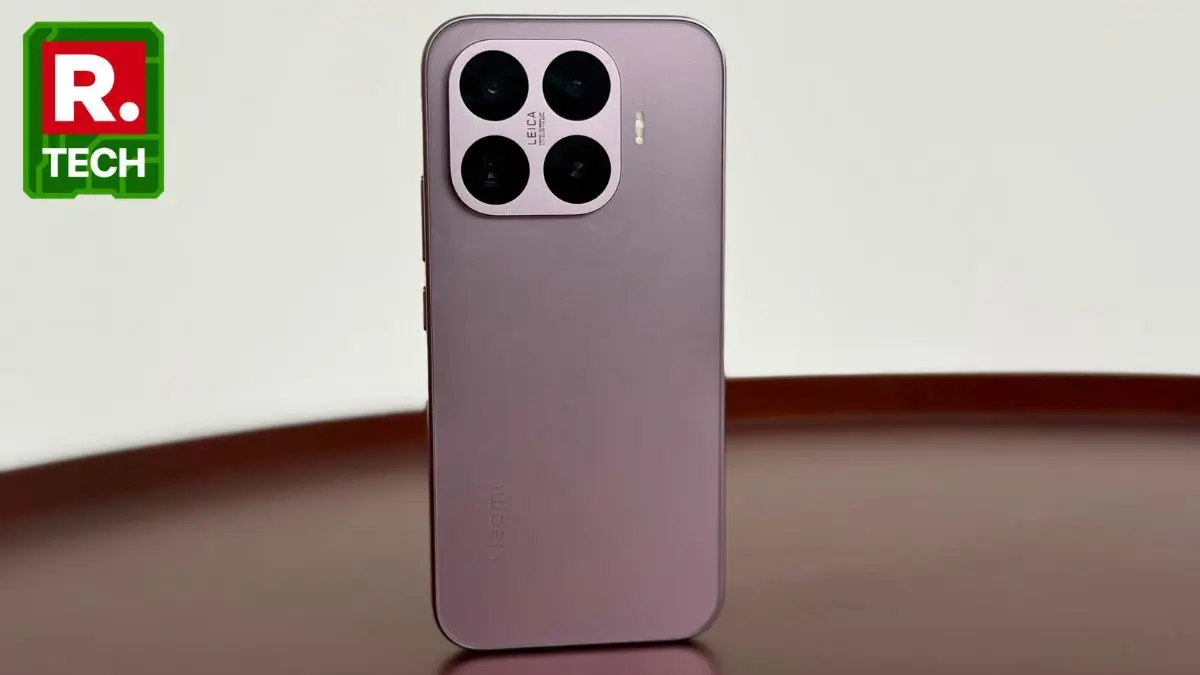
The Xiaomi 17T is one of those phones that attracts attention without desperately asking for it. My Violet review unit stood out immediately. The colour is distinctive, while the metallic yet muted finish on the back gives the phone an expensive appearance without becoming flashy. Black and Blue options are also available if Violet feels a little too adventurous.
I had people asking me what phone I was using solely because of how it looked. When I told them about the 5x optical zoom camera, some were already convinced about buying it. Perhaps I should start asking Xiaomi for commission.
The phone is also surprisingly comfortable to use.
At 8.17mm thick and 200g, it isn't particularly light, but the curved corners prevent the frame from digging into my palms during prolonged use. The buttons are positioned within easy reach of my right thumb, while reaching the top of the display during one-handed operation rarely required awkward finger gymnastics.
The large camera island does cause the phone to wobble slightly when placed on a flat surface, but I never found it particularly bothersome.
Gorilla Glass 7i protects the display, while IP68 protection adds some reassurance against water and dust. These aren't features you'll necessarily appreciate every day, but they matter on a phone costing nearly ₹60,000.
The 5x Leica camera is the star
The Xiaomi 17T's biggest reason for existence is its camera system. You get a 50MP Leica main camera with optical image stabilisation, a 50MP Leica periscope telephoto camera offering 5x optical zoom, and a 12MP ultrawide camera. The front houses a 32MP selfie camera. The 5x telephoto uses a 115mm equivalent focal length, while digital zoom stretches all the way to 120x with Xiaomi's AI Ultra Zoom processing.
This is also an important moment for Xiaomi's long-running partnership with Leica. The collaboration, traditionally associated with Xiaomi's more expensive camera flagships, has now trickled down to the T series in India. And the benefits are immediately visible.
The 50MP main camera is excellent.
Daylight photos contain immaculate levels of detail, while dynamic range is handled well in most situations. I clicked photos of leaves and foliage where the textures looked closer to something captured using a dedicated camera than a smartphone.
Close-up photography is similarly impressive.
Colours are generally pleasing, and Xiaomi gives you Leica Authentic and Leica Vibrant photographic styles depending on the look you prefer. I found myself switching between them depending on the subject rather than sticking permanently with one.
But the periscope camera is what makes the Xiaomi 17T interesting.
Photos captured at 5x retain impressive detail and allow you to photograph subjects that would otherwise require physically moving closer. Portraits also benefit from the longer focal length, producing natural-looking compression and pleasing background separation. Edge detection is generally accurate, although some photos can appear slightly soft.
That softness isn't necessarily bad. In portraits, particularly, it can occasionally make skin tones appear more flattering without looking aggressively processed.
Going beyond 5x introduces compromises.
At around 10x, hybrid zoom still produces usable photos, but fine details begin disappearing and colour accuracy becomes less consistent. Push towards the ridiculous 120x limit and computational processing inevitably takes over. I see that mode more as a technological demonstration than something I would regularly use.
For me, 5x remains the sweet spot.
And that is precisely where Xiaomi's argument against external telephoto extenders makes the most sense. I don't need to carry another accessory, attach it to the phone, and remove it when I'm done. I simply open the camera, tap 5x, and shoot.
Video recording is impressive for the price
The Xiaomi 17T is also a capable video camera.
Both the main and telephoto cameras produce well-stabilised footage, while the phone supports 4K HDR10+ recording at up to 60fps. Xiaomi also includes Log video recording at up to 4K 60fps, giving more experienced creators additional flexibility during colour grading.
The results aren't quite at the level of the iPhone 17, particularly when it comes to consistency in colour and exposure.
But the iPhone is also more expensive.
Within its price category, the Xiaomi 17T offers one of the better video experiences I've encountered. The ability to switch between the main and telephoto perspectives also makes it considerably more versatile for creators.
The AMOLED display is fantastic for movies
The 6.59-inch 1.5K AMOLED display is another highlight. It is sharp, colourful, and highly customisable. Xiaomi allows you to adjust the colour profile depending on whether you prefer punchier colours or something more restrained.
Brightness reaches up to 3500 nits under specific conditions, and outdoor legibility is excellent. I could comfortably read messages and articles under bright sunlight without squinting at the display like I was trying to decipher an eye test.
HDR10+ and Dolby Vision support make the phone particularly enjoyable for streaming.
I watched Off Campus on Prime Video in HDR and Enola Holmes on Netflix in Dolby Vision, and both looked excellent. Dark scenes retain impressive contrast, colours pop without becoming excessively saturated, and the sharp resolution makes the display feel suitably premium.
The display supports refresh rates up to 120Hz, and you can let the phone adjust the refresh rate automatically. Unfortunately, that implementation isn't always perfect, but more on that later.
Performance is better than the processor name suggests
The MediaTek Dimensity 8500-Ultra isn't a flagship processor. Most of the time, I forgot that.
The 4nm chipset is paired with 12GB of LPDDR5X RAM and fast UFS 4.1 storage, and that combination makes everyday usage remarkably smooth. Apps open quickly, switching between multiple applications feels effortless, and background apps rarely need to reload unnecessarily.
Browsing, social media, photo processing, and multitasking never presented significant problems during my usage.
HyperOS also contributes to the fluidity. Xiaomi's AI tools are particularly useful for productivity. As a journalist, I found transcription-related functionality genuinely helpful when dealing with interviews and recordings. This is the kind of AI integration I appreciate: something that saves me time rather than generating questionable cartoon versions of my photos.
Battery life is dependable
The 6500mAh silicon-carbon battery comfortably lasted me an entire day. Even with photography, social media, navigation, video streaming, and occasional gaming thrown into the mix, I rarely found myself worrying about reaching for the charger before bedtime.
The phone supports 67W wired HyperCharge, and a full top-up takes under an hour in my experience.
Xiaomi also supports 22.5W wired reverse charging, which effectively allows the 17T to double as an emergency power bank for accessories or even another phone.
What's Bad
The processor isn't built for flagship-level gaming
The Dimensity 8500-Ultra is powerful. It isn't flagship powerful.
That distinction becomes apparent when playing demanding games at their highest graphics settings. BGMI, Call of Duty Mobile, and Genshin Impact all ran well during my testing, but pushing the graphics settings to maximum occasionally introduced frame drops and stutters.
Reducing the settings slightly transformed the experience.
Once I stopped demanding flagship-level graphics from a non-flagship processor, gameplay became significantly smoother. Casual gamers won't have much to complain about. People buying a ₹59,999 phone primarily for competitive gaming, however, can find more powerful alternatives.
Adaptive refresh rate needs better optimisation
The 120Hz display generally feels smooth. Generally.
I occasionally noticed the phone incorrectly determining when to lower the refresh rate, resulting in momentary jitter while navigating through certain apps or content.
Interestingly, I didn't encounter the same problem while gaming.
That suggests this is more likely a HyperOS optimisation issue than a limitation of the display itself. Hopefully, Xiaomi can address it through software updates.
Low-light photography is disappointing
This is the biggest weakness of an otherwise impressive camera system.
Daylight photography is excellent. Low-light photography isn't.
Photos captured at night using both the rear and front cameras can contain considerable noise. In particularly difficult lighting conditions, some shots came out poorly enough that I wouldn't consider posting them on social media.
That's disappointing because the camera system sets such high expectations during daytime usage.
The 32MP selfie camera has similar limitations. Under bright lighting, selfies look pleasing, although slightly soft. Once the available light drops, however, image quality deteriorates noticeably.
The ultrawide camera feels like an afterthought
The 12MP ultrawide camera does its job. That's about the nicest way I can describe it.
It captures considerably more of a landscape than the main camera, which is useful for architecture and group photos, but the reduction in detail is noticeable.
The difference becomes even more obvious when you switch directly from the excellent main or 5x telephoto camera.
On a phone built so heavily around photography, I would have preferred Xiaomi to give the ultrawide camera more attention.
The speakers are loud, but lack character
The stereo speakers can get impressively loud. Unfortunately, they lack depth and bass.
Dialogue remains clear, so watching YouTube videos or casually streaming a show is perfectly fine. Music and cinematic content, however, sound flatter than I would expect from a phone in this price category.
Given how good the Dolby Vision display is, I frequently found myself reaching for earbuds to complete the experience.-1784565336987.webp)
Verdict
Rating: 4/5
The Xiaomi 17T arrives at a time when camera-focused smartphones are becoming increasingly common. That makes standing out difficult.
Yet Xiaomi has managed to find a compelling differentiator.
The 50MP Leica 5x periscope camera isn't merely another sensor added to inflate the camera count. It fundamentally changes how I used the phone's camera, allowing me to capture distant subjects and better portraits without attaching an external lens extender.
The main camera is excellent, the display is gorgeous, performance is smooth for everyday workloads, and the 6500mAh battery comfortably lasts a day.
There are compromises.
Low-light photography needs improvement, the ultrawide camera feels underwhelming, HyperOS occasionally struggles with refresh-rate optimisation, and the Dimensity 8500-Ultra isn't going to satisfy hardcore gamers demanding maximum graphics settings.
But at ₹59,999, I don't think the Xiaomi 17T needs to be the fastest phone.
It needs to deliver on its promise of bringing a more serious camera experience to people who don't want to pay flagship prices. And for the most part, it does.
The Xiaomi 17T's biggest achievement isn't that it can zoom up to 120x. It's that the 5x camera is good enough that I rarely felt the need to go any further.