
20 Million Mourners, Thousands of Fresh Graves: Inside Iran's Extraordinary Preparations for Khamenei's Funeral
Iran is preparing for an unprecedented public farewell to Supreme Leader Ali Khamenei, expecting 20 million mourners. The government has readied thousands of graves, anticipating 1,500 to 3,000 deaths due to crowd size, heat, and logistical challenges.
- World News
- 3 min read

;'%3e%3cpath%20d='m8,15.99c4.41,0,7.99-3.58,7.99-7.99S12.41,0,8,0,0,3.59,0,8s3.58,7.99,7.99,7.99Z'%20style='stroke:%23fff;%20stroke-miterlimit:10;%20stroke-width:.02px;'/%3e%3cpath%20d='m3.08,3.37l3.82,5.11-3.84,4.15h.87l3.37-3.64,2.72,3.64h2.94l-4.04-5.39,3.58-3.87h-.86l-3.1,3.35-2.5-3.35h-2.94Zm1.27.64h1.35l5.97,7.99h-1.35l-5.97-7.99Z'%20style='fill:%23fff;'/%3e%3c/g%3e%3c/svg%3e)


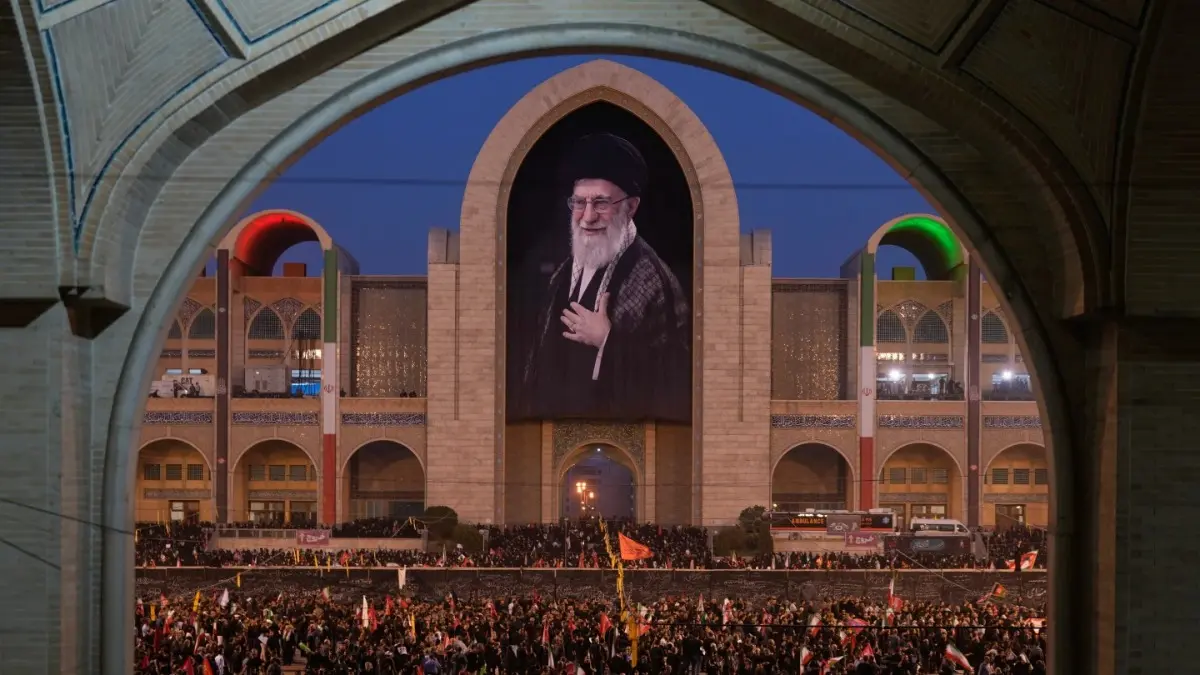
New Delhi: As Iran prepares to bid farewell to former Supreme Leader Ali Khamenei, authorities are bracing for what could become one of the largest and most expensive state funerals in modern history. While officials expect up to 20 million mourners to take part in the six-day funeral procession, reports suggest the government has quietly prepared for a grim worst-case scenario-between 1,500 and 3,000 possible deaths during the ceremonies.
According to a report based on an alleged classified letter from the Iranian Red Crescent and the National Crisis Management Organisation to First Vice President Mohammad-Reza Aref, authorities have drawn up extensive contingency plans to deal with a potential mass-casualty incident.
The assessment reportedly warns that the sheer size of the crowds, soaring summer temperatures, exhaustion, stampedes and possible security threats could result in thousands of fatalities over the course of the funeral.
As part of those preparations, officials have reportedly established a special unit to manage the dead and missing, while thousands of new graves have been dug at Tehran's Behesht-e Zahra cemetery, Iran's largest burial ground. An anonymous municipal employee quoted in the report said the graves "really exist" and that authorities had been told that up to 3,000 deaths would be manageable, given the anticipated crowd size and weather conditions.
Advertisement
The elaborate funeral ceremonies began in Tehran on July 4 and will continue through the holy city of Qom, before moving to the Iraqi Shia cities of Najaf and Karbala. The final burial is scheduled to take place in Mashhad on July 9, Khamenei's hometown and one of Shia Islam's holiest cities.
Iranian authorities have deployed thousands of police personnel, Revolutionary Guard members, Basij volunteers, emergency responders, ambulances and medical teams to manage the massive gathering. Roads have been closed, public transport expanded and hospitals placed on high alert as millions are expected to travel across multiple cities during the week-long ceremonies.
Advertisement
The extraordinary preparations are rooted in Iran's painful history of deadly crowd disasters. During the funeral of General Qassem Soleimani in Kerman in January 2020, a massive stampede killed 56 people and injured more than 200, forcing authorities to temporarily suspend the procession. Officials are keen to avoid a repeat of that tragedy during Khamenei's funeral, which is expected to attract several times more people than Soleimani's farewell.
Apart from crowd-related risks, security agencies are also believed to be on alert over possible attacks by hostile groups following the recent conflict involving Iran, Israel and the United States. The government is treating the funeral as both a national mourning event and a major security operation.
The funeral is also expected to be one of the costliest state ceremonies in modern history, with reports estimating expenses running into tens of millions of euros to cover security, logistics, transport, medical services and ceremonial arrangements across multiple cities and two countries.
The spending has drawn criticism from sections of Iranian society struggling with inflation and economic hardship, even as the government presents the event as a demonstration of national unity and resilience.
Although Iranian officials have not publicly confirmed the reported contingency document or the grave preparations, the unprecedented scale of emergency planning underscores the enormous logistical challenge facing authorities as millions prepare to attend what is expected to be one of the largest funeral processions ever witnessed in the Islamic Republic.