
From Santika to Lat Phrao: How Flammable Foam and Locked Exits Keep Killing Thai Revellers
Over the years, incidents like the infamous 2009 Santika Club disaster on New Year's Eve and the devastating 2022 Mountain B nightclub inferno have exposed a deadly, recurring pattern of blocked fire exits, flammable acoustic foam, and inadequate emergency infrastructure.
- World News
- 3 min read

;'%3e%3cpath%20d='m8,15.99c4.41,0,7.99-3.58,7.99-7.99S12.41,0,8,0,0,3.59,0,8s3.58,7.99,7.99,7.99Z'%20style='stroke:%23fff;%20stroke-miterlimit:10;%20stroke-width:.02px;'/%3e%3cpath%20d='m3.08,3.37l3.82,5.11-3.84,4.15h.87l3.37-3.64,2.72,3.64h2.94l-4.04-5.39,3.58-3.87h-.86l-3.1,3.35-2.5-3.35h-2.94Zm1.27.64h1.35l5.97,7.99h-1.35l-5.97-7.99Z'%20style='fill:%23fff;'/%3e%3c/g%3e%3c/svg%3e)


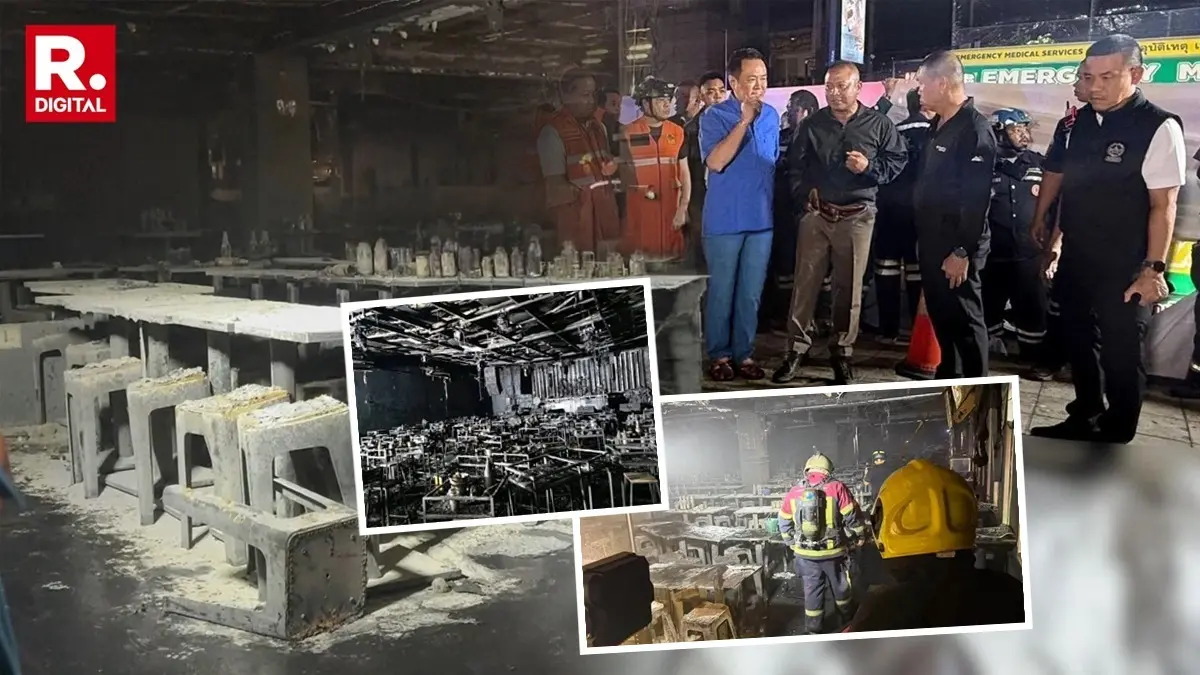
New Delhi: The horrific fire that ripped through Bangkok’s Rong Beer Na Lat Phrao pub- killing at least 27 people and leaving 22 in critical condition- has once again thrust Thailand’s troubled nightlife safety record into the global spotlight.
The tragedy painfully mirrors a dark, recurring cycle of venue fires in the country, where lax enforcement, poor building designs, and highly flammable materials have repeatedly turned celebrations into death traps.
Behind the recurring nightmare
Witness accounts from the Bangkok blaze describe a terrifyingly familiar sequence of events- a sudden power failure, an explosion near the stage (believed to be a circuit breaker), and a venue engulfed in suffocating black smoke within minutes.
Panicked patrons rushed to the back of the venue toward the bathrooms, only to find themselves trapped with no fire exits.
Advertisement
"The fire was not that aggressive, but the smoke had engulfed 100% of the venue," said firefighter Chakrit Khongkom. "Most of the survivors were choking on smoke," as per reports.
Notably, this exact structural trap, a single main exit, flammable acoustic insulation, and nonexistent or blocked escape routes, is the thread that connects Thailand's worst nightlife disasters.
Advertisement
This is far from the first time Thailand's nightlife has been struck by such a horrific tragedy. The country shares a deeply troubling history of devastating venue fires, where the lack of proper safety enforcement has repeatedly turned celebration into catastrophe.
Over the years, incidents like the infamous 2009 Santika Club disaster on New Year's Eve and the devastating 2022 Mountain B nightclub inferno have exposed a deadly, recurring pattern of blocked fire exits, flammable acoustic foam, and inadequate emergency infrastructure.
Timeline of Tragedy
2009: The Santika Club Disaster (67 Dead, 222 Injured)
On New Year’s Eve, a fireworks display inside Bangkok’s upscale Santika Club ignited the ceiling. Over 1,000 revelers rushed for a single main exit; a secondary exit had been locked by staff to prevent unpaid tabs. Investigators later revealed the club was officially registered as a private residence, meaning it had bypassed all commercial fire safety inspections.
2022: The Mountain B Nightclub Inferno (25 Dead, 38 Injured)
A fire broke out at the Mountain B club in Chonburi province, ignited by sparks near the stage. The venue was lined with cheap, highly flammable acoustic foam that accelerated the blaze. Like Santika, the back door was locked, trapping patrons inside an unventilated concrete box.
2026: Rong Beer Na Lat Phrao (27 Dead, 63 Injured)
Despite assurances from city officials that the Lat Phrao venue possessed the correct permits, blocked escape routes and heavy furniture obstructions ultimately forced panicked victims into a dead-end restroom corridor, compounding the death toll.
The cost of compromise
While Thailand remains a premier global tourism and hospitality hub, its nightlife industry continues to battle a systemic culture of safety compromise.
Time and again, investigations into these disasters uncover a mix of forged architectural blueprints, illegal zoning, blocked exits, and a severe lack of fire-retardant interior materials.
As mourning families demand answers, the latest disaster serves as a stark reminder that without aggressive, uncorrupted enforcement of building codes, Thailand's vibrant nightlife will continue to carry a devastatingly high price.