
'Can have devastating effect': WHO warns one in 4 people will have hearing issues by 2050
The World Health Organization’s first World Report on Hearing warned that 1 in 4 people, that is 2.5 billion people, will be facing some degree of hearing loss.
- World News
- 3 min read

;'%3e%3cpath%20d='m8,15.99c4.41,0,7.99-3.58,7.99-7.99S12.41,0,8,0,0,3.59,0,8s3.58,7.99,7.99,7.99Z'%20style='stroke:%23fff;%20stroke-miterlimit:10;%20stroke-width:.02px;'/%3e%3cpath%20d='m3.08,3.37l3.82,5.11-3.84,4.15h.87l3.37-3.64,2.72,3.64h2.94l-4.04-5.39,3.58-3.87h-.86l-3.1,3.35-2.5-3.35h-2.94Zm1.27.64h1.35l5.97,7.99h-1.35l-5.97-7.99Z'%20style='fill:%23fff;'/%3e%3c/g%3e%3c/svg%3e)


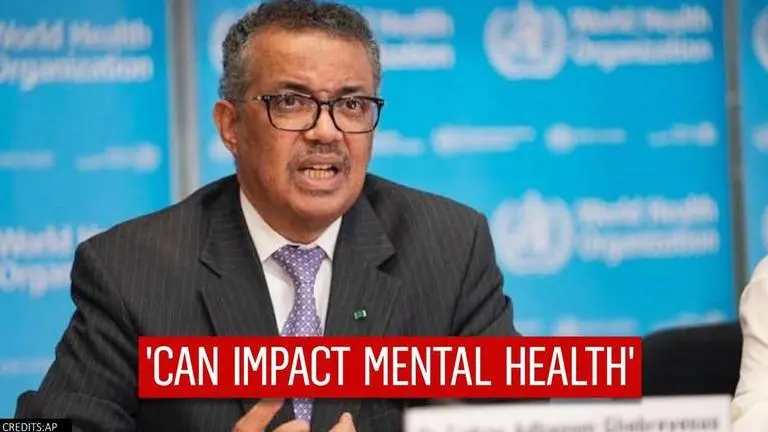
The World Health Organization’s first World Report on hearing warned that 1 in 4 people, that is 2.5 billion people, will be facing some degree of hearing loss by 2050. Also, it said that 700 million of these people will need access to ear and hearing care and other rehabilitation services unless action is taken. WHO Director-General, Dr Tedros Adhanom Ghebreyesus, terms hearing power as ‘precious’ and he says, ‘Untreated hearing loss can have a devastating impact on people’s ability to communicate, to study and to earn a living. It can also impact on people’s mental health and their ability to sustain relationships’.
‘This new report outlines the scale of the problem, but also offers solutions in the form of evidence-based interventions that we encourage all countries to integrate into their health systems as part of their journey towards universal health coverage’, Tedros added. The report says that it is due to the lack of accurate information and stigmatizing attitudes to ear diseases that people are not able to take care of themselves or any ear disease. It reveals that in most of the countries, ear and hearing care is still not integrated into national health systems and accessing care services is challenging for those with ear diseases. Also, access to ear and hearing care is poorly measured and documented.
The 'glaring' gap
As per the report, the most ‘glaring’ gap in health system capacity is in human resources. In low income countries, 78 per cent people have fewer than one ear, nose and throat (ENT) specialist per million population. Also, 93 per cent people have fewer than one audiologist per million and 17 per cent people have one or more speech therapist per million with 50 per cent having one or more teacher for the deaf per million. This problem can only be tackled through integration of ear and hearing care into primary health care.
Advertisement
In children, the loss of hearing can be prevented through immunization for prevention of rubella and meningitis, improved maternal and neonatal care, and screening for, and early management of, otitis media - inflammatory diseases of the middle ear. However, in adults, it could be dealt with through noise control, safe listening and surveillance of ototoxic medicines with good ear hygiene. There has also been development of technology that can help identify any ear disease.
Advertisement
Dr Bente Mikkelsen, Director of the WHO Department of Noncommunicable Diseases said, “To ensure that the benefit of these technological advances and solutions is equitably accessible to all, countries must adopt an integrated people-centered approach. Integrating ear and hearing care interventions within national health plans and delivering these through strengthened health systems, as part of universal health coverage, is essential to meet the needs of those at risk of or living with hearing loss”.