
How the 108-Days of US-Israel-Iran War Unfolded as Trump, Pezeshkian Sign 14-Point MoU | Timeline
The agreement, signed on June 17, calls for the reopening of the Strait of Hormuz, a halt to military operations, and a 60-day process to negotiate a final agreement on Iran's nuclear programme and sanctions relief.
- World News
- 5 min read

;'%3e%3cpath%20d='m8,15.99c4.41,0,7.99-3.58,7.99-7.99S12.41,0,8,0,0,3.59,0,8s3.58,7.99,7.99,7.99Z'%20style='stroke:%23fff;%20stroke-miterlimit:10;%20stroke-width:.02px;'/%3e%3cpath%20d='m3.08,3.37l3.82,5.11-3.84,4.15h.87l3.37-3.64,2.72,3.64h2.94l-4.04-5.39,3.58-3.87h-.86l-3.1,3.35-2.5-3.35h-2.94Zm1.27.64h1.35l5.97,7.99h-1.35l-5.97-7.99Z'%20style='fill:%23fff;'/%3e%3c/g%3e%3c/svg%3e)


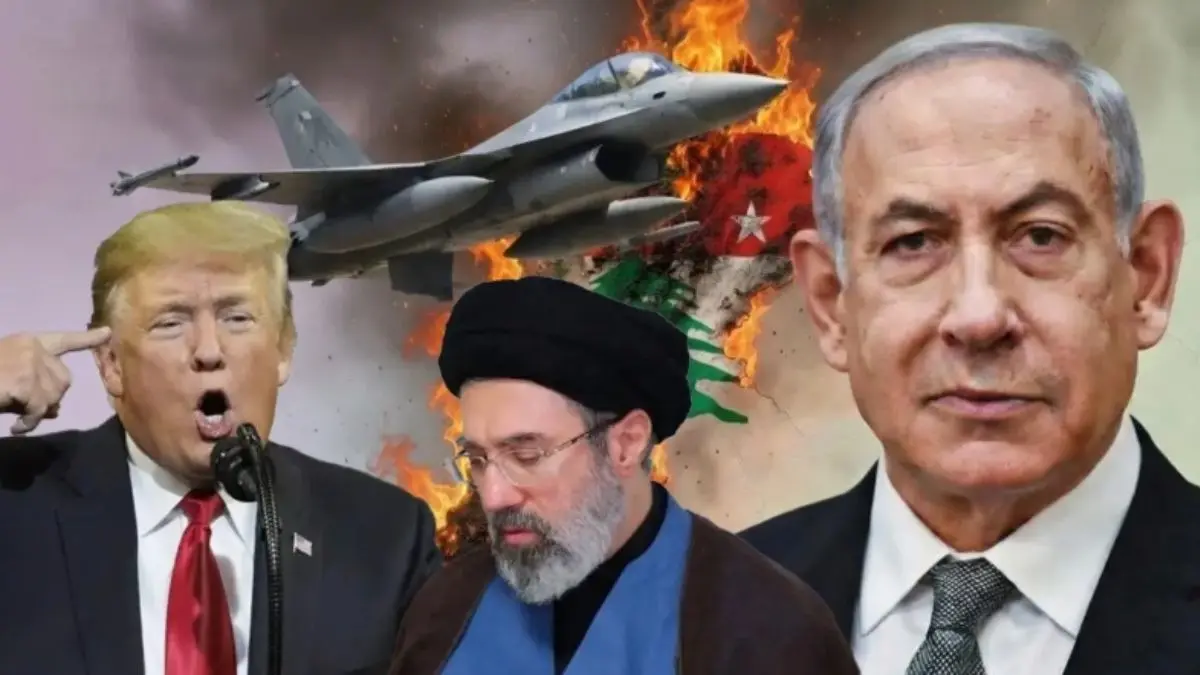
After 108 days of US-Israel-Iran war, US President Donald Trump and Iranian President Masoud Pezeshkian have virtually signed a 14-point Memorandum of Understanding (MoU) aimed at ending hostilities and paving the way for broader negotiations.
The agreement, signed on June 17, calls for the reopening of the Strait of Hormuz, a halt to military operations, and a 60-day process to negotiate a final agreement on Iran's nuclear programme and sanctions relief.
The White House later released the full text of what it called the "Islamabad Memorandum of Understanding," brokered with the involvement of Pakistan, Oman and other regional stakeholders.
The war lasted 108 days, beginning on February 28, 2026, when Israel and the United States launched coordinated strikes on Iran, and culminating in the signing of the ceasefire framework in June.
Advertisement
Key Timeline Of The 108-Day War
February 28, 2026:
The war erupted on February 28 when Israel launched what it described as "preventive strikes" against Iranian targets under operations reportedly named "Roar of the Lion" and "Operation Epic Fury."
Advertisement
The opening wave of attacks targeted sites in Tehran and other strategic locations. Iranian authorities later confirmed the death of Supreme Leader Ayatollah Ali Khamenei during the initial phase of the war.
The strikes drew international criticism after reports emerged that civilian locations, including a girls' school in Minab, had also been hit.
March 9, 2026:
Iran announced Ayatollah Mojtaba Khamenei, son of the late Supreme Leader, as the country's new paramount leader.
The appointment signalled Tehran's intention to project stability despite the unprecedented military and political crisis.
As the war intensified, Israel expanded military operations beyond Iran.
April 7, 2026:
A fragile ceasefire is announced.
April 8, 2026:
Israeli strikes on Beirut reportedly killed more than 300 people within minutes, making it one of the deadliest single attacks of the war.
April 11, 2026:
US-Iran talks held in Islamabad collapse without a deal. US Vice President JD Vance travelled to Islamabad for direct talks with an Iranian delegation led by Parliament Speaker Mohammad Bagher Qalibaf.
The negotiations lasted 21 hours but ended without a breakthrough.
Pakistan later emerged as a key mediator in the eventual peace framework.
Further, Iran responded with waves of missile and drone attacks targeting US military facilities and allied interests across the Middle East.
Countries including Bahrain, Qatar, Kuwait, Jordan and the UAE reported intercepting projectiles.
Explosions were reported near strategic military installations, including areas around the US Navy's Fifth Fleet headquarters in Bahrain.
May 31, 2026:
Israel launched its deepest ground incursion into Lebanon in more than two decades, targeting Hezbollah positions.
The Lebanon front would become one of the key sticking points during later peace negotiations.
June 15: Breakthrough Agreement Reached:
After months of fighting and diplomatic efforts, the United States and Iran reached a preliminary agreement on June 15.
Both Washington and Tehran described the agreement as a significant step toward ending the war.
June 17, 2026:
The U.S. and Iran released the text of an interim agreement their presidents have signed to end their war on Wednesday.
Strait Of Hormuz Crisis Shakes Global Economy
One of the war's most significant consequences was the disruption of shipping through the Strait of Hormuz, a critical artery for global energy supplies.
The closure and military tensions around the waterway triggered:
- Oil prices soaring above $100 per barrel
- Major disruptions to tanker traffic
- Supply chain bottlenecks
- Energy security concerns across Europe and Asia
Analysts warned that the economic shock could exceed the peak disruptions witnessed during the Ukraine war.
Which Countries Were Involved?
What began as a direct confrontation between the United States, Israel and Iran quickly expanded into a regional crisis involving several Middle Eastern nations.
Countries Affected or Drawn Into The war
- Lebanon
- Bahrain
- Qatar
- United Arab Emirates
- Kuwait
- Jordan
- Oman
- Pakistan
- Other International Stakeholders
- France
- United Kingdom
- Ukraine
- Saudi Arabia
- Iraq - The war also involved Iran-backed groups operating across the region, particularly Hezbollah in Lebanon.
Key highlights of the 14-point MoU
- The US and Iran agreed to an immediate and permanent end to military operations on all fronts, including Lebanon, while committing not to threaten or use force against each other and to respect Lebanon's sovereignty.
- Both countries pledged to respect each other's sovereignty, territorial integrity, and refrain from interfering in internal affairs.
- The two sides agreed to conclude negotiations on a final agreement within 60 days, with the possibility of extending the deadline through mutual consent.
- The US will begin lifting its naval blockade immediately and completely end it within 30 days, while also withdrawing military forces from Iran's vicinity within 30 days of the final agreement.
- Iran will ensure free and safe passage for commercial vessels through the Strait of Hormuz for 60 days and will work with Oman and other Gulf states on the future administration of the strategic waterway.
- The US committed to supporting a reconstruction and economic development programme for Iran worth at least USD 300 billion as part of the final agreement.
- Washington pledged to gradually lift all sanctions on Iran, including unilateral US sanctions and measures linked to UN Security Council and IAEA resolutions, according to an agreed schedule.
- Iran reaffirmed that it would neither develop nor acquire nuclear weapons. Both sides agreed to discuss the future of Iran's enriched uranium stockpile, including downblending under IAEA supervision, along with broader nuclear issues.
- Until a final agreement is reached, Iran will maintain the current status of its nuclear programme while the US will refrain from imposing new sanctions or deploying additional forces in the region.
- The US agreed to issue immediate waivers allowing exports of Iranian crude oil, petroleum products, and related services, including banking, insurance, and transportation.
- Washington also committed to making Iran's frozen or restricted funds available, with procedures for their release to be finalised during negotiations.
- A joint monitoring mechanism will be established to oversee the implementation of both the MoU and the eventual final agreement.
- Formal negotiations on the final agreement will begin once implementation starts on key provisions relating to the ceasefire, Strait of Hormuz, sanctions waivers, and release of frozen assets.
- The final agreement will be endorsed through a United Nations Security Council resolution.