
Pakistan's Illegal Move to Grant 'Provincial' Status to Gilgit-Baltistan Sparks Controversy Over UN Resolution Violations
Critics, particularly in India, view the integration of Gilgit-Baltistan into Pakistan as a violation of UN resolutions on the disputed territories of Jammu and Kashmir and an attempt to alter the region’s demographic or legal character.
- World News
- 2 min read

;'%3e%3cpath%20d='m8,15.99c4.41,0,7.99-3.58,7.99-7.99S12.41,0,8,0,0,3.59,0,8s3.58,7.99,7.99,7.99Z'%20style='stroke:%23fff;%20stroke-miterlimit:10;%20stroke-width:.02px;'/%3e%3cpath%20d='m3.08,3.37l3.82,5.11-3.84,4.15h.87l3.37-3.64,2.72,3.64h2.94l-4.04-5.39,3.58-3.87h-.86l-3.1,3.35-2.5-3.35h-2.94Zm1.27.64h1.35l5.97,7.99h-1.35l-5.97-7.99Z'%20style='fill:%23fff;'/%3e%3c/g%3e%3c/svg%3e)


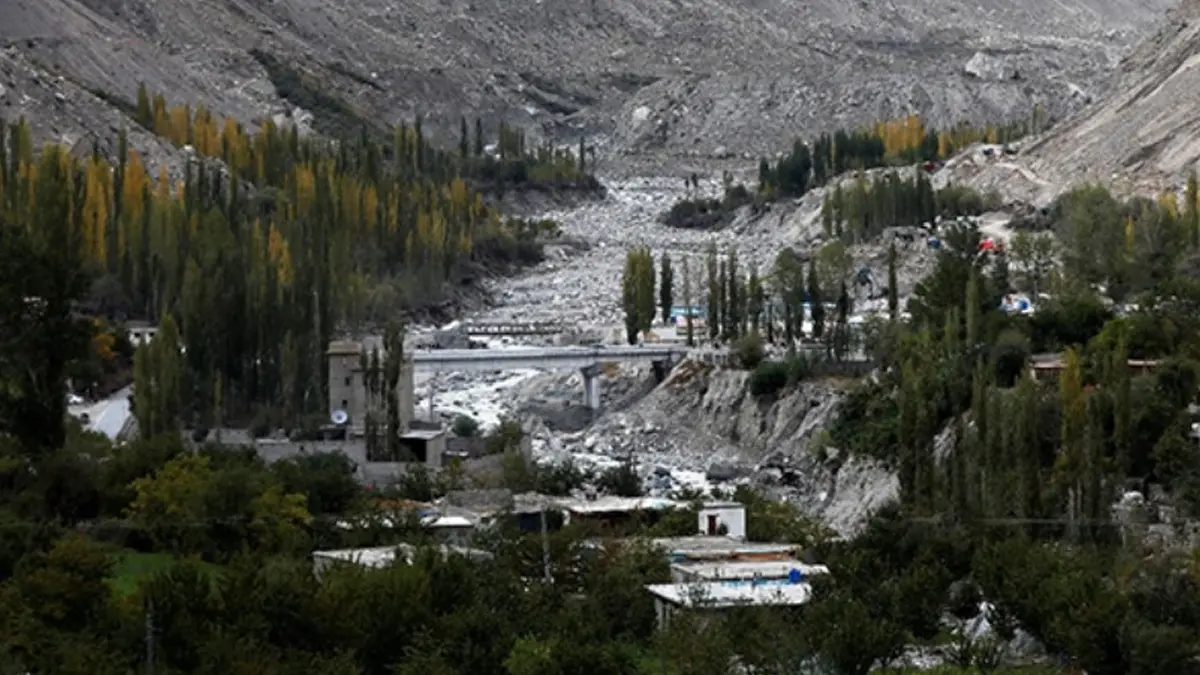
Gilgit-Baltistan: The Gilgit-Baltistan Legislative Assembly has unanimously passed a joint resolution calling for the region to be granted the status of a provisional province of Pakistan through appropriate constitutional amendments.
The resolution, titled “Joint Resolution on Granting Provisional Provincial Status to the Gilgit-Baltistan,” outlines historical and legal arguments for the move. It references the region’s 1947 accession to Pakistan, subsequent administrative reforms, the Gilgit-Baltistan (Empowerment and Self-Governance) Order of 2009, and the Gilgit-Baltistan Order of 2018. Lawmakers argued that the step would provide the people of Gilgit-Baltistan with the same constitutional rights and democratic representation enjoyed by citizens of Pakistan’s four existing provinces.
Key provisions of the resolution include:
--Granting Gilgit-Baltistan provisional provincial status without prejudice to Pakistan’s international commitments or its legal position on the Jammu and Kashmir dispute.
--Ensuring the people of the region receive representation in the National Assembly, Senate, and other federal institutions.
Incorporating constitutional safeguards so that the provisional status remains subject to any future settlement of the broader Jammu and Kashmir issue.
--Calling on the Federal Government to initiate necessary constitutional, legal, and administrative measures in consultation with local stakeholders.
The document emphasizes that the move does not alter Pakistan’s principled stance on the Kashmir dispute or UN resolutions related to it. It was supported by members across parties, with signatures from figures including Syed Jalal Ali Shah (Member, GB Assembly, PPPP), Hafiz Hafeez-ur-Rehman (Leader of Opposition), Amjad Hussain (Leader of the House), Malik Kazim Mehdi (Deputy Speaker), Muhammad Dilpazir, and Farman Ali.
Advertisement
Context
Gilgit-Baltistan has been administered by Pakistan since 1947 but has not held full provincial status. Proponents of the resolution argue it fulfills long-standing demands for greater self-governance and political rights. Critics, particularly in India, view any such integration as a violation of UN resolutions on the disputed territories of Jammu and Kashmir and an attempt to alter the region’s demographic or legal character.
This development comes amid ongoing debates in Pakistan about constitutional reforms for the region. The resolution now places the issue before the federal parliament for further deliberation and potential constitutional action.
Advertisement
This also comes amid mounting suppression and a sweeping security crackdown against the citizens of Pakistan-occupied Jammu and Kashmir (PoJK) by Pakistani authorities, along with global condemnation of it.