
Trump Labels Iran Leaders 'Cuckoo' at NATO Summit, Warning US Forces May 'Hit Them Hard Again Tonight'
At the NATO summit in Ankara, President Donald Trump called Iran’s leadership “cuckoo” and warned that U.S. forces could launch fresh strikes “as soon as tonight.” The remarks follow renewed clashes in the Strait of Hormuz, where Iranian attacks on merchant ships triggered American retaliation and heightened fears of a wider conflict.
- World News
- 4 min read

;'%3e%3cpath%20d='m8,15.99c4.41,0,7.99-3.58,7.99-7.99S12.41,0,8,0,0,3.59,0,8s3.58,7.99,7.99,7.99Z'%20style='stroke:%23fff;%20stroke-miterlimit:10;%20stroke-width:.02px;'/%3e%3cpath%20d='m3.08,3.37l3.82,5.11-3.84,4.15h.87l3.37-3.64,2.72,3.64h2.94l-4.04-5.39,3.58-3.87h-.86l-3.1,3.35-2.5-3.35h-2.94Zm1.27.64h1.35l5.97,7.99h-1.35l-5.97-7.99Z'%20style='fill:%23fff;'/%3e%3c/g%3e%3c/svg%3e)


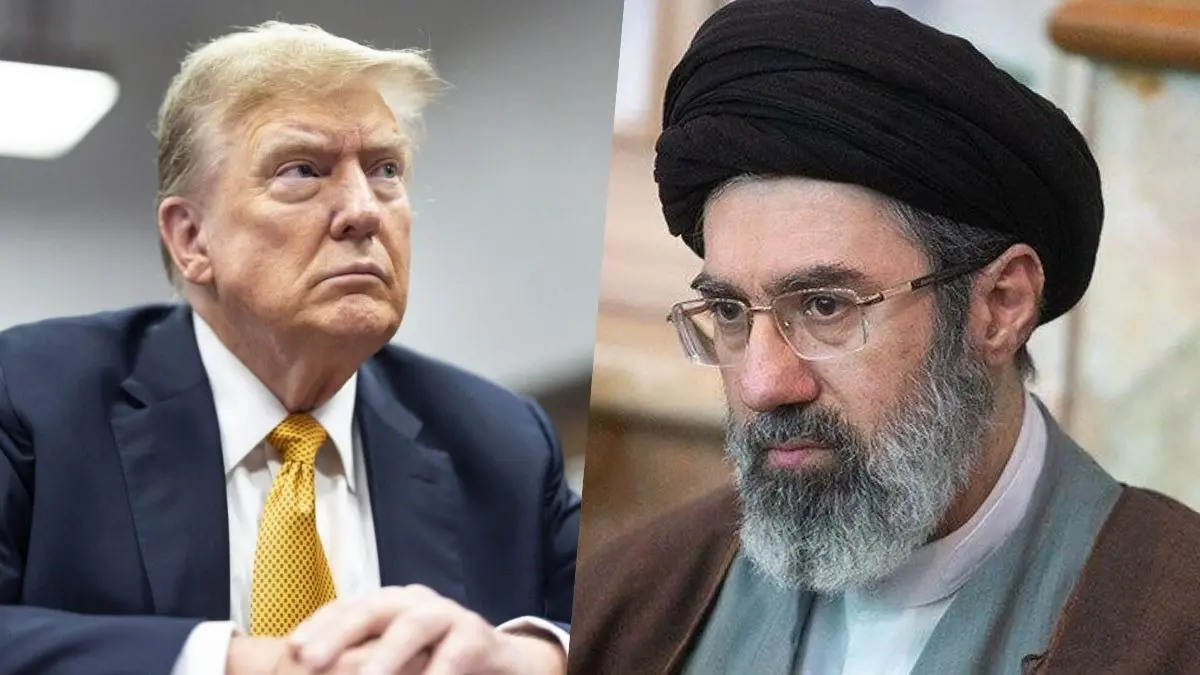
President Donald Trump escalated his rhetoric against Iran on Wednesday, telling reporters at the NATO summit in Ankara that the country's leadership was behaving erratically and that another round of American strikes could come as soon as tonight.
"We hit them very hard last night, very probably hit them hard again tonight," Trump said, adding that Iran had lost its position as the dominant military power in the region. He went further, claiming Iran's navy and air force had effectively been wiped out by the recent campaign.
The comments followed his declaration hours earlier that the ceasefire agreement with Tehran was "over," a reaction to Iranian attacks on commercial vessels near the Strait of Hormuz. Even so, Trump left space for diplomacy to continue, saying negotiators were free to keep talking if they wanted to though he suggested the U.S. was equally prepared to act "without a deal" if talks went nowhere.
"They're Cuckoo," Trump Says of Iranian Leadership
Much of Trump's frustration centered on what he described as a pattern of bad faith from Tehran during negotiations. He claimed Iranian officials would appear cooperative in private talks, only to publicly deny any agreement had been discussed once they faced reporters.
Advertisement
"They're cuckoo, there's something wrong with these people," Trump said, describing the whiplash between private negotiating sessions and public statements as evidence the regime couldn't be trusted to honor its word. He accused Tehran of violating the agreement "every day" and said Iran had been "killing people for 47 years," arguing that no American president before him had been willing to confront the regime directly.
He said he remained unhappy with Iran's conduct and confirmed he was actively weighing further military action for Wednesday night, while cautioning that the final decision would depend on how the situation developed.
Advertisement
Old Grievances, Renewed at NATO
Trump used his platform at the summit to revisit longstanding complaints about Iran policy dating back decades. He singled out the Obama-era nuclear agreement for particular scorn, claiming it had funneled "millions" and later "billions and billions of dollars" to Tehran, money he said had gone "to the wrong country." He dubbed the agreement the "Obama waste deal" and called it one of the worst tragedies in Middle East history, contrasting it with what he described as his own administration's approach, which he characterized as a genuine barrier against Iran ever obtaining a nuclear weapon.
He also repeated his claim that Iran had once agreed in principle to forgo nuclear weapons entirely, only to publicly deny at a later press conference that any such commitment had ever been made citing it as further proof, in his view, that Iranian officials "lie and cheat."
Amid the Iran-focused remarks, Trump briefly widened his lens to other global conflicts, saying he had "settled a lot of wars" - eight, by his count - but acknowledged this one was proving especially difficult, singling out Russian President Vladimir Putin and Ukrainian President Volodymyr Zelenskyy as being particularly hard to negotiate with.
Allies Strike a Different Tone
Despite the sharp language directed at Tehran, the mood toward NATO's own members appeared calmer than in past summits. French President Emmanuel Macron said he had not heard any complaints from Trump about the alliance's members during their discussions, a notable departure from Trump's history of publicly criticising allies over defense spending.
Strait of Hormuz Attacks Set Off the Latest Escalation
The renewed hostilities trace back to Tuesday's attacks on three merchant ships in the Strait of Hormuz- the heaviest single day of attacks in the waterway since late April, according to the UN's International Maritime Organization. U.S. Central Command confirmed it responded with a fresh wave of strikes on Iranian targets and reimposed sanctions on Iranian oil exports.
Iran's Revolutionary Guard Corps retaliated with missile and drone strikes on U.S. military installations in Bahrain and Kuwait, further threatening the interim deal reached between the two countries last month. Iranian Parliament Speaker Mohammad Bagher Ghalibaf accused Washington of repeatedly violating the ceasefire and vowed Iran would not yield to pressure.
What's Next
With Trump openly weighing another strike for Wednesday night and Tehran promising a forceful response of its own, the coming hours are likely to determine whether the fragile ceasefire can be salvaged or whether the conflict enters a new, more sustained phase.