
UK: Mountain-dwelling unique butterflies at risk of extinction due to climate change
UK Researchers have found that genetically unique cold-adapted butterfly species found in European mountains will also be destroyed due to rise in temperature.
- World News
- 3 min read

;'%3e%3cpath%20d='m8,15.99c4.41,0,7.99-3.58,7.99-7.99S12.41,0,8,0,0,3.59,0,8s3.58,7.99,7.99,7.99Z'%20style='stroke:%23fff;%20stroke-miterlimit:10;%20stroke-width:.02px;'/%3e%3cpath%20d='m3.08,3.37l3.82,5.11-3.84,4.15h.87l3.37-3.64,2.72,3.64h2.94l-4.04-5.39,3.58-3.87h-.86l-3.1,3.35-2.5-3.35h-2.94Zm1.27.64h1.35l5.97,7.99h-1.35l-5.97-7.99Z'%20style='fill:%23fff;'/%3e%3c/g%3e%3c/svg%3e)


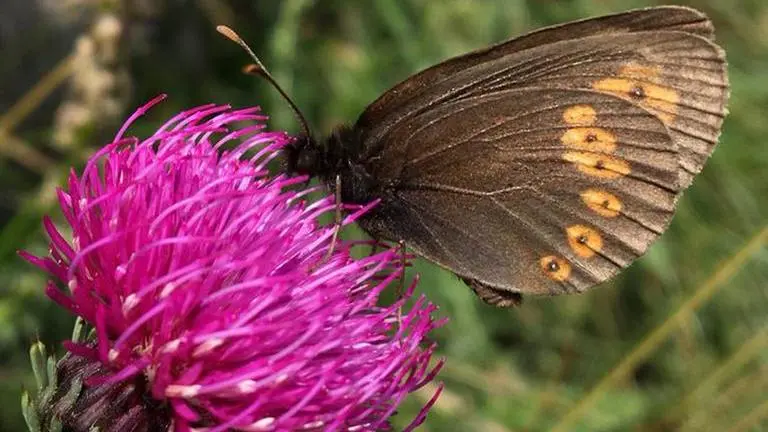
As global warming continues to threaten several species across the world, UK researchers have found that genetically unique cold-adapted butterfly species found in European mountains will also be destroyed due to the rise in temperature.
The mountain-dwelling butterflies such as the mountain ringlet, bright-eyed ringlet and dewy ringlet, as per the newest study, should be subjected to "assisted colonisation" or translocation to higher altitudes as their current habitats in the region are warming up. The populations of mountain ringlet found in the Lake District in the UK, that fear extinction, are one of the most diverse in Europe after the ones found in the western Alps.
The unique butterflies will be unable to survive in the Lake District due to global heating of at least 2-3 degrees-Celcius more than the pre-industrial levels. Researchers also said that the species already tried to change its location by moving hundreds of metres uphill in Britain over the last five decades. However, as per the study published in Ecology in Evolution, the tiny colourful insects will gradually “run out of mountain” as no cooler places would be left.
Advertisement
Researchers at the University of York that studied the ‘Past, current, and potential future distributions of unique genetic diversity in a cold‐adapted mountain butterfly’, concluded that the species will have to evacuated from the British lakes and moved to higher altitudes in Scotland, Scandinavia or the Alps.
The study said, “Assisted colonisations of individuals from at‐risk populations into climatically suitable unoccupied habitat might help conserve unique genetic diversity, and translocations into remaining populations might increase their genetic diversity and hence their ability to adapt to future climate change.”
Advertisement
Komodo dragons could also become extinct
Mounting on the already existing issues of climate change, a new international study has derived that the world’s largest lizard also known as the Komodo dragon could be pushed to extinction 'in a matter of decades' due to drastic changes in the Earth’s atmosphere until measures are taken to control the same.
As per research led by the University of Adelaide and Deakin University, the impact of global warming threatens the mere existence of the Komodo dragons that already live in restricted habitats. The researchers have stressed that the issue of Komodo dragons must be better incorporated into the environmental conversation strategies and climate change would severely reduce their population in a matter of decades. The experts came up with models that predicted that these animals would become extinct in more than 50 per cent of their habitats known to humans.