Late Arrivals, Entry Denials, PM Modi's Thoughtful Gesture & More: NEET UG 2026 Wraps Up With Eventful Re-Test
The NEET UG 2026 re-examination has concluded across India. The re-examination was conducted following the cancellation of the May 3 test over allegations of question paper leak and administrative irregularities.
- Education News
- 6 min read

;'%3e%3cpath%20d='m8,15.99c4.41,0,7.99-3.58,7.99-7.99S12.41,0,8,0,0,3.59,0,8s3.58,7.99,7.99,7.99Z'%20style='stroke:%23fff;%20stroke-miterlimit:10;%20stroke-width:.02px;'/%3e%3cpath%20d='m3.08,3.37l3.82,5.11-3.84,4.15h.87l3.37-3.64,2.72,3.64h2.94l-4.04-5.39,3.58-3.87h-.86l-3.1,3.35-2.5-3.35h-2.94Zm1.27.64h1.35l5.97,7.99h-1.35l-5.97-7.99Z'%20style='fill:%23fff;'/%3e%3c/g%3e%3c/svg%3e)


New Delhi: The NEET UG 2026 re-examination has concluded across India. The offline paper was conducted in a single shift that ran from 2:00 PM to 5:15 PM, granting candidates an additional 15 minutes to allow for mandatory administrative and biometric verification.
The re-examination was conducted following the cancellation of the May 3 test over allegations of question paper leak and administrative irregularities.
'Paper Tougher Than Last Time'
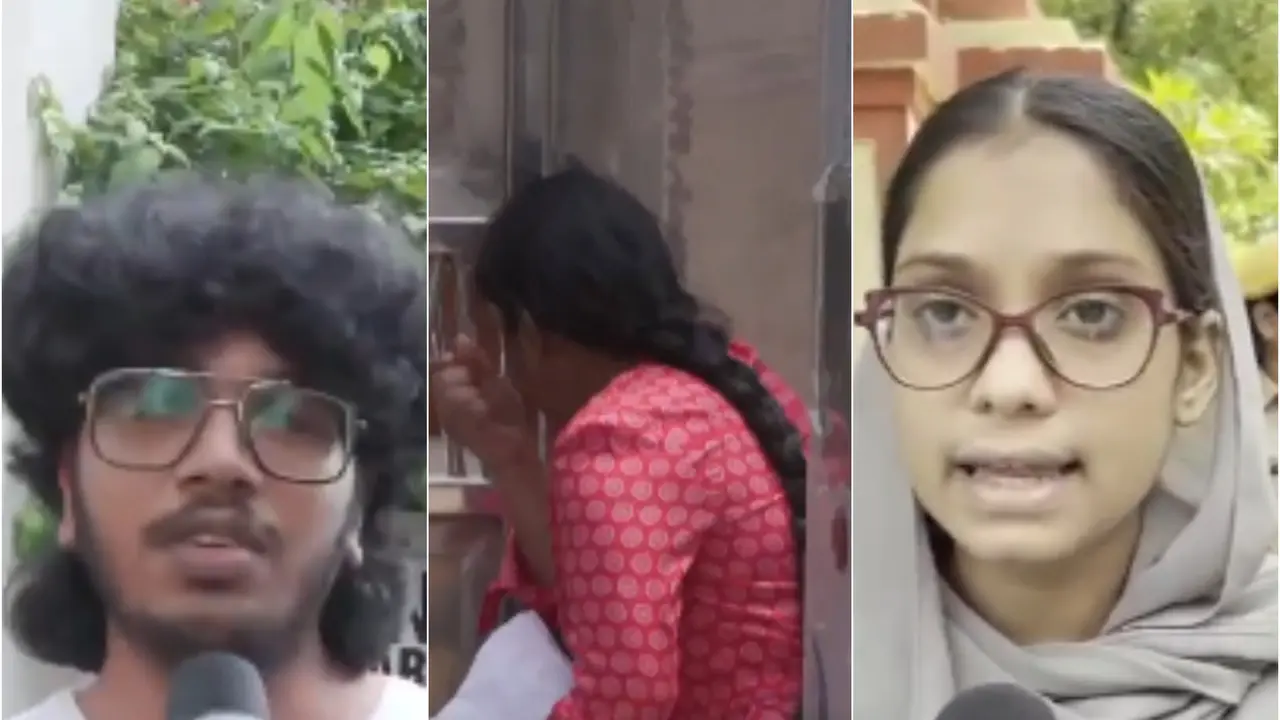
While leaving the exam hall, a candidate named Traun from Chennai, Tamil Nadu said that the exam was tougher than the last time, adding, "I did well but let's see."
Another candidate from Srinagar, Jammu and Kashmir, told ANI that the paper was overall good, adding, “Only Physics was a little difficult.”
Advertisement
Meanwhile, candiate from Kerala said, “The exam was tough... It was from moderate to tough. Physics was tough. Chemistry was doable, but it took a lot of time. Biology was doable.”
Chaos At Exam Centres
The exams did not conclude without chaos at several examination centres.
Advertisement
High drama and emotional scenes unfolded outside the Maharshi Dayanand (MD) College in Parel as a female NEET-UG re-examination candidate was barred from entering the centre for arriving just after the gates were closed. The incident triggered angry protests from parents and onlookers, who blamed Sunday traffic and a public transport shortage for the minor delay.
The candidate, who had traveled from Kurla, reached the gates at 1:31 PM- just a minute after the National Testing Agency's (NTA) official deadline of 1:30 PM. However, eyewitnesses and distressed parents alleged that the college authorities had locked the main gates early, at 1:27 PM, effectively shutting out students ahead of the scheduled cutoff time.
Many pointed out that traveling across Mumbai was exceptionally difficult on Sunday due to an ongoing BEST bus strike, which significantly reduced the availability of public transport and caused unexpected traffic bottlenecks.
"She was right outside the gate, but they wouldn't listen," said a parent of another candidate who witnessed the commotion. "With the bus strike, getting here on time was already a struggle. To lock a student out over a matter of seconds, especially when the college reportedly closed the gate early, is completely unfair to their career."
There were also reports of students arriving late at an exam centre in Bangalore due to traffic. Some students were crying, standing near the locked gates. As per reports, officials later allowed them to enter the exam hall.
Burqa-Clad Student Alleges Entry Denial

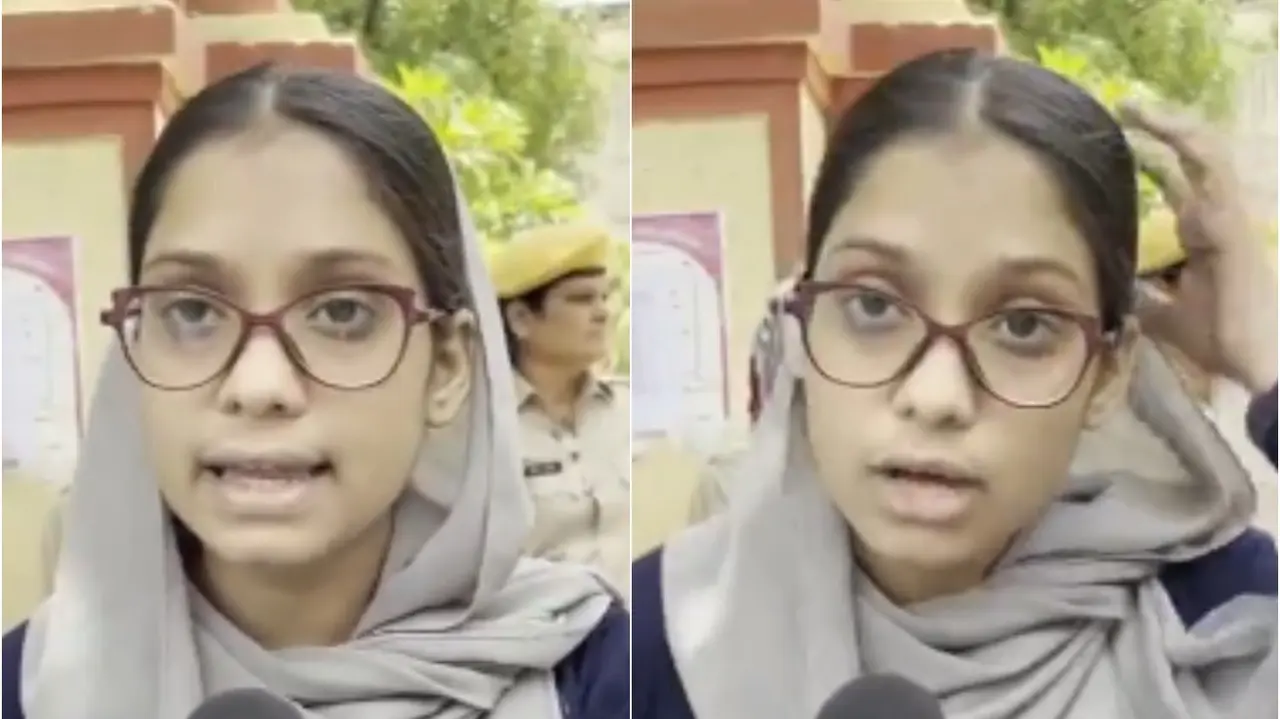
An 18-year-old student claimed that she was denied entry into an exam centre in Ajmer, Rajasthan, because she was wearing a burqa.
Kulsum Bano, who said that she had come from Beawar to take the exam, claimed, “When I took the exam on May 3rd, I was in the same attire then as I am now: wearing a burqa and a dupatta.” She added, “Initially, they said I would have to remove the dupatta to enter; then they insisted I had to remove the burqa as well."
Kulsum Bano protested against the direction to remove her burqa, reasoning that if the National Testing Agency (NTA), which is conducting the exam, has permitted the students to wear burqa, how could the authorities at the exam centre stop her.
Kulsum stressed that if she is not allowed to take the exam in the attire she was wearing, she would refuse to take the exam at all.
“If I am to take the exam and they don't allow me in this attire, then I simply won't take it...Sharm aani chahiyae inhe…It is shameful that they are messing with 18-year-olds like this... The exam doesn't matter to me; what matters is my 'burqa' and my identity,” she added.
Ajmer CO North Shivam Joshi stated that the issue was resolved later, claiming that there was some lack of clarity regarding certain rules, which was subsequently clarified by senior officials, settling the matter.
At an exam centre in Ahmedabad, Gujarat, students were reportedly made to remove religious items such as threads and sacred necklaces (kanthi) from their hands and bodies, which led to protests by activists associated with Hindu organisations outside the exam centre.
PM Modi's Thoughtful Gesture
Prime Minister Narendra Modi waited at the Delhi Airport and delayed his journey home by 45 minutes to ensure that NEET students travelling to their exam centres would not face any traffic disruptions.
Official sources told ANI that the Prime Minister arrived at Indira Gandhi International (IGI) Airport, Delhi, at 1:15 PM, and chose to wait at the airport instead of heading directly to his residence.
Since the NEET examination was scheduled to begin at 2 PM, he delayed his departure to ensure students faced no inconvenience in reaching their examination centres and that traffic movement remained smooth, the sources added.
Security Measures
The NEET-UG 2026 re-examination came after widespread public outrage over the paper leak and administrative lapses that led to the cancellation of the original examination.
In response, the NTA, along with local administrations and law enforcement agencies, significantly strengthened security arrangements and operational protocols.
On the eve of the highly anticipated test, the NTA detailed a massive security framework relying heavily on cutting-edge technology and human surveillance working in tandem to eliminate electronic malpractices and cheating.
Ubiquitous Monitoring: The examination room featured a dedicated CCTV camera alongside two active invigilators.
AI Eye in the Sky: A staggering 1,38,560 CCTV cameras live streamed feeds to national, state, and ministry-level command centers. These feeds were backed by AI-based tools programmed to analyze footage and automatically flag suspicious behavioral patterns and anomalies in real-time.
Signal Jammers: To combat electronic malpractice, 51,311 jammers were deployed nationwide to block communications. This included 17,054 jammers provided by ECIL and 34,257 by BEL.
Massive Personnel Deployment: The human mobilization exceeded 2 lakh personnel. This included around 6,700 on-site observers supported by over 100 virtual observers monitoring the live digital broadcasts. A Centre Systems Officer (CSO) was deployed at each of the 5,440 centers to monitor feeds and resolve local technical issues instantly.
Strict Frisking & Biometrics: A total of 38,795 frisking staff members were stationed at checkpoints. To prevent proxy candidates and identity fraud, the biometric verification team was doubled to 48,448 personnel, incorporating mandatory face authentication.
Systemic Readiness: A comprehensive nationwide mock drill was executed on June 20, testing everything from CCTVs and jammers to biometric hardware, material availability, and even furniture cleanliness.