
Air India Flight AI171 Probe: Pilots' Body Seeks Role in Draft Report Review, Citing Simulator Timing Gaps
Under International Civil Aviation Organisation (ICAO) protocols, the document must be shared with international stakeholders, including the U.S. National Transportation Safety Board (NTSB), for a mandatory 30- to 60-day review period before public release.
- India News
- 5 min read

;'%3e%3cpath%20d='m8,15.99c4.41,0,7.99-3.58,7.99-7.99S12.41,0,8,0,0,3.59,0,8s3.58,7.99,7.99,7.99Z'%20style='stroke:%23fff;%20stroke-miterlimit:10;%20stroke-width:.02px;'/%3e%3cpath%20d='m3.08,3.37l3.82,5.11-3.84,4.15h.87l3.37-3.64,2.72,3.64h2.94l-4.04-5.39,3.58-3.87h-.86l-3.1,3.35-2.5-3.35h-2.94Zm1.27.64h1.35l5.97,7.99h-1.35l-5.97-7.99Z'%20style='fill:%23fff;'/%3e%3c/g%3e%3c/svg%3e)


New Delhi: The Federation of Indian Pilots (FIP) has formally requested representation on any independent panel reviewing the draft final investigation report into the June 2025 crash of Air India Flight AI171.
In a comprehensive letter to Union Civil Aviation Minister K. Ram Mohan Naidu on September 25, the pilots' association said it had learned that the government or the Ministry of Civil Aviation is considering, or has already ordered, an independent evaluation of the draft report before it is formally finalised.
Citing critical technical discrepancies between the Aircraft Accident Investigation Bureau’s (AAIB) preliminary findings and subsequent full-flight simulator testing, the FIP urged the ministry to nominate a professional pilot representative to ensure rigorous scrutiny.
The request comes as the AAIB nears the completion of its probe. The bureau previously informed the Supreme Court in July that the final draft report, governed by India's aircraft accident investigation rules and Annex 13 of the International Civil Aviation Organisation (ICAO), is expected to be ready by October 2026.
Advertisement
The Ram Air Turbine (RAT) Discrepancy
A central pillar of the FIP’s representation centres on the operational behaviour and deployment timing of the Boeing 787’s Ram Air Turbine (RAT), an emergency backup system designed to deploy automatically to generate hydraulic and electrical power during a total loss of primary power.
According to the AAIB’s preliminary report released in July 2025, the fuel-system interruption occurred at approximately 08:08:42 UTC, followed by hydraulic power generated by the RAT just four seconds later, at around 08:08:47 UTC.
Advertisement
However, the FIP pointed to subsequent independent full-flight simulator testing that yielded a starkly different timeline.
In simulator recreations of the Boeing 787-8, it took 18 seconds after a fuel-system interruption for RAT-generated hydraulic power to become available.
The pilots’ federation emphasised that this 14-second variance is far from trivial. The precise sequence and speed of fuel cut-off, RAT deployment command, turbine spin-up, and usable hydraulic pressure are fundamental to determining whether an underlying electrical/systems failure or manual switch movement initiated the disaster.
Rather than demanding that authorities accept the 18-second simulator result as definitive, the FIP has called on the AAIB or an independent review panel to reproduce, reconcile, and explain the divergence. Specifically, the pilots' body has asked the ministry to investigate technically :
1. The exact software and hardware configurations used in the flight simulator versus the accident aircraft.
2. The physical deployment and spin-up times required for the RAT to unfurl and produce energy.
3. The time elapsed before usable hydraulic pressure reaches flight control systems.
4. The exact causal relationship between the fuel interruption and initial RAT deployment.
Beyond emergency power systems, the FIP highlighted technical discrepancies regarding the aircraft's takeoff roll performance.
In its preliminary report, the AAIB noted that the aircraft reached $V_1$ (takeoff decision speed) at approximately 56 seconds into the takeoff roll and $V_R$ (rotation speed) at around 58 seconds.
However, independent simulator runs simulating the same ambient conditions and aircraft weight produced materially shorter timings to reach these critical speeds.
Calls for Transparency and Professional Representation
Emphasising that its objective is not to predetermine findings or assign blame, the FIP stated that incorporating experienced, operational pilot perspectives is vital to maintaining the integrity of aviation safety inquiries.
In its letter, copies of which were forwarded to the Prime Minister’s Office (PMO), the AAIB, the Parliamentary Standing Committee on Transport, Tourism and Culture, and the Public Accounts Committee (PAC)—the FIP outlined several key procedural requests:
1. Permitting a designated technical representative from the federation to access relevant sections of the draft report under strict non-disclosure agreements.
2. Mandating that each technical submission raised by the pilot body be explicitly mapped against the evidence, data, and conclusions in the draft report. If a submission is rejected, a recorded written technical justification.
3. Guaranteeing that no conclusions regarding flight operations, cockpit crew actions, human factors, or operational safety are finalised without formal evaluation by active flight crew experts.
4. Requesting an urgent personal hearing with Civil Aviation Minister K. Ram Mohan Naidu or senior ministry officials to present its technical findings in detail.
Background on the AI171 Crash
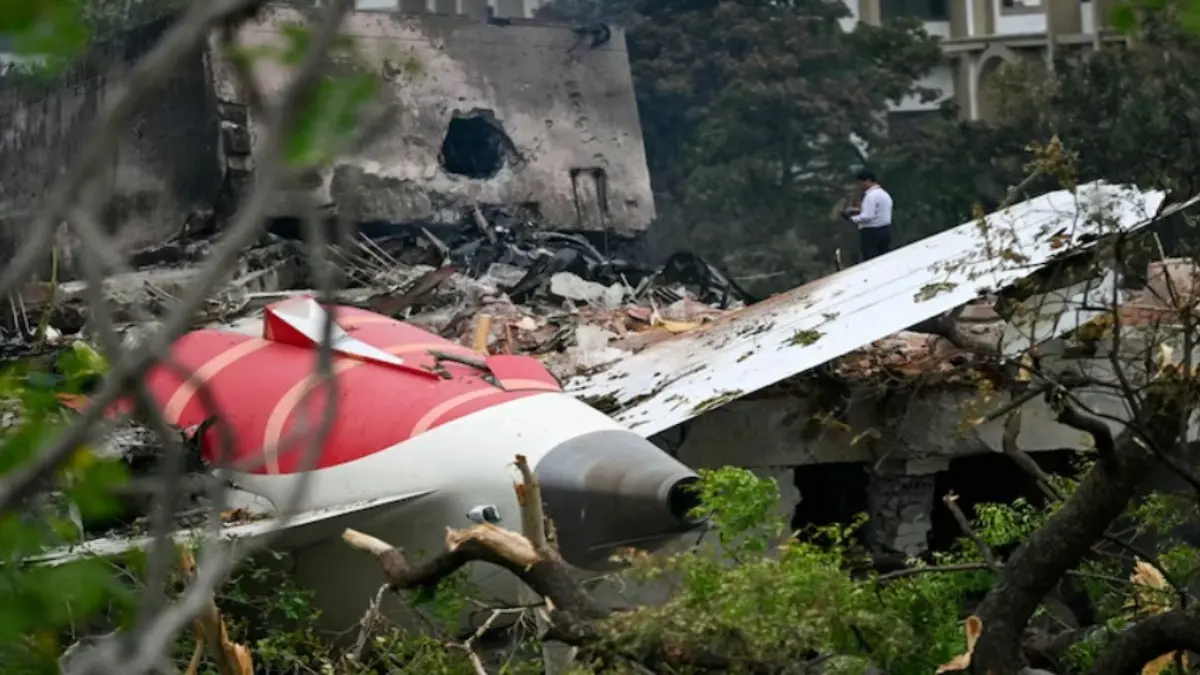
Air India Flight AI171, a Boeing 787-8 Dreamliner carrying 230 passengers and 12 crew members from Ahmedabad to London Gatwick, crashed seconds after liftoff on June 12, 2025.
The aircraft impacted a hostel building at the B. J. Medical College campus, less than a nautical mile from the runway threshold, killing 241 people on board and 19 on the ground. There was a single surviving passenger.
The AAIB's preliminary report, released a month after the crash, revealed that both engine fuel control switches transitioned from 'RUN' to 'CUTOFF' in rapid succession during initial climb, causing a complete loss of engine thrust.
Cockpit Voice Recorder (CVR) audio captured one pilot asking the other why the fuel switches had been cut, to which the second pilot responded that he had not touched them.
While initial focus centred on cockpit switch movements, the AAIB underscored that preliminary reports do not assign final cause.
Following the disaster, the Union government also established a high-level multidisciplinary committee to review standard operating procedures and systemic safeguards across commercial aviation.
As the investigation enters its final phase ahead of the October 2026 deadline, the pilots' federation contends that independent expert oversight remains the best safeguard against premature conclusions.
Get Current Updates on India News, Entertainment News, Cricket News along with Latest News and Web Stories from India and around the world.